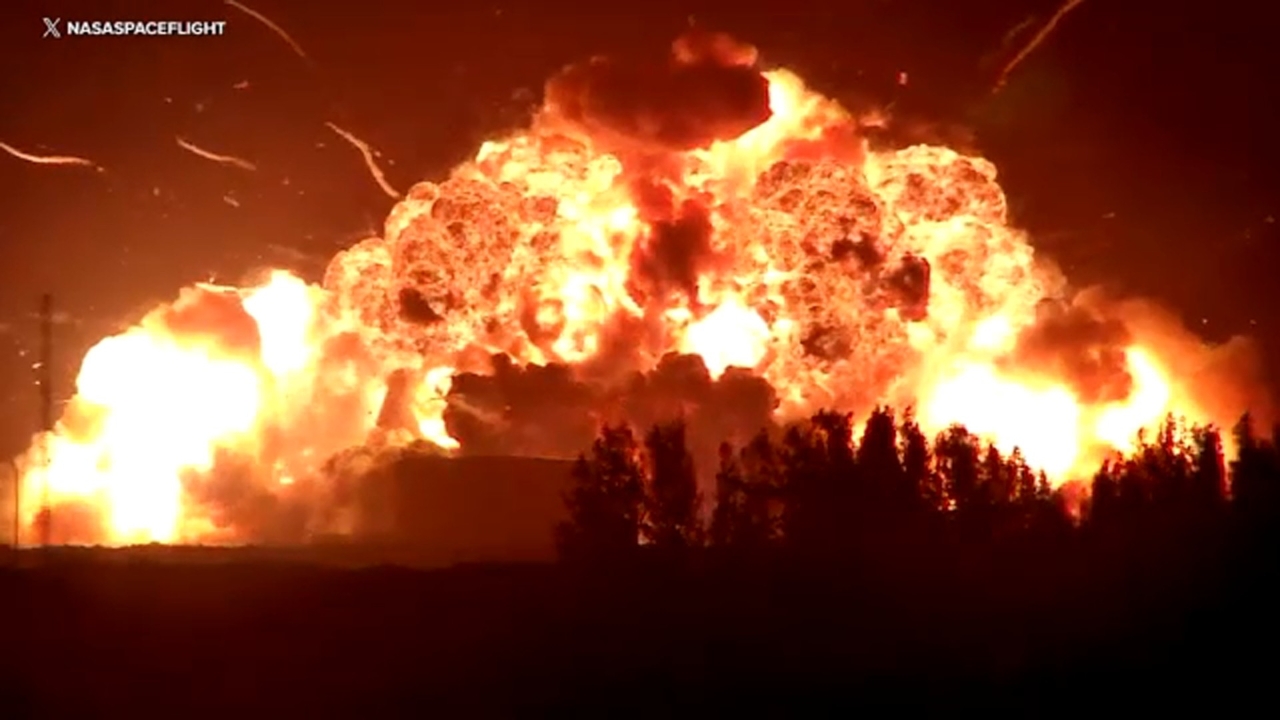
If you’ve been tracking the billionaire space race, Thursday night delivered a sobering reminder about rocket engineering’s unforgiving nature. Blue Origin’s New Glenn erupted into a massive fireball around 9 p.m. EDT during what should have been a routine static fire test at Cape Canaveral Space Force Station. The explosion destroyed the heavy-lift rocket while it sat secured to Launch Complex 36, turning months of preparation into spectacular debris in seconds.
Ground testing carries significant risks despite appearing routine—engines ignite briefly while the vehicle remains bolted to the pad, but even secured rockets can fail catastrophically. This seemingly straightforward procedure went catastrophically wrong, reportedly damaging at least one lightning protection tower and the transporter erector. Blue Origin’s founder reportedly confirmed that all personnel were accounted for and safe while acknowledging the company was working to find the root cause.
The timing stings particularly hard for Amazon’s satellite ambitions. New Glenn was reportedly prepping for an Amazon Leo mission scheduled as soon as June 4, part of the company’s broader push to compete with Starlink’s dominance. This wasn’t even New Glenn’s first encounter with failure—reports suggest the FAA had already identified nine corrective actions following an earlier mishap involving a cryogenic leak that froze hydraulic lines and caused thrust anomalies during a second-stage burn.
Reports indicate the FAA told Spaceflight Now this explosion falls “outside the scope of FAA licensed activities,” meaning no federal investigation will probe what went wrong. That leaves Blue Origin to diagnose the failure internally while competitors like SpaceX maintain their relentless launch cadence. Your Amazon packages might not notice the delay, but this setback underscores how fragile the commercial space industry’s rapid expansion really is.
What happens next determines whether Blue Origin bounces back quickly or faces extended delays that could reshape the competitive landscape. The company must assess vehicle and pad damage, complete its investigation, and implement fixes before resuming operations—all while Amazon’s satellite constellation waits in the wings and rivals capitalize on the opening.