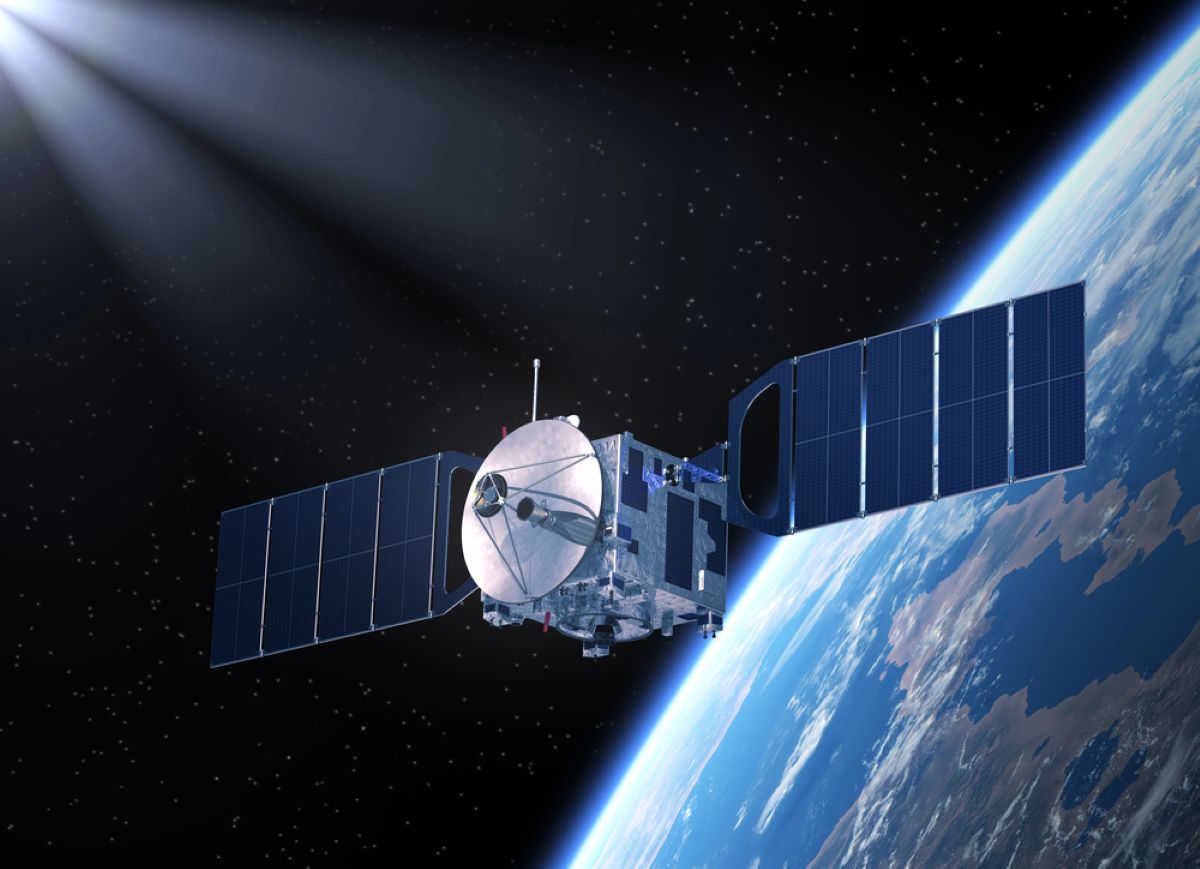
Somewhere in California, a startup just got permission to point a giant mirror at your planet from space. The FCC recently approved radio operations for Reflect Orbital’s Eärendil-1 satellite — a demonstrator designed to bounce sunlight onto Earth after sunset. Here’s the critical fine print: the agency greenlit the satellite’s communications gear only. The mirror itself, and everything it does to the night sky, falls entirely outside FCC jurisdiction. No federal body formally reviewed the reflective surface or its environmental consequences. That regulatory blind spot is the real story.
A Basketball Court-Sized Mirror, Folded Like Origami
Engineers with NASA JPL experience designed the reflector to unfold in orbit and deliver a controlled beam of sunlight to specific targets on the ground.
Riding a SpaceX Falcon 9 with a target launch in 2026, Eärendil-1 will orbit at roughly 600–650 km altitude in a sun-synchronous path. Once deployed, its 18m x 18m aluminized Mylar reflector — about 324 square meters, weighing just 16 kg — unfolds using an origami-style mechanism. The result: a circular light spot roughly 5 km wide on the ground, delivering around 0.1 lux. That’s full-moon brightness. Reflect Orbital pitches this as “sunlight on demand” for:
- Solar farms after dark
- Disaster response
- Nighttime construction
- Large outdoor events
“A full constellation could make the night sky three to four times brighter” — according to ESO commentary — turning darkness itself into collateral damage.
What’s Approved Versus What’s Planned Is a Canyon-Sized Gap
The FCC authorization covers radio operations only, while the company’s long-term constellation ambitions remain subject to no formal environmental oversight.
One prototype satellite sounds modest. The ambition behind it does not. Reflect Orbital has publicly signaled plans for thousands of satellites by decade’s end and up to 50,000 by roughly 2035 — potentially delivering daylight-level illumination over select areas. Public Employees for Environmental Responsibility argues the project warrants formal environmental review, citing risks to:
- Wildlife
- Human health
- The global night sky
That review simply hasn’t happened.
Astronomers and Ecologists Aren’t Staying Quiet
The AAS, ESO, and independent researchers warn that orbital mirrors could degrade observations, disrupt ecosystems, and cross national borders without consent.
If you care about dark skies, migratory birds, or human sleep cycles, this matters. The American Astronomical Society and the European Southern Observatory warn these mirrors could become among the brightest artificial objects in orbit, leaving streaks across long-exposure telescope images and complicating observations of faint, distant objects. Astronomer Aaron Boley told CBC that sun-synchronous mirrors “would be moving across Canada as twilight sets in,” adding that “Canada should express its concerns about this.” Russia’s Znamya experiments in the 1990s proved orbital mirrors work — until one tangled during deployment and proved they also fail spectacularly.
The demo is deliberately low-stakes. The governance vacuum it exposes is not. If Eärendil-1 succeeds, every space agency on Earth faces a question no existing framework is equipped to answer: who owns the dark?