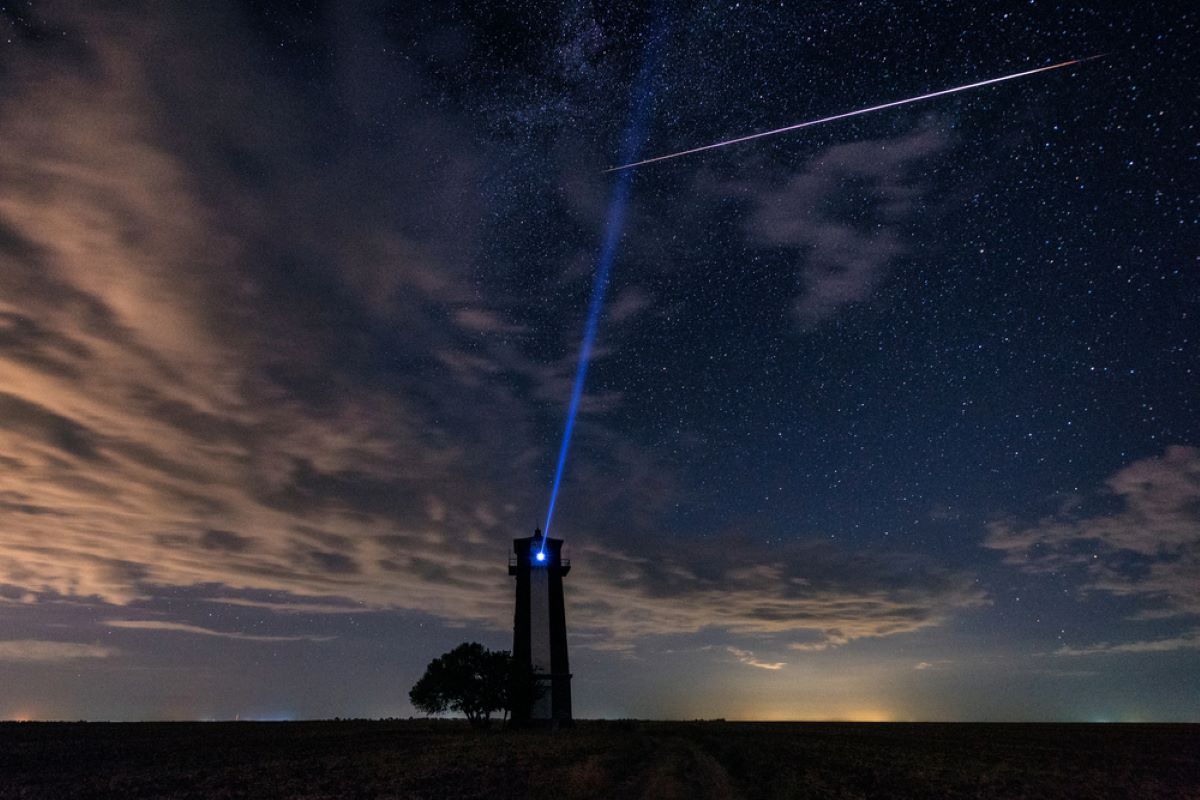
Between December 2025 and May 2026, SpaceX deliberately incinerated 260 of its own satellites. Not a malfunction. Not a crisis. Just maintenance. According to the company’s semi-annual FCC filing, 176 were first-generation units, with the remainder from Gen 2. Another 349 have been decommissioned and are queued for the same fiery exit. The constellation now tops 10,000 satellites, and SpaceX runs it like a Netflix content library — constantly rotating stock, nothing collecting dust in a decaying orbit.
The Five-Year Clock Is Always Ticking
Planned obsolescence was baked into every Starlink satellite from the start.
Each Starlink satellite carries roughly a five-year expiration date. When time’s up, onboard fuel drops the spacecraft into a lower orbit where atmospheric friction does the rest. SpaceX says every unit fully disintegrates, leaving no space junk behind — though the pace of retirements fluctuates. The prior six-month window saw 472 deorbits, nearly double the current figure. Retrieval isn’t practical either: Gen 1 satellites weigh 573 to 650 pounds, and Gen 2 units tip the scales at up to 2,756 pounds. Nobody’s catching those on the way down.
- 260 satellites deorbited, December 2025–May 2026 (176 Gen 1, remainder Gen 2)
- 349 more decommissioned and awaiting disposal
- Constellation exceeds 10,000 active satellites
- FCC approved 7,500 additional Gen 2 satellites in January
- SpaceX plans up to 42,000 satellites total
The Atmosphere Isn’t a Recycling Bin
Researchers want answers about what happens when thousands of satellites burn up overhead every year.
SpaceX argues full disintegration equals zero debris, and regulators have largely accepted that framing. But researchers studying megaconstellation re-entries have called for more study on the cumulative atmospheric effects — metal particulates and aluminum oxides released at scale represent chemistry that remains an open question at this volume. The FCC has also floated a proposal to exempt space-based operations from NEPA environmental review entirely, arguing they’re extraterritorial. That proposal has not been approved.
If you’re a Starlink subscriber, your connection depends on exactly this kind of churn. SpaceX’s expanding ambitions — 42,000 satellites total, direct-to-phone Starlink Mobile, an orbital compute platform targeting a gigawatt of capacity by late 2027 — mean retirements will only accelerate. Whether the regulatory framework can keep pace with a constellation this size, refreshing this fast, is the story worth watching.