Rooftop solar has transformed Australian homes over the past decade, but renters and apartment dwellers have largely watched that transformation from the outside. That may be about to change. On 11 September 2026, Australia’s energy ministers agreed to explore pathways for the “safe deployment” of plug-in solar and batteries, a significant policy shift for a country where the current ban on plugging in such devices remains firmly in place.
No firm legalisation date exists yet. The federal government has committed to reporting on next steps by the end of 2026, with advocacy group Solar Citizens pushing for a concrete timeline announced by December and full legalisation across every state and territory by July next year.
How Plug-in Solar Actually Works
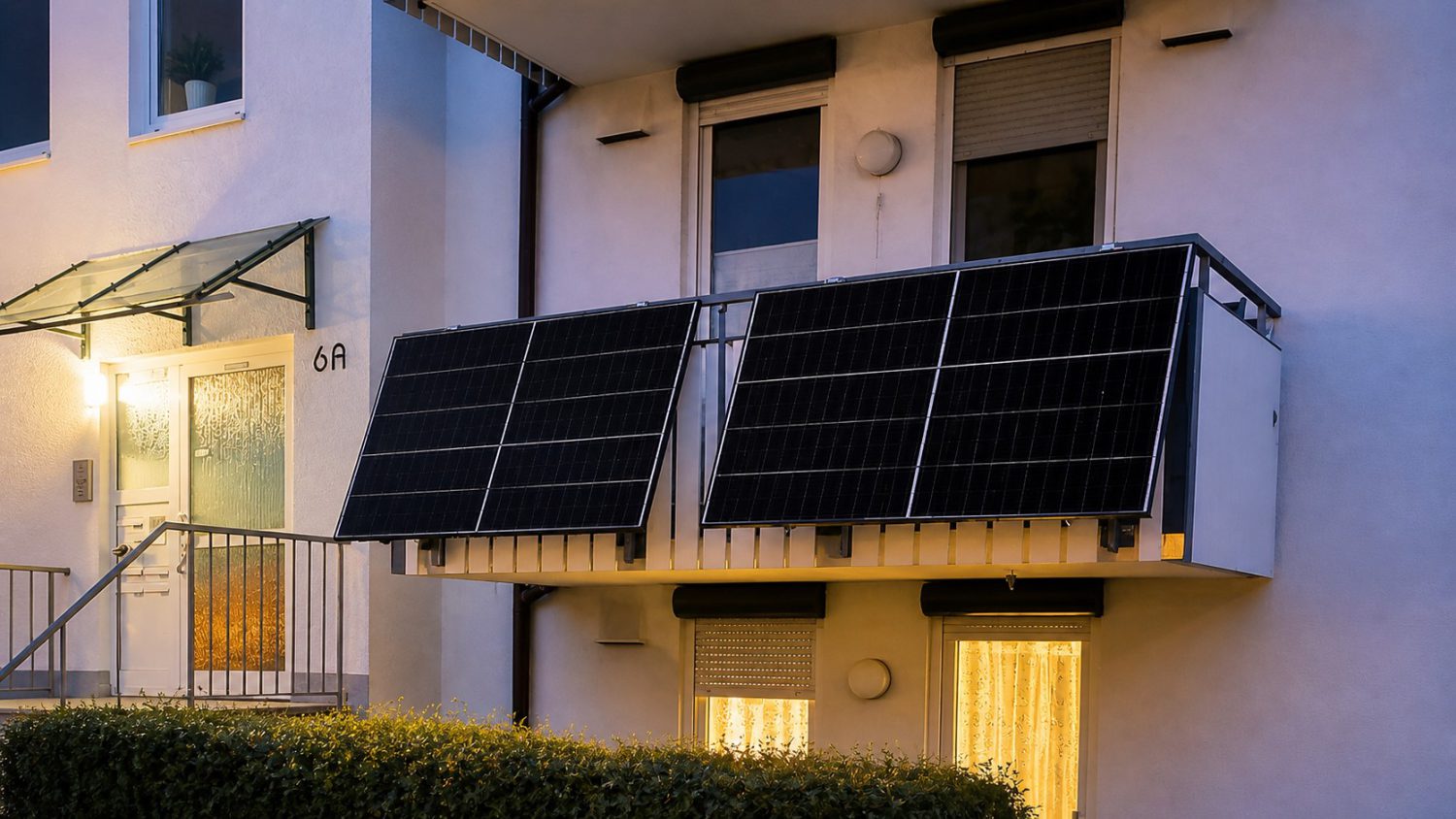
Two panels, a microinverter, and a standard power point: no electrician required.
A typical plug-in system consists of one or two solar panels plus a small microinverter. The panels convert sunlight into direct current, which the microinverter converts into standard household AC voltage before feeding it into your home’s internal wiring through a regular socket.
Once connected, appliances like your fridge, router, or washing machine draw from that solar power first, reducing what you pull from the grid. Inverter output is typically capped at 600–800 W, a limit designed to prevent overloading household circuits. Systems cost up to about AU$1,300, according to ABC News.
Safety standards for these systems require microinverters with anti-islanding features, meaning the unit automatically shuts down if the grid fails, according to balkon.solar. The hardware is also portable: renters can take panels and batteries with them when they move, so the investment follows you rather than staying behind for the landlord.
Where Australia Stands Internationally
Germany, the UK, and New Zealand have already moved; Australia is still developing its framework.
Germany is the clearest reference point, with roughly one in ten households running plug-in systems. Since October 2024, German tenants have had a legal right to install balcony solar, with inverter output capped at 800 W, according to Germany’s Federal Ministry for Economic Affairs and Energy. Landlords must have substantial grounds before refusing an installation.
The UK legalised self-installation from 27 August 2026. Households there are eligible to save up to £110 a year on electricity bills, according to the UK government. New Zealand has flagged plans to follow within roughly 12 months, and Australia is moving in the same direction without yet committing to a date.
What the Numbers Say
Savings are real, but payback depends heavily on when and how much power you use during the day.
Solar Citizens estimates that an average plug-in solar panel saves AU$300–$400 a year on electricity bills, with plug-in batteries potentially pushing annual savings toward AU$1,000, according to ABC News. If you’re worried about paying too much on energy, payback periods range between four and ten years depending on local tariffs and daytime consumption patterns.
German data suggests an 800 W system produces roughly 650–950 kWh per year under local conditions, according to SunMeasure. Sunny Australian cities could reasonably expect comparable output.
What Still Has to Happen
Ministers agreed on a direction; product safety standards, landlord rules, and firm dates still need to follow.
Before plug-in kits can legally enter the Australian market at scale, product safety standards must be developed and adopted, with Germany’s existing framework cited as a potential starting point. Landlord and body corporate permission will remain a practical barrier even after national rules change, since panels typically need to be mounted on balcony railings or in shared spaces.
Solar Citizens is pushing for a firm timeline announced by December and full legalisation by July next year. Until those rules are formally adopted, plug-in solar remains banned for Australian renters and apartment residents.