UK iPhone users who noticed Advanced Data Protection disappear from their iCloud settings encountered no glitch — a secretly tracking users situation was behind it. That order demanded Apple build a backdoor into encrypted cloud backups. Apple refused, pulled the feature for British users entirely, and has now filed a legal challenge at the Investigatory Powers Tribunal (IPT). A 2026 public hearing will determine how far any democratic government can legally force a tech company to break its own encryption.
The Order Apple Refused to Follow
A secret legal demand sought global access to every encrypted iCloud backup on the planet.
UK security officials served Apple with a Technical Capability Notice (TCN) — a classified order under the Investigatory Powers Act that compels companies to hand over user data, encrypted or not. The original demand sought worldwide access to iCloud content protected by Advanced Data Protection (ADP), Apple’s strongest encryption layer, where only users hold the keys. Apple’s response was unambiguous: the company has stated it has “never built a backdoor or master key to any of our products or services and we never will.”
Rather than comply, Apple pulled ADP from the UK. Here’s what British users lost:
- Photos, Notes, Voice Memos, iCloud Drive files, and device backups are no longer end-to-end encrypted
- iCloud Keychain passwords, health data, and payment info retain end-to-end encryption by default — those protections held
- ADP remains available to Apple users outside the UK
- Existing UK users were required to turn off ADP; new UK users could no longer enable it
The global scope of that original order triggered a transatlantic dispute. U.S. officials objected to Britain claiming jurisdiction over American citizens’ data. By August 2025, the UK withdrew its worldwide demand — confirmed publicly by the U.S. Director of National Intelligence. Apple still did not restore ADP. The UK was quietly rewriting the order, narrowing it to British users only. Think of it like geo-blocked content on a streaming platform: same restriction, different postcode.
The Electronic Frontier Foundation was direct: limiting the demand to British users “doesn’t make it any better” — calling it a backdoor that sets a dangerous precedent regardless of geography.
A Secret Law Under Public Scrutiny
Apple, Privacy International, and Liberty are forcing a classified surveillance regime into open court.
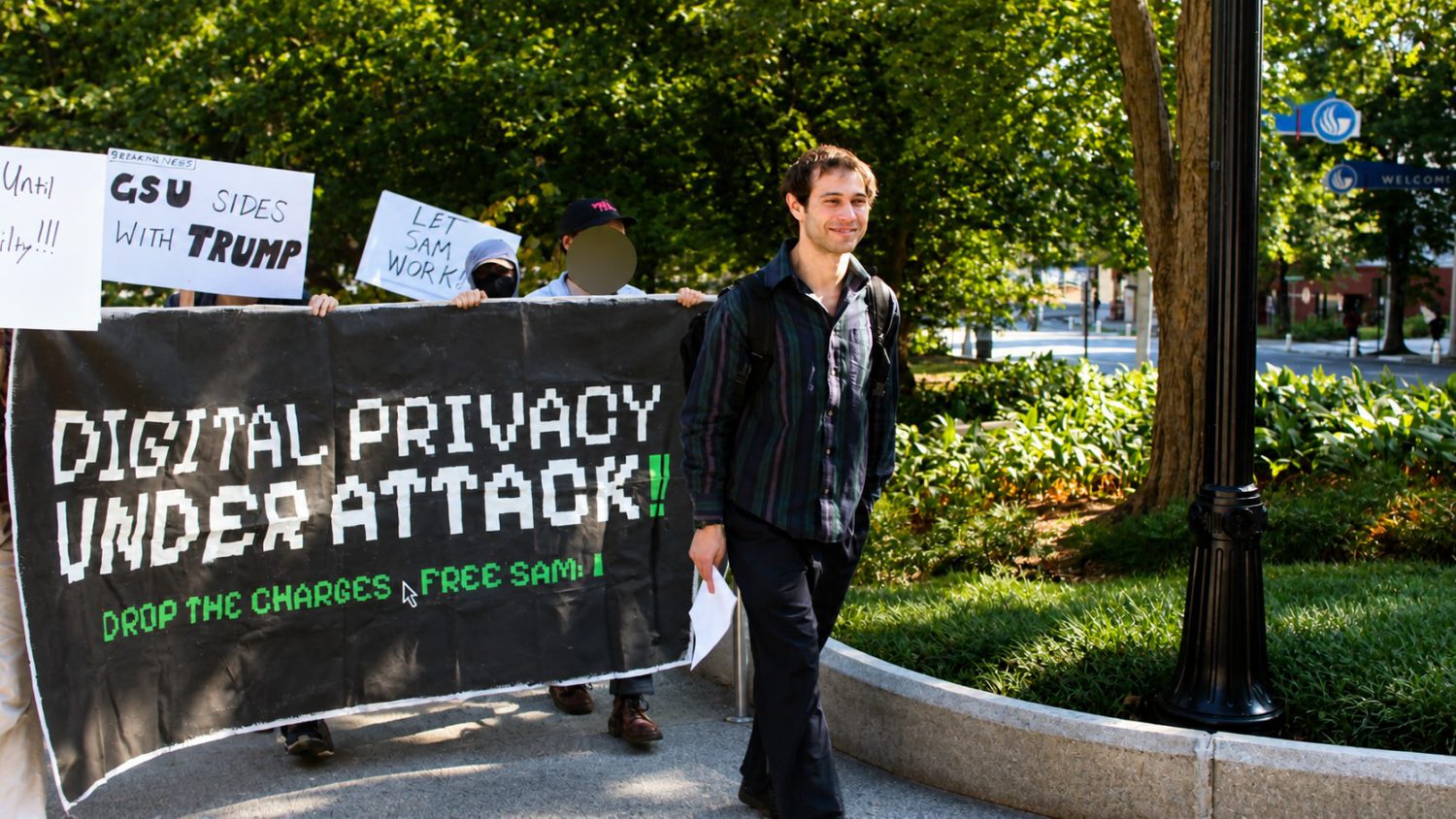
Apple filed a fresh complaint with the IPT in July 2026, challenging the rewritten UK-only TCN. The tribunal confirmed it will hear cases from Apple alongside Privacy International, Liberty, and two private individuals — in public hearings, using “assumed facts” rather than classified specifics. The secrecy around TCNs is striking: under the Investigatory Powers Act, recipients cannot legally confirm one exists. It is an NDA so airtight that acknowledging it is itself a crime. Rights groups have also pointed to a surveillance app built by state operatives as evidence of how far governments will go to monitor civilians.
The UK Home Office argues these powers are essential for investigating terrorism and child sexual abuse — the familiar “going dark” position that encryption blocks lawful access even with warrants. Apple and rights groups counter that any mandated backdoor creates vulnerabilities exploitable by criminals and hostile states. The Internet Society warns the UK order “threatens the privacy and security of all internet users.”
The IPT’s ruling will reach well beyond iCloud. A win for the Home Office places every encrypted messaging app, cloud service, and password manager operating in Britain under the same pressure. A win for Apple redraws the line no government gets to cross.