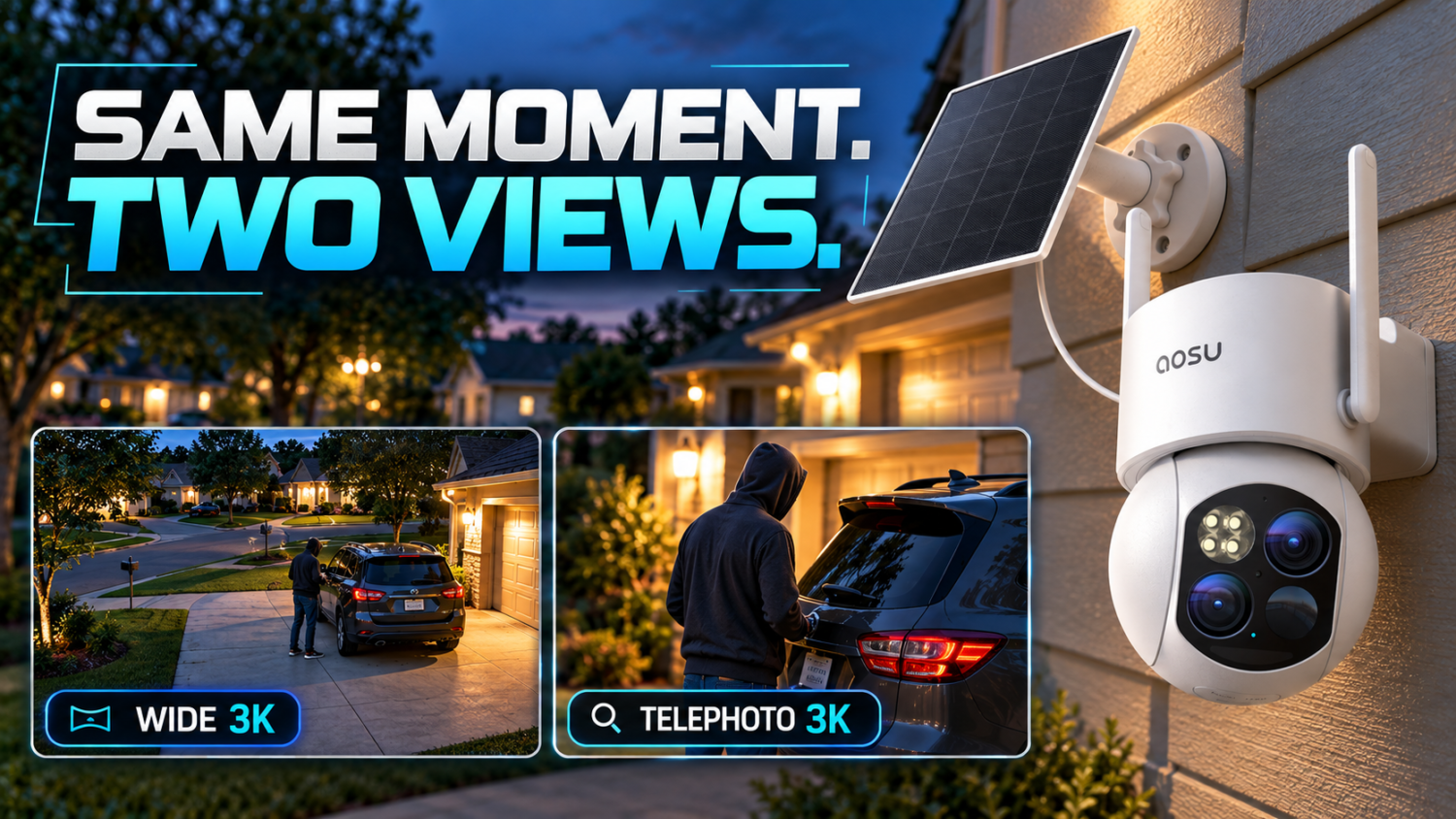
Your phone goes off at 2am to tell you there’s motion on the driveway, so you open the app half asleep and find somebody standing at the back of your car, about forty feet from the lens.
The camera is covering the whole driveway, and the further out a thing sits, the fewer pixels it gets. At forty feet there aren’t enough of them left to make a face out of, so when you pinch to zoom all you’ve got is a blurry mess. By the time you’re properly awake they’re gone, and all you’re left with is eleven seconds of somebody in a hoodie who could be anyone on the street.
What would you tell an officer, that you saw someone in a hoodie and that’s it?
Single-lens cameras have to choose: wide views or close-ups, and when it comes time to rely on it, you’re basically flipping a coin on whether the camera is going to give you useful footage or not. That’s why aosu SolarCam T2 doesn’t make you, because it’s got two lenses.

Two Lenses, Same Moment
There’s a 3K wide lens taking in the whole scene and a 3K 8mm telephoto pulled in tight on the subject, and both record the same event at the same time. When a delivery driver walks up your path, it comes back as two pieces of footage: the wide shot showing the van, the path and the street behind it, and the close shot showing the person’s face.
Neither one is a crop of the other. They’re separate sensors with separate jobs, so you keep full quality on both instead of throwing pixels away to enlarge a corner of a single frame.
On top of that there’s 1 to 8x hybrid zoom on either feed, and the telephoto holds focus while a subject moves, so it doesn’t smear right when you need it most.
It Watches Instead of Sleeping
Most solar cameras spend their day switched off. A passive infrared sensor waits for a heat signature, and when it catches one, the camera wakes up. But by the time it has started writing to the card the person is already halfway across the frame, so you get the back of a jacket and the second half of a story.
The aosu T2 keeps watching at about one frame a second, all day. aosu calls it Always Ready Vision, and the point of it is that the camera is already looking when something happens, so the recording starts with the action instead of catching up to it. A frame a second is slow enough to sip power and quick enough that the first second of an event lands on the card.
That’s also why it still works on solar. A frame a second costs little enough power that the panel keeps up, so the camera can stay awake instead of sleeping between triggers.

A Photo Every Five Minutes, All Day
Motion events only tell you about the things that moved. So the T2 also saves a still every five minutes from dawn to dark, and strings them into a timeline you can scrub.
That means you can check for more than just suspicious activity. How long was the sprinkler running before anybody noticed? When exactly did that branch come down? Was the side gate open at four o’clock or did somebody open it at six? Motion alerts won’t trip for these events, but the T2 has them ready for you.
Deters, Doesn’t Just Record
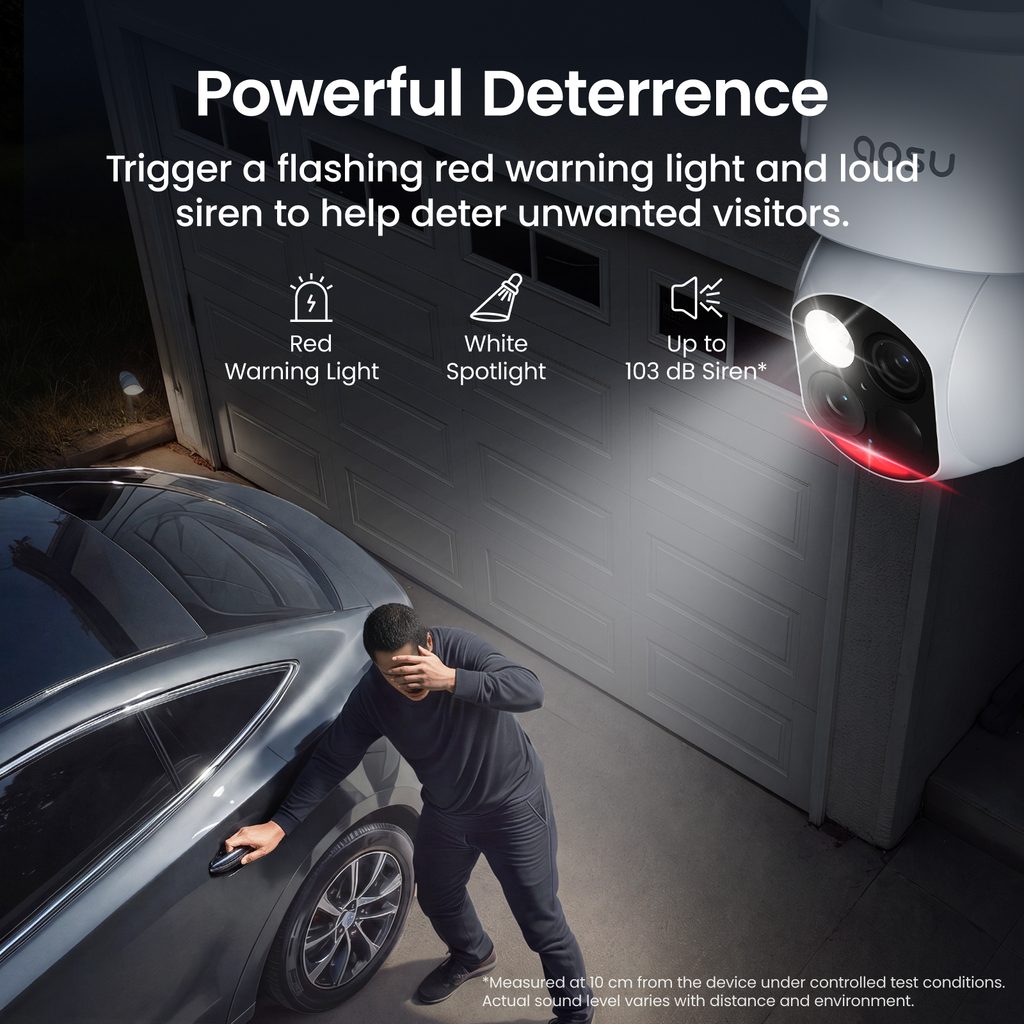
Recording an intruder is useful afterwards, when you’re sitting with a police officer. Getting them to give up and walk away is better.
When the T2 picks up a threat it fires a red warning light and a 120 dB siren, and it throws its spotlight on at the same time. Now, whoever’s standing around your car acting suspicious knows they’re on camera and they’re being watched.
The Full Package
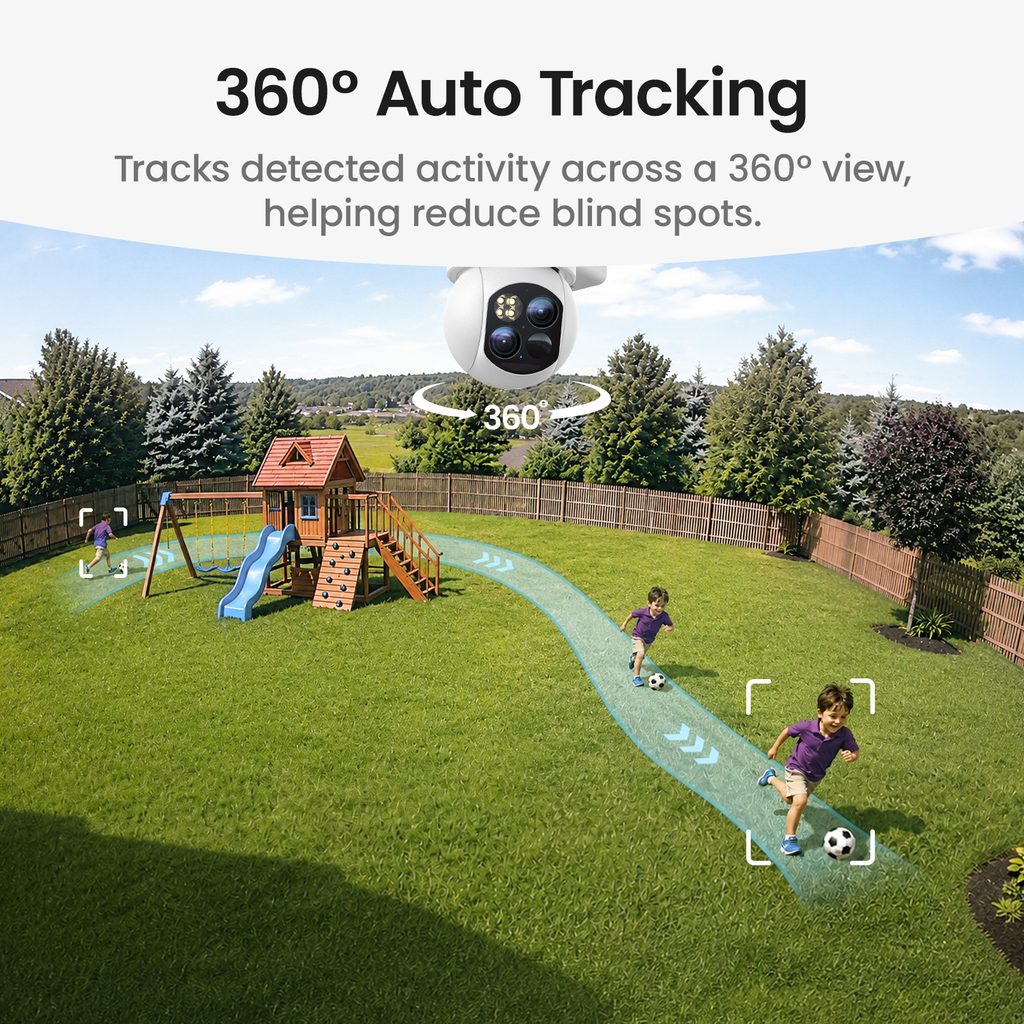
The T2 has a full 360-degree pan and tilt camera with auto-tracking, so it can follow a subject across your whole yard. It also has night vision with two modes: full color with the spotlight on when you want a usable face, and infrared if you want your camera to stay discreet.
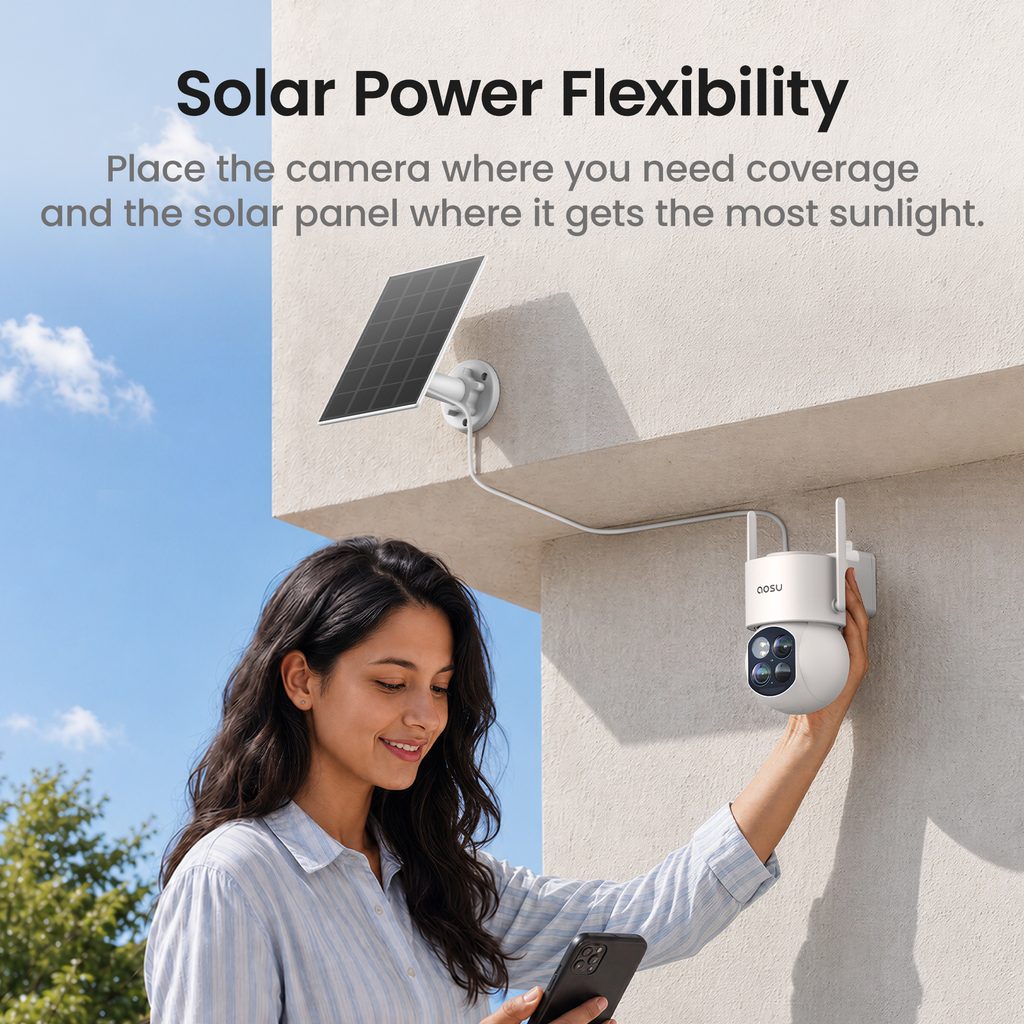
Footage goes to a microSD card in the camera, with cloud backup there if you want a second copy. The unit’s also got an IP65 rating, so it’s dust-tight and rated against water jets. It works with Google Home and Alexa, and the solar panel mounts separately from the camera body, so you’re not stuck choosing between mounting your camera somewhere useful and somewhere sunny.
You can also set up custom detection zones to draw the areas you care about, so the camera keeps watch of your path and driveway without sending you alerts about everyone walking along the sidewalk.
What It Costs
The T2 is available for $129.99 direct from aosu’s website, with a 365-day warranty and a 30-day return window if it isn’t what you pictured, or you can pick it up through Amazon.
For a solar camera that doesn’t need a wire run to it, doesn’t need a ladder every few weeks to recharge, and keeps your footage on a card in the housing, that’s the kind of price that makes it worth it to pick up two. Now you’ll never need to deal with grainy footage of a vague figure again.