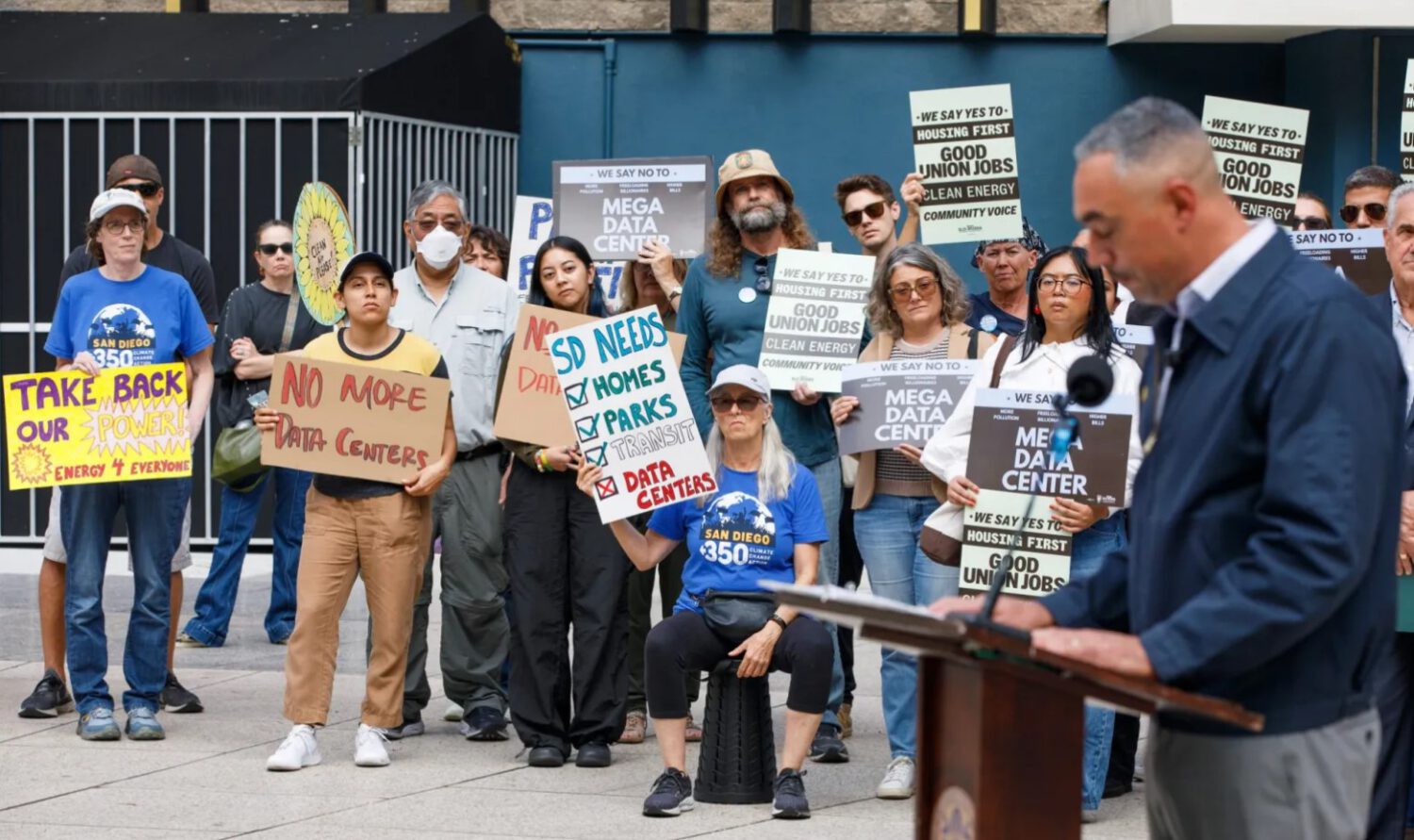
According to KPBS, Manchester Financial Group is exploring a data center of up to 400 megawatts on the federally owned NAVWAR site near Old Town. That single facility’s estimated power demand would be comparable to the annual electricity use of roughly 300,000 homes.
The San Diego Union-Tribune reports the concept could make it the largest data center in California. Manchester president and CEO Ted Eldredge told the Union-Tribune the company is also weighing housing, hospitality, a university campus, and a defense complex as alternatives.
“San Diego is a city of innovation, and I want us to continue leading in the technologies and jobs of the future.” Mayor Todd Gloria.
Here is the catch that matters most: San Diego’s moratorium would not directly affect a facility on federal land, because NAVWAR sits outside the city’s land-use authority. The city’s executive order acknowledges this gap, calling for state and federal protections to cover sites beyond local jurisdiction.
The moratorium is partly a planning tool and partly a signal directed at federal decision-makers considering the future of NAVWAR.
What the Pause Actually Buys (and What It Doesn’t)
San Diego now has a temporary moratorium. What it still lacks is a permanent framework with any real force.
The City Council voted unanimously on October 27 to establish an initial 45-day pause, with possible extensions up to 10 months and 15 days. City staff have 180 days to deliver recommendations, per Mayor Gloria’s executive order. A Data Center Stakeholder Working Group of up to 15 members, drawn from tech, utilities, water, planning, housing, and community interests, will guide that process.
Council members have also argued that the NAVWAR site could support transit-oriented housing at a moment when San Diego residents, military personnel, and young workers face mounting housing costs.
The moratorium buys time. What it does not buy is answers.
San Diego currently lacks a comprehensive local regulatory framework specifically governing data centers, including rules on how a facility must source its power, how much water it can consume, or who pays for grid upgrades. City officials have raised concerns that large facilities could shift infrastructure costs onto utility customers, though final cost allocation would depend on regulatory and project-specific decisions.
The pattern is familiar to anyone who watched communities scramble to manage the arrival of Amazon fulfillment warehouses, where the logistics infrastructure landed before residents had any framework to absorb its costs. AI data centers are following the same trajectory.
The industry should not wait to be regulated into accountability. Developers considering sites like NAVWAR would serve everyone better by arriving at the stakeholder table with concrete proposals on power sourcing, water limits, and community benefits, rather than a list of objections to whatever rules eventually emerge.
The Clock Is Running
Two decision points will determine whether this pause produces rules with real force or simply expires.
Watch the stakeholder working group’s recommendations and the ongoing federal consideration of the NAVWAR site’s future. Those are the moments where San Diego’s moratorium either becomes a working model for how cities govern AI infrastructure or quietly lapses without changing anything.
The question was never whether data centers belong in cities. It is whether the people already living in those cities get a meaningful voice in the terms.