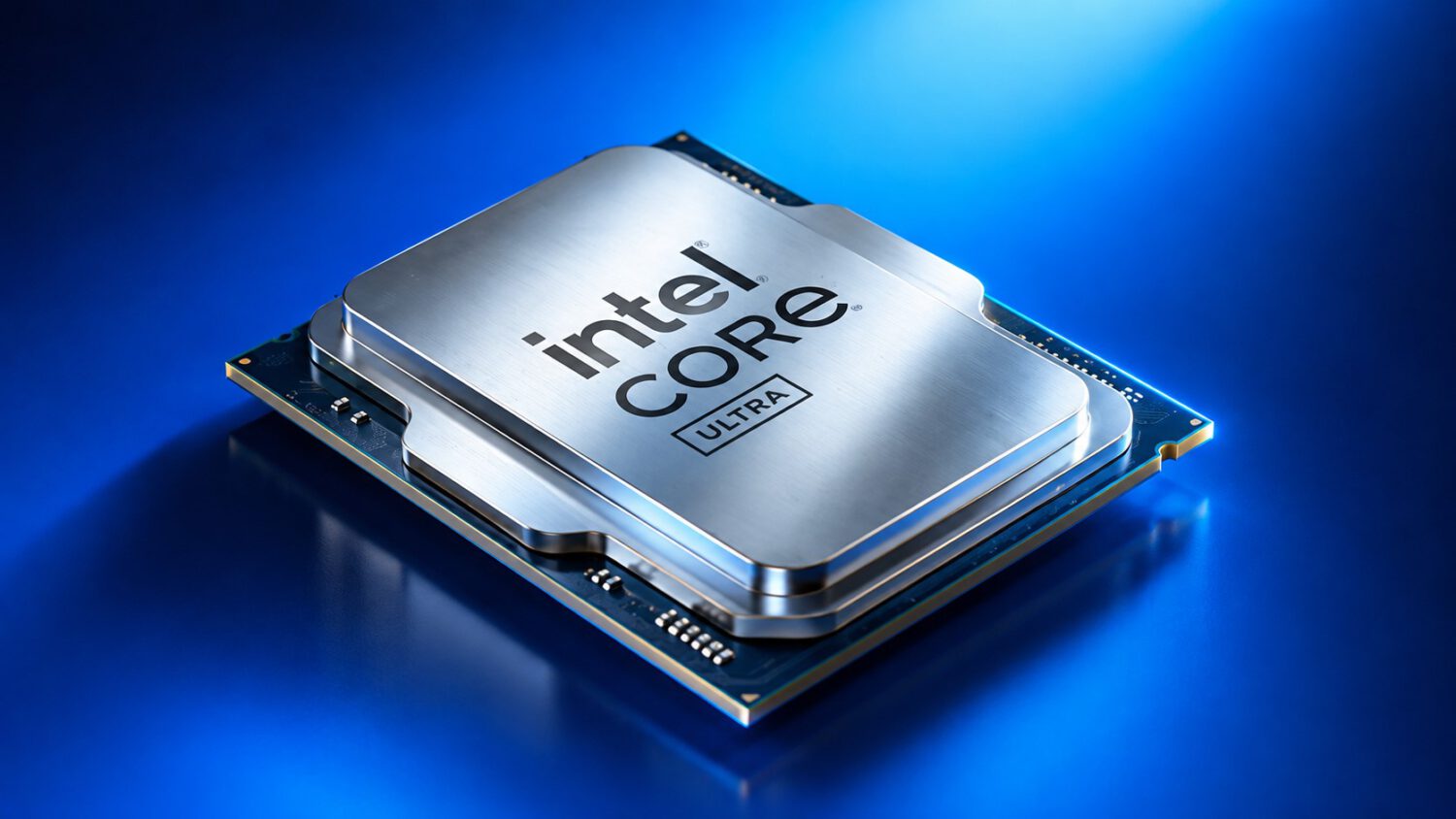
A PassMark database entry reportedly linked to an Intel Nova Lake-S engineering sample scored 5,210 points in single-thread testing, clearing both the Core Ultra 9 285K (5,059) and AMD’s Ryzen 9 9950X3D (4,805). The entries are unverified, the hardware is unidentified, and no public Intel confirmation has been identified, but for enthusiasts tracking whether Nova Lake can answer AMD’s X3D cache advantage, the numbers are worth examining carefully. Readers interested in custom silicon developments across the industry may find adjacent context in how other chip makers are approaching next-generation designs.
A VideoCardz reader surfaced the results through PassMark PerformanceTest 11.1’s “Manage Baselines” feature. The processors appear in the database as “Intel 0000” running on an “NVL-S Embedded” platform.
What the Benchmark Actually Shows
Strong single-thread figures and a weaker overall score emerge from a pre-production system that raises as many questions as it answers.
The fastest reported 28-core-class entry scored 5,210 in PassMark’s single-thread test; a second result reached 5,191. According to reports, those figures sit approximately 3% above the Core Ultra 9 285K, 8.4% above the Ryzen 9 9950X3D, and 12.4% above the older Core i9-14900KF. That is a meaningful single-thread lead in this reported test, if it proves reproducible on retail silicon.
The overall CPU Mark result complicates the picture. The same reportedly leaked entry scored 61,509 in multi-thread testing, below the Core Ultra 9 285K’s 67,274 and well below the Ryzen 9 9950X3D’s 72,066. That deficit is not a footnote; the leaked sample cannot claim across-the-board superiority over current flagships.
The reported system configuration adds further uncertainty. The entries show approximately 16GB of memory, a base clock near 3.3 GHz, and turbo readings around 4.8 GHz. The Memory Mark result came in at 2,523.4, substantially below the Core Ultra 9 285K system’s 3,349.6, though Memory Mark measures the full test platform rather than the CPU in isolation.
TechPowerUp cautioned in its coverage that the results are unofficial, a qualification that should accompany every figure cited here. Eight-core Nova Lake entries reportedly ranged from 9,004 to 23,478 points in overall CPU Mark, a spread wide enough to suggest meaningfully different test conditions, firmware states, or memory configurations across samples.
What Nova Lake-S Is (and What Remains Unknown)
A separate leak sketches the flagship lineup, but the benchmark entries cannot be matched to any specific retail model.
A separate leak reportedly identifies a flagship Core Ultra 9 4970K BFC carrying eight performance cores, 16 efficiency cores, and four low-power efficiency cores, totaling 28 cores. Intel reportedly rates it at 125W with 32 integrated graphics execution units.
Commentators interpret the “BFC” designation as a large-cache variant, potentially aimed at competing with AMD’s X3D-branded gaming processors, though the naming and product strategy remain unconfirmed. The connection between that rumored product and the PassMark entries is equally uncertain. No published report can establish whether the tested sample is the 4970K BFC, the reportedly standard Core Ultra 9 4950K, or another Nova Lake configuration entirely, because the benchmark database identifies the chip only as “Intel 0000.” Users who run into computer problems while stress-testing pre-production hardware may find practical guidance useful alongside these benchmark considerations.
The rumored platform is said to require LGA 1954 motherboards and 900-series chipsets, but those details remain unverified. Notebookcheck described the results as an early glimpse of Nova Lake’s potential rather than a reliable indication of final retail performance, a characterization that applies to every figure in this report.
Final retail clocks, microcode, memory support, cache configuration, and platform tuning will determine whether the single-thread lead survives on production hardware. The multi-thread gap leaves AMD’s Ryzen 9 9950X3D and Intel’s own Arrow Lake-era chips with a defensible position at the high end until verified results from retail Nova Lake silicon are available.