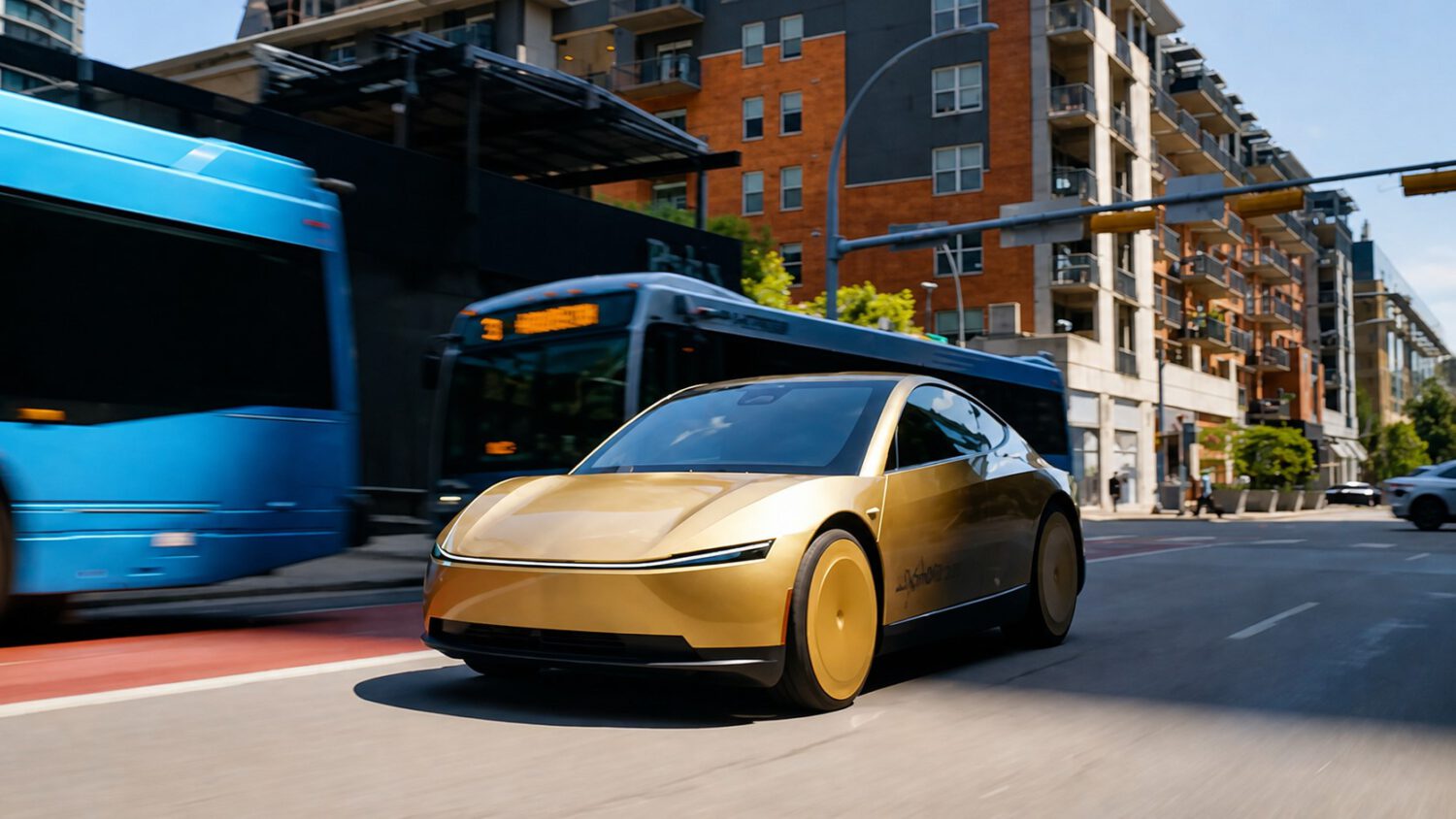
A Tesla Cybercab traveling at roughly 5 mph struck a large, water-filled pothole in an Austin parking lot, becoming the first reported Cybercab crash in available NHTSA data. No passengers were aboard, no injuries were reported, and the damage was limited to the vehicle itself.
The incident is minor on its face. Its timing and context are not.
What the Incident Report Says
The crash occurred during a supervised test, not a passenger run, but it entered the public regulatory record at a significant moment.
According to Austin American-Statesman and KXAN reporting, the incident happened before Tesla’s paid public Tesla Robotaxi service launched. A safety monitor was inside the vehicle, and no passengers were present.
The reported outcome was property damage only. At approximately 5 mph in a parking lot, this qualifies as a low-severity event by any standard measure.
The context surrounding it is more consequential. A federal audit, a contested sensor strategy, and a vehicle designed without a steering wheel or pedals all frame what might otherwise read as a minor fender-bender.
Why a Puddle Is a Harder Problem Than It Sounds
Standing water can turn an ordinary road defect into a serious perception challenge for autonomous systems.
Standing water does not just obscure a pothole visually. It can mask the defect’s depth and shape entirely, turning what looks like a wet patch of asphalt into a concealed drop.
Tesla’s robotaxis rely on video-based perception, according to Austin American-Statesman reporting. Competing autonomous-vehicle systems commonly pair cameras with lidar, which scans surroundings using laser pulses and can provide additional road-surface data that a camera might not capture.
Relying on a camera to assess depth in standing water is roughly like judging how deep a swimming pool is from a photograph. The surface information is available until the water conceals what lies beneath.
Available reporting does not establish that Tesla’s camera system caused the impact. The incident does illustrate that a water-covered pothole represents the kind of ambiguous edge case that perception engineers invest years in trying to solve.
The Regulatory Layer Already Existed
NHTSA opened its Audit Query into Tesla’s Cybercab self-certification before this crash became part of the public record.
Before this crash was reported, NHTSA had opened an Audit Query into Tesla’s self-certification that the Cybercab complies with applicable Federal Motor Vehicle Safety Standards, according to an NHTSA press release and the agency’s official audit document. The inquiry centers on how Tesla validated a vehicle designed without traditional human controls.
That scrutiny was already active when the first crash report entered the public regulatory record. The two developments now sit against the same backdrop, even if NHTSA has not formally linked the crash to the audit.
NHTSA’s inquiry asks Tesla to provide the technical data and processes behind certifying a vehicle that operates without a steering wheel or pedals.
What This Means Before a Robotaxi Arrives in Your City
The accountability question beneath a parking-lot pothole strike is harder to dismiss than the incident itself.
The immediate severity of this crash is easy to set aside. The underlying question is not whether this specific incident was serious.
The relevant question is how Tesla documents that its perception system handles road hazards reliably across real-world conditions, and whether that information reaches regulators before you are in the back seat. Think of it as the gap between a product demo on a closed course and software running in the field: that gap is precisely where consequential data either gets collected or goes unexamined. For drivers weighing the broader shift to electric and autonomous vehicles, understanding those tradeoffs is increasingly relevant.
A First Report Becomes Public Record
The moment a supervised test incident enters an NHTSA filing, it shifts from internal data to public accountability.
Supervised AV testing produces substantial internal data. When a reported incident enters an NHTSA filing, it becomes part of the public regulatory record, visible to researchers, regulators, and the public.
This crash, minor as it was, marks the point at which the Cybercab’s real-world performance moves beyond Tesla’s internal evaluation alone.