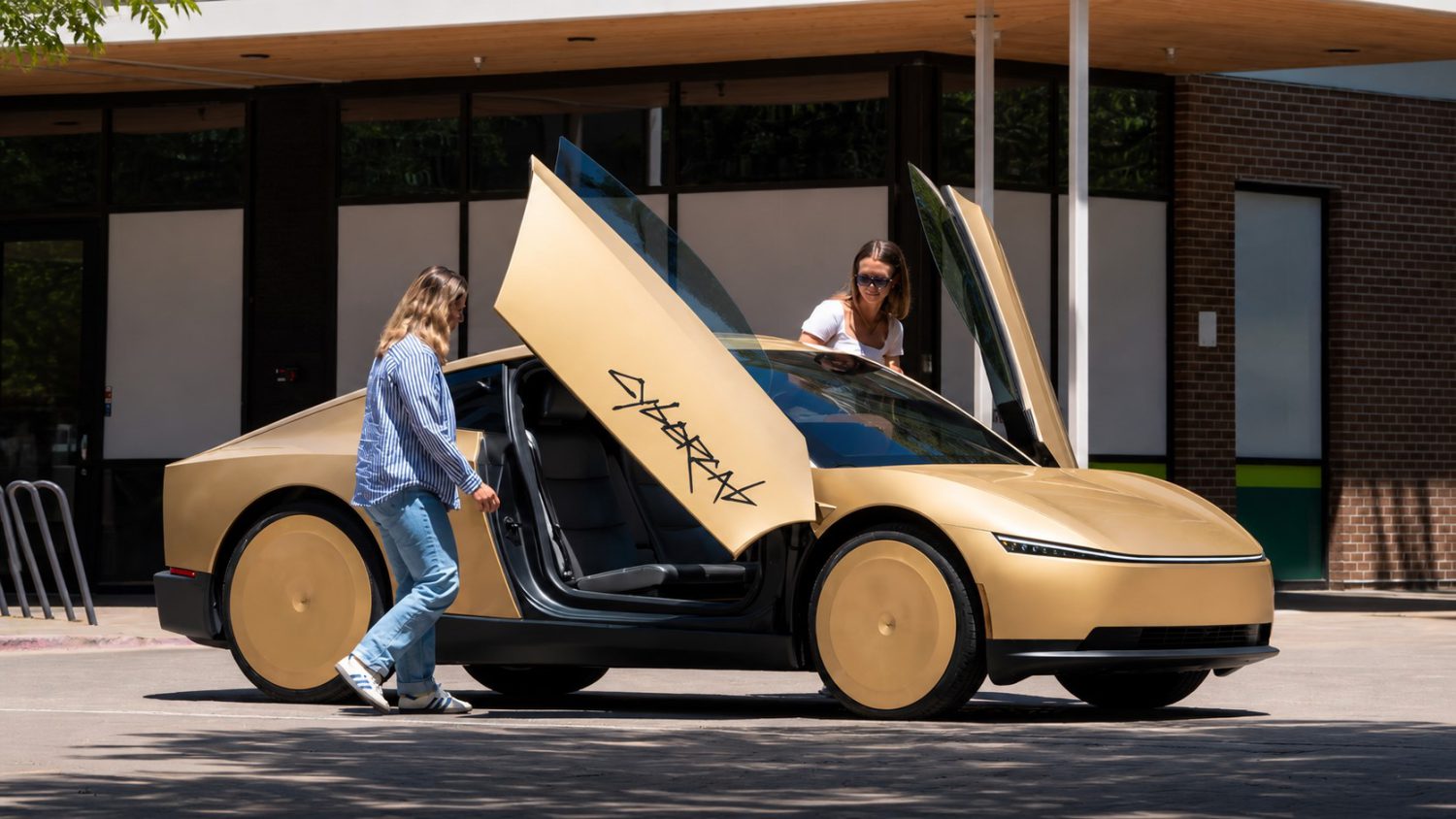
Federal regulators have formally ordered Tesla to justify, under sworn oath, how a driverless Tesla vehicle with no steering wheel, no pedals, and no mirrors can legally be sold in the United States. This is not a safety performance review. It is a direct challenge to whether Tesla had the legal authority to certify the Cybercab for sale under existing federal standards in the first place.
What the Order Actually Demands
NHTSA opened its audit the same day the Cybercab hit Austin roads.
The National Highway Traffic Safety Administration launched Audit Query AQ26002 on September 3, 2026, the exact day Tesla began commercial Cybercab service in Austin, Texas. The agency estimates 1,000 vehicles are currently under review.
NHTSA issued a Special Order under 49 U.S.C. § 30166(g)(1)(A) requiring Tesla to respond by September 30, 2026. The response must be submitted with a sworn affidavit signed by a responsible Tesla officer.
The vehicles in question have no brake pedal, no accelerator pedal, no steering wheel, and no mirrors. These are not optional features Tesla chose to omit. They are the design.
NHTSA is asking Tesla to explain how it certified compliance with Federal Motor Vehicle Safety Standards, known as FMVSS. Those standards were drafted for vehicles operated by human drivers.
“Tesla’s response to this Special Order must be provided to NHTSA’s Office of the Chief Counsel by September 30, 2026.” (NHTSA Special Order, AQ26002)
The Legal Crux
One federal standard presents the sharpest legal problem for a vehicle with no pedals.
The central issue is not whether the Cybercab drives well. NHTSA wants to know whether Tesla had a lawful basis to self-certify compliance with standards it may have treated as inapplicable to a driverless vehicle.
FMVSS No. 135 is the most pointed example. The standard states plainly: “The service brakes shall be activated by means of a foot control.” The Cybercab has no foot controls.
The Special Order also names FMVSS No. 101, 102, 108, 111, and 126, covering controls, transmission, lighting, rearview mirrors, and electronic stability. Each was drafted with a human driver in mind.
What Happens If Tesla Cannot Satisfy the Order
The exemption path exists, but Tesla reportedly did not take it.
NHTSA does maintain a general exemption process for vehicles that do not comply with specific FMVSS standards. According to Reuters, that process caps deployment at 2,500 vehicles per year. Tesla does not appear to have pursued that route for the Cybercab.
Tesla’s anticipated argument is that certain FMVSS standards were never intended to apply to a fully driverless vehicle. NHTSA’s position, as reflected in its public statement and investigation documents, is that those standards remain enforceable until formally revised or an exemption is granted.
If the agency concludes Tesla’s self-certification lacked a valid legal basis, the consequences could include pressure to redesign, a requirement to seek a formal exemption, or enforcement action against the existing deployment. The case is widely regarded as a test of whether a purpose-built autonomous vehicle can launch commercially and secure its legal footing afterward, a question with no settled answer in U.S. law.
The Cybercab is already operating on Austin streets, and whether it should be there at all is now Tesla’s legal problem to solve, in writing, under oath, by September 30, 2026.
What Tesla files may shape not just its own robotaxi future, but the regulatory framework other autonomous vehicle makers will have to navigate in the years ahead.