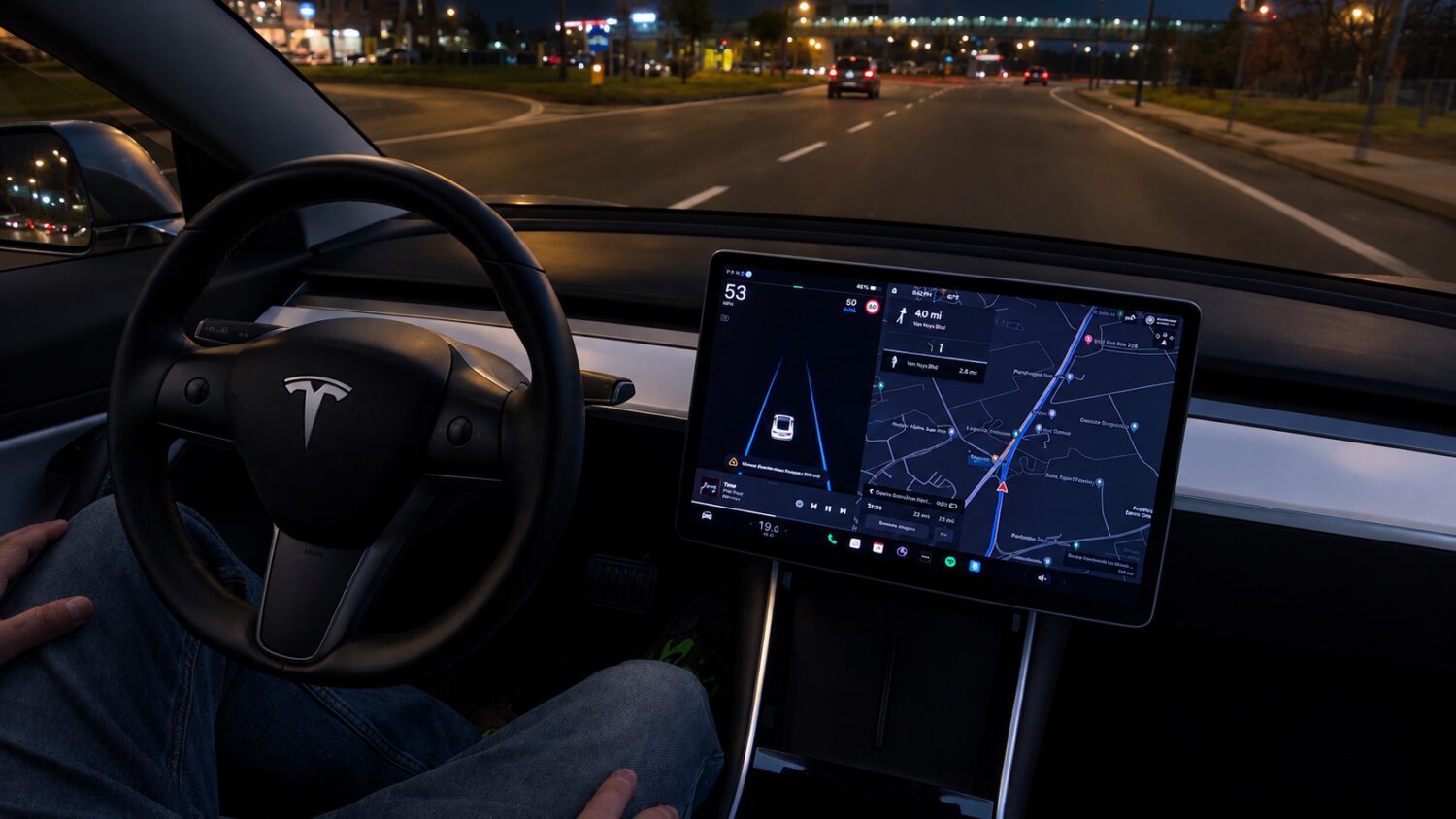
A 71-year-old Vallejo man was killed on westbound Interstate 80 near the I-780 interchange at approximately 2:30 a.m. Thursday. The driver of the Tesla that struck him told California Highway Patrol the vehicle was operating in Full Self-Driving mode at the time.
The crash follows a separate I-80 incident just days earlier in which a driver struck a stopped CHP patrol vehicle and told officers he had been asleep while using driver-assistance technology. Both collisions focus attention on a persistent gap between what Tesla’s “Full Self-Driving” branding implies and what the system actually requires from the person behind the wheel.
The Fatal Sequence on I-80
CHP’s preliminary dashcam review placed the Tesla at approximately 70 mph when the pedestrian stepped onto the freeway from the right shoulder and moved toward the center divider.
According to that preliminary review, the footage showed the vehicle applying its brakes and steering left in an attempt to avoid the man. Despite those evasive actions, the right front portion of the Tesla struck him.
The 26-year-old San Francisco driver stopped, remained at the scene, cooperated with officers, and provided dashcam footage to investigators.
Authorities believe at least one additional vehicle struck the pedestrian after the Tesla. That driver or drivers did not stop, according to reports.
The CHP Solano Area office is actively seeking witnesses and anyone with information about other vehicles involved in the collision.
“Full Self-Driving” Is a Product Name, Not a Promise
Tesla markets Full Self-Driving as a supervised driver-assistance feature that requires an attentive human operator ready to take control at any moment.
CHP has not confirmed through Tesla vehicle data whether FSD was active at the time of the crash. The driver’s statement to officers remains the basis for that description in the available reporting.
That distinction carries real weight. Tesla’s own documentation states that FSD does not make the vehicle autonomous and that the driver must supervise the system and be prepared to intervene. The human operator bears responsibility for monitoring the road and taking control when necessary. For drivers weighing the responsibilities of ownership, a comparison of Gas vs Diesel vs Electric vehicles may also be relevant context.
A Pattern CHP Has Already Flagged
The week before the Vallejo fatality, a Tesla struck a stopped CHP patrol vehicle on I-80 near the I-780 interchange, and the driver told officers he had been asleep while using driver-assistance technology.
Whether Full Self-Driving was active in that Fairfield collision was not confirmed, according to NBC Bay Area. CHP used the incident to publicly reiterate that the feature is not a fully autonomous system and does not remove a driver’s responsibility to operate the vehicle safely.
That warning came before Thursday’s fatal crash on the same interstate.
Investigation Ongoing, Key Questions Unresolved
No citation against the Tesla driver was reported at the scene, and investigators have not announced charges as the case remains open.
CHP is still seeking witnesses and information about the other vehicle that struck the pedestrian and left the scene. Whether investigators will obtain Tesla vehicle data to independently verify the system’s operating status at the time of the collision has not been confirmed in available reports.