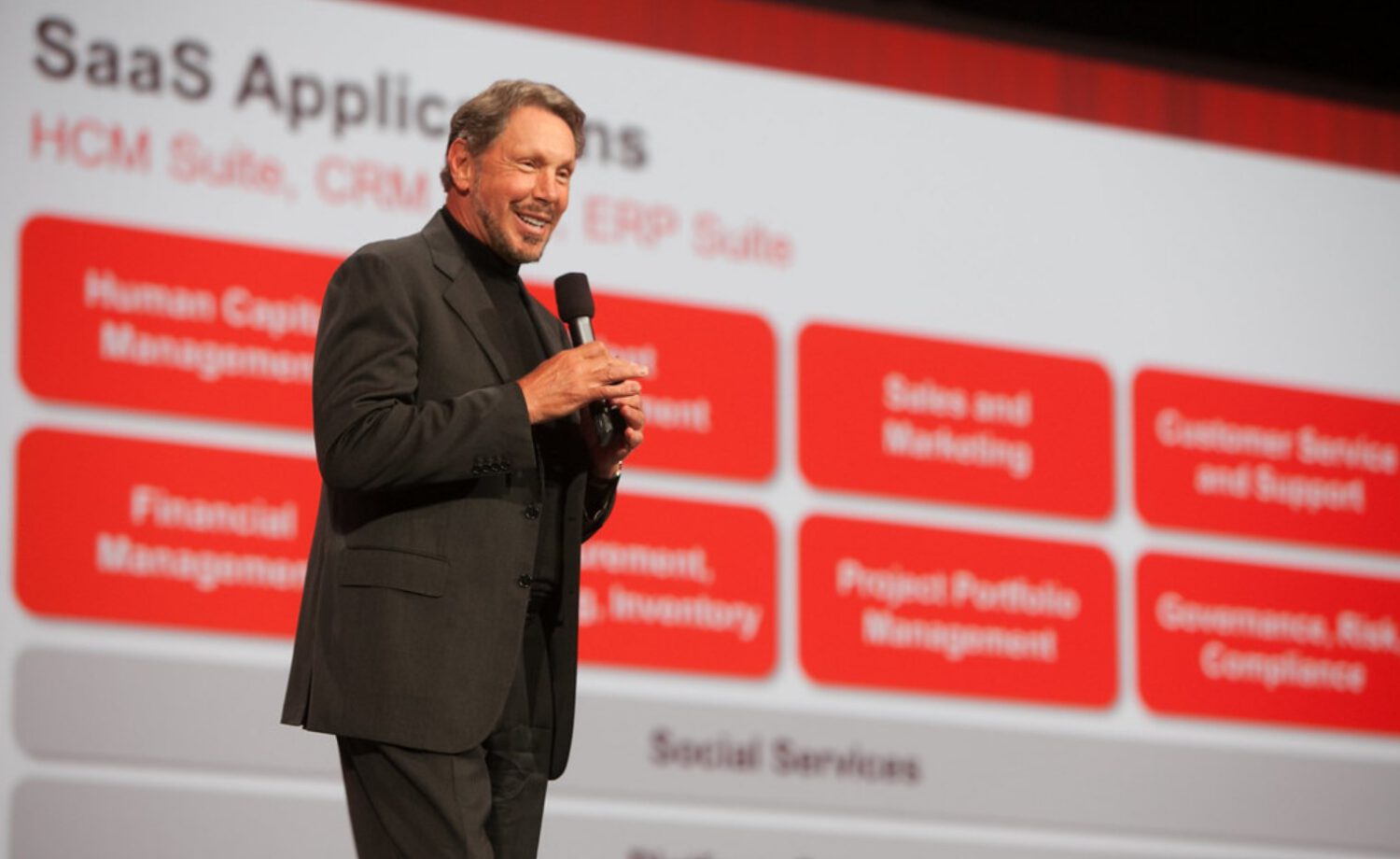
Rather than sell $7.5 billion in Oracle stock, Larry Ellison reportedly borrowed against it instead. The Wall Street Journal reported that Ellison expanded borrowing from five major banks by pledging shares in Oracle, Tesla, SpaceX and Paramount Skydance as collateral, with key collateral changes occurring in the weeks before his son David’s approximately $110 billion Warner Bros. Discovery merger closed on Oct. 6, 2026.
The timing matters for anyone holding Oracle stock or tracking how Silicon Valley wealth finances media consolidation.
Five Banks, Four Companies, No Disclosed Loan Total
The reported collateral changes, drawn from California lien filings, involved five lenders and at least four different securities in the weeks before the merger closed.
According to the Wall Street Journal’s reporting on California lien filings, the lenders involved include Citigroup, HSBC, JPMorgan, UBS and BNP Paribas. JPMorgan reportedly broadened a May 2025 loan agreement on Oct. 1, adding SpaceX and Paramount Skydance shares to collateral that already included Oracle and Tesla stock.
Citigroup reportedly made similar changes on Sept. 25, raising its Oracle collateral from 30 million shares to 45 million shares while cutting Tesla collateral from 3 million to 1.5 million shares. The exact amounts Ellison borrowed were not disclosed in the reported filings.
Borrowing against appreciated stock lets owners keep their shares and defer taxable gains. Pledged assets are exposed to lender remedies if the loans go unpaid.
Banks that disclosed figures reportedly held liens covering 87 million Oracle shares. That is, shares covered by those particular lenders’ reported filings, not necessarily the total amount of Oracle stock Ellison has pledged. That compares with roughly 30 million shares a year earlier.
What Oracle’s Own Filing Confirms
Oracle’s SEC proxy statement is the verified official record; the bank-level collateral details involving Tesla, SpaceX and Paramount Skydance come from Wall Street Journal reporting on lien filings.
Oracle’s proxy statement, filed with the SEC and current as of Sept. 21, 2026, confirms that Ellison pledged 413 million Oracle shares as collateral for personal indebtedness, up from 346 million shares a year earlier. Oracle states the pledges secure personal term loans used exclusively to fund outside personal business ventures, with none of the shares pledged as collateral for margin accounts.
Oracle’s Governance Committee said it believes the arrangements do not pose a material risk to Oracle or its stockholders. The committee also said it believes Ellison has the financial capacity to repay the loans without resorting to the sale or transfer of pledged shares.
The Stock Sale That Never Happened
Ellison scrapped a plan to sell up to 50 million Oracle shares in September, turning instead to collateralized borrowing as the Warner deal approached its close.
Ellison canceled a plan on Sept. 12 to sell up to 50 million Oracle shares, a stake valued at approximately $7.5 billion at the time. The plan was adopted in June 2026, was scheduled to expire Oct. 24, and resulted in zero shares sold.
The Wall Street Journal reported the proceeds were intended to help finance David Ellison‘s Warner Bros. Discovery acquisition. The merger closed Oct. 6, and David Ellison became chairman and CEO of the combined company, now trading on the NYSE under the ticker SKYD.
Applying a 50% lending rule of thumb to the 87 million Oracle shares covered by reported bank liens produces an estimated borrowing capacity of roughly $5.7 billion. That figure is an estimate based on standard private-banking practice, not a disclosed loan balance, and the available reporting does not establish that every pledged asset was used specifically for the Warner deal.
What Comes Next
The total debt load, precise allocation of borrowed funds and the valuation of SpaceX shares as private collateral all remain undisclosed.
Oracle’s governance reviews represent the next likely window for additional disclosure. For Oracle shareholders, the question worth tracking is direct: if pledged shares were ever forced to market, what would that mean for the stock?