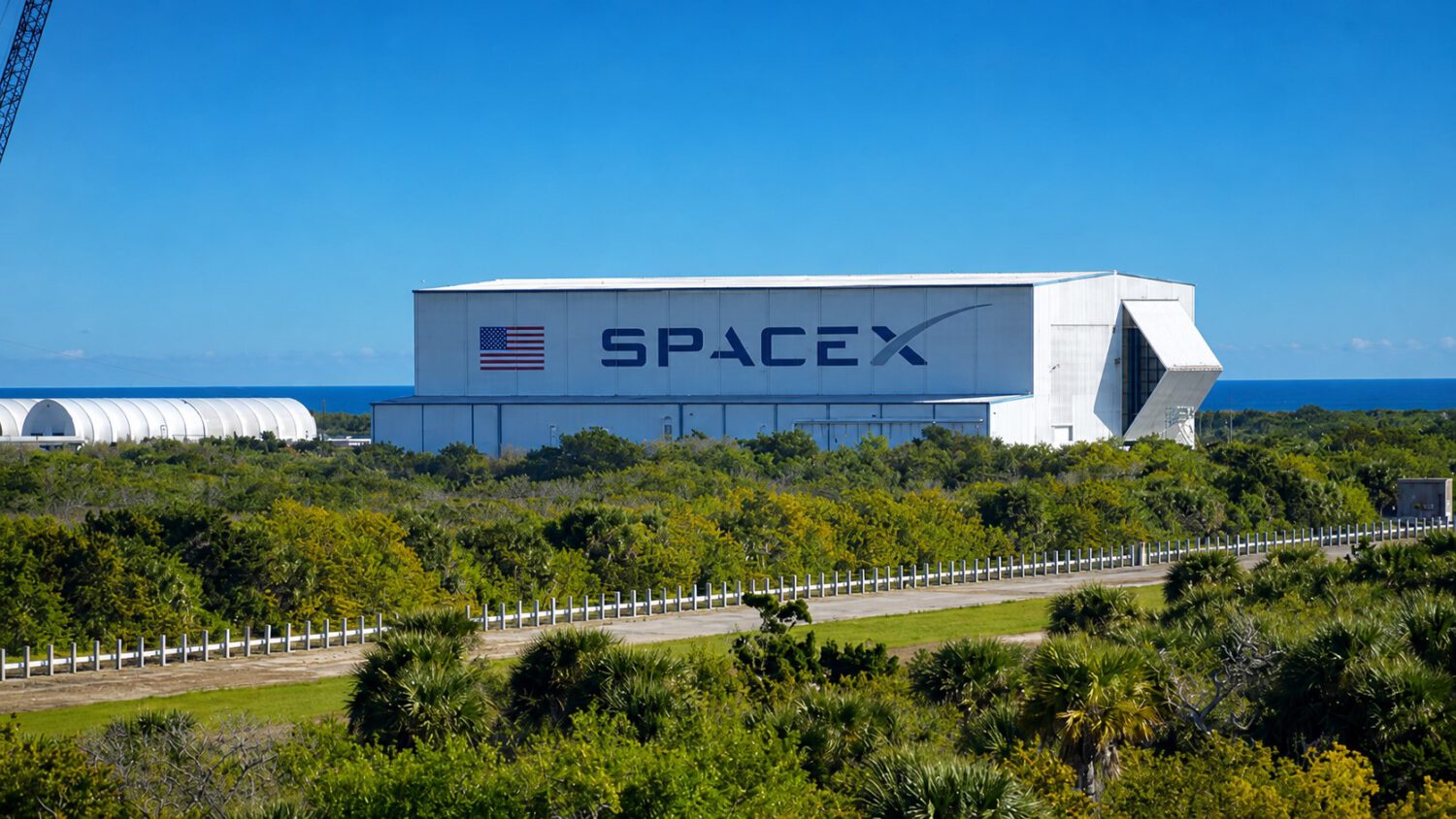
At the Paley International Council Summit, John Malone predicted that SpaceX could invest $8 billion to $10 billion in Skydance and enter a global content output deal with the studio. Neither company has confirmed any deal, negotiation, or agreement.
The prediction carries weight because the financial context makes it plausible. Skydance’s newly combined entity carries roughly $80 billion in net debt, according to Variety. Malone also cited the longstanding financial relationship between Elon Musk and Larry Ellison, David Ellison’s father, as part of his rationale for the forecast.
What Malone Actually Said
A billionaire’s public prediction is not a press release, and Malone’s own framing made that distinction clear.
Malone’s words, as reported by Variety, were precise: “I predict, big prediction, that you’ll see a global output deal for Skydance with SpaceX, and an investment by SpaceX into Skydance.” Malone used predictive language throughout and did not establish that negotiations were underway.
The financial logic he outlined is straightforward. A capital injection from SpaceX could help Skydance manage its substantial debt load, while an output deal could give SpaceX a content pipeline for a potential distribution arrangement. What that arrangement might look like, and what content it would carry, remains entirely unconfirmed.
The AI Franchise Question
A content output agreement would not automatically give xAI or Grok access to any major franchise.
Here is where the speculation moves well past the reporting. A content relationship between SpaceX and Skydance could theoretically open doors for xAI, Musk’s generative AI company, to work with studio material. That remains a hypothetical scenario, not a reported deal term. No cited source establishes any xAI participation, training-data access, or generative-video arrangement.
Authorized AI-generated content built around properties like Game of Thrones, Harry Potter, or Star Trek would require explicit rights clearances. A distribution deal does not provide them. Copyright owners, trademark holders, performers, composers, and guilds would each need to negotiate separately, depending on the property and the contracts already in place.
An output deal covers content delivery. It does not reassign intellectual property.
The Gap Between Possible and Licensed
Technical capability and legal authorization are two different conversations, and right now only one of them has started.
Models like Grok can produce stylistically plausible imitations of fictional worlds. You have likely seen this in the wave of AI fan films that circulate online, technically impressive but legally distinct from any officially sanctioned commercial product. An authorized studio production requires something no model can generate on its own: permission from every party with a contractual stake in the work.
That list, for a major franchise, can include literary and audiovisual copyright holders, trademark licensors, performer likeness rights, music publishers, and guild residual structures designed to ensure creators share in downstream revenue. The specific parties and approvals required vary by property, jurisdiction, and production plan.
For Malone’s prediction to translate into licensed AI-generated entertainment, SpaceX and Skydance would first need to announce and close a deal. Both parties would then need to negotiate separate rights agreements with every relevant stakeholder. Most major franchise contracts also require creative approvals, and securing those adds a substantial layer of additional time and negotiation.