Two proposed Cook County class-action lawsuits allege Coco Robotics and Serve Robotics collected biometric data without consent. Both companies deny it.
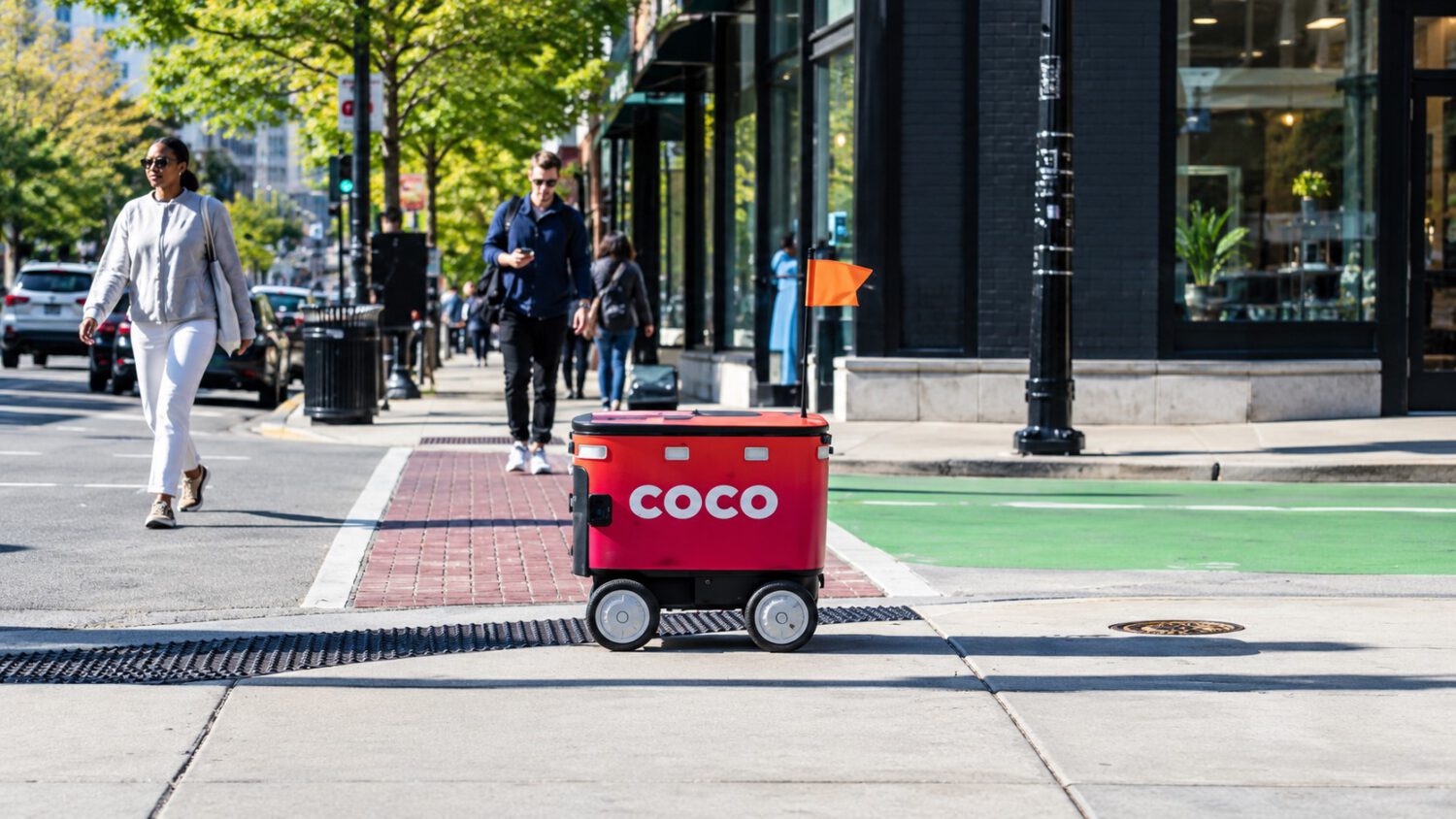
A Coco Robotics delivery robot navigates a Chicago sidewalk. Two proposed class-action lawsuits filed in October allege the robots collected biometric data without customer consent.
Most people retrieving a grocery order from a sidewalk robot are thinking about dinner, not data retention. According to two proposed class-action lawsuits filed October 9 in Cook County, that routine interaction may have produced a three-dimensional map of your face and hands, raising concerns reminiscent of those documented in a recent surveillance app case.
The complaints target Coco Robotics and Serve Robotics, alleging their Chicago delivery robots scanned customers without notice or consent in violation of the Illinois Biometric Information Privacy Act. Both companies deny the characterization, and no court has ruled on the claims.
What the Plaintiffs Allege
The complaints center on two customers who say they never agreed to be scanned.
Mitchell Breidinger alleges a Coco robot delivered his September 2025 DoorDash grocery order even though he did not select robot delivery. His lawsuit claims the robot’s cameras recorded his face, head, and hands as he entered a retrieval code. LiDAR, which uses laser pulses to construct a three-dimensional map of surrounding objects, also allegedly measured their geometry, according to the complaint.
The complaints allege that map included customers’ facial and hand features. Plaintiffs also allege that this alleged biometric data was stored alongside names and addresses, linking it to identifiable individuals.
Barry Schain alleges Serve robots handled three of his deliveries, including an Uber Eats order on October 4. His lawsuit claims the robots captured comparable facial and hand information without his consent, according to the Chicago Sun-Times.
The complaints further allege that video and sensor data were retained to train AI systems. The Coco suit reportedly names OpenAI and other third parties as recipients of that data, while the Serve suit points to licensed video and LiDAR datasets used for AI training, according to the Sun-Times.
What the Companies Say
Coco and Serve both frame their sensors as navigation tools, not identity systems.
Coco denies collecting biometric data in Chicago and states it has never used LiDAR in the city. The company told ABC7 Chicago that any shared information is anonymous navigational data used to identify sidewalk hazards, and that it does not share data from the start or end of delivery trips through its partnerships.
Serve told CBS News Chicago that its robots use cameras and sensors for sidewalk navigation, not to identify people or create biometric profiles. The company confirmed it is aware of the complaint and intends to defend against it.
The Legal Stakes
Illinois’ biometric privacy law carries enforcement teeth that most state privacy statutes lack.
The Illinois Biometric Information Privacy Act requires written notice of collection purpose and duration, written consent, and a publicly available policy governing data retention and destruction. Biometric identifiers and biometric information covered by the statute must be destroyed when the original purpose is satisfied or within three years of the person’s last interaction, whichever comes first.
Statutory damages range from $1,000 per negligent violation to $5,000 per intentional or reckless violation, a pattern echoed by reports of apps secretly tracking users without consent. Facebook agreed to a $650 million settlement in litigation alleging violations of Illinois’ biometric privacy law, which offers some measure of what exposure could look like at scale.
The central legal question remains unresolved: does routine navigation footage and sensor data qualify as biometric information under Illinois law when it captures measurable body geometry? That determination belongs to the courts.
Chicago’s Robot Pilot, Under Pressure
The lawsuits land on a city already fielding complaints about its sidewalk robot experiment.
Chicago launched its Personal Delivery Device pilot in 2022, with city agencies assessing safety, mobility, and sidewalk impacts through May 2027 unless the City Council extends the program. The city also maintains a 311 reporting category for robot-related complaints, and prior reported incidents included robots colliding with bus shelters and a widely circulated video of Coco robots apparently stuck on a sidewalk.
These lawsuits have not established legal precedent. A ruling either way will force clearer answers about when navigation data crosses into biometric territory. It will also clarify whether automatic robot assignment constitutes meaningful consent and how companies must handle sensor footage of people who never requested the service.