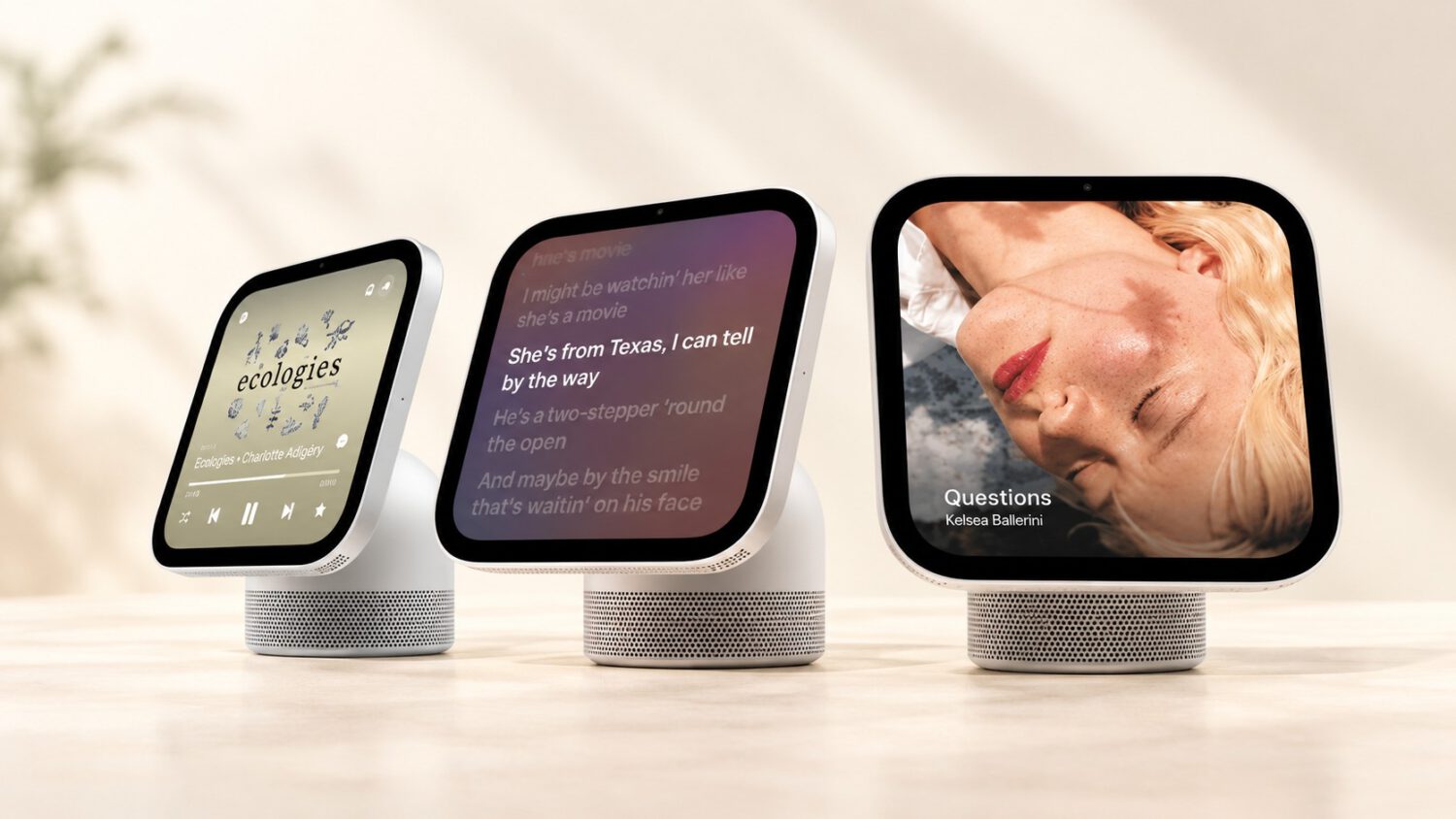
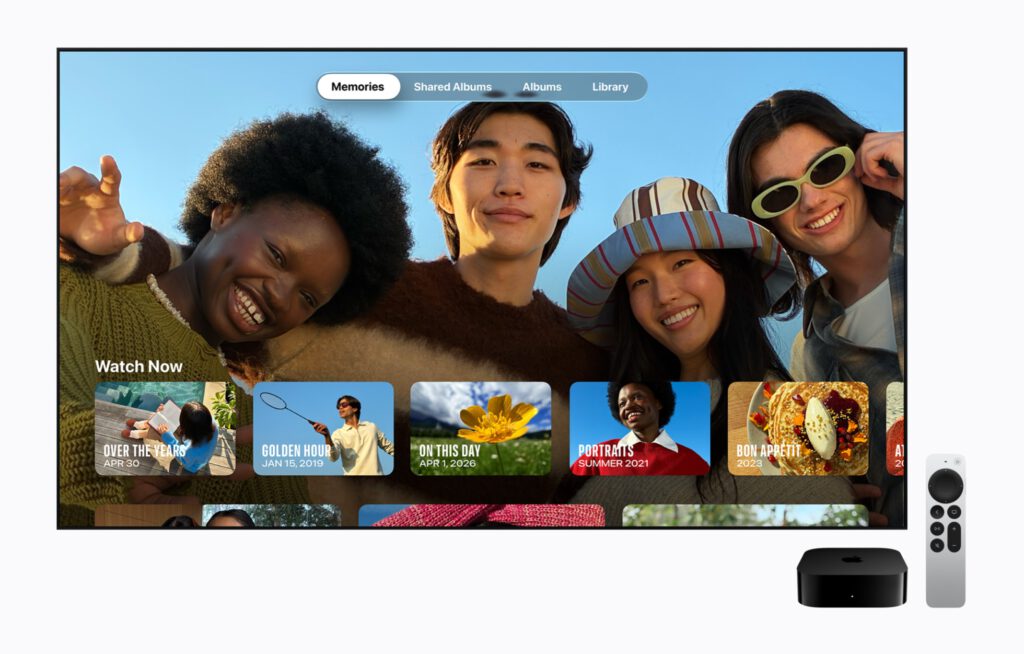
Three built-in microphones and an A19 chip headline Apple’s fourth-generation Apple TV 4K, arriving November 13, 2026 at $299, with preorders open as of October 13.
For anyone already running the 2022 third-generation model, the real question is whether a box that streams perfectly well today needs replacing.
What Actually Changed
The fourth-generation model brings several hardware-exclusive upgrades that older Apple TV units cannot replicate through software alone.
Apple claims the A19 chip delivers up to 50% faster CPU performance and twice the GPU speed compared to the A15 Bionic in the third-generation model. Those are company figures, not independent benchmarks, but the gains should translate to snappier navigation and more headroom for Apple Arcade titles.
A dedicated AV1 decoder is also new, allowing high-quality streaming at lower bandwidth demands, according to Apple.
Three far-field microphones built directly into the unit let you trigger Siri by voice without touching the remote. That is a hardware-dependent feature; the third-generation model has no comparable microphone array.
Siri AI’s broader intelligence features, including personal context, expanded world knowledge, and new app actions, are expected to reach second- and third-generation Apple TV 4K models through a software update, according to secondary reporting. That rollout reduces the software-related case for upgrading.
Find My support and Precision Finding arrive on the new Siri Remote, along with a built-in speaker that provides guided directions to the remote’s location. The remote is also sold separately and is reported to work with older Apple TV models, which matters if trackability is your primary interest.
Connectivity moves from Wi-Fi 6 and Bluetooth 5.0 to Wi-Fi 7 and Bluetooth 6, with Thread support retained. Gigabit Ethernet is now standard on every configuration rather than reserved for the higher-capacity model, and storage lands at 128GB across the board compared to the 64GB base on the previous generation.
The HomePod Surround System
Apple’s new four-speaker surround feature is the most differentiated capability in this generation, and also the most expensive to put into practice.
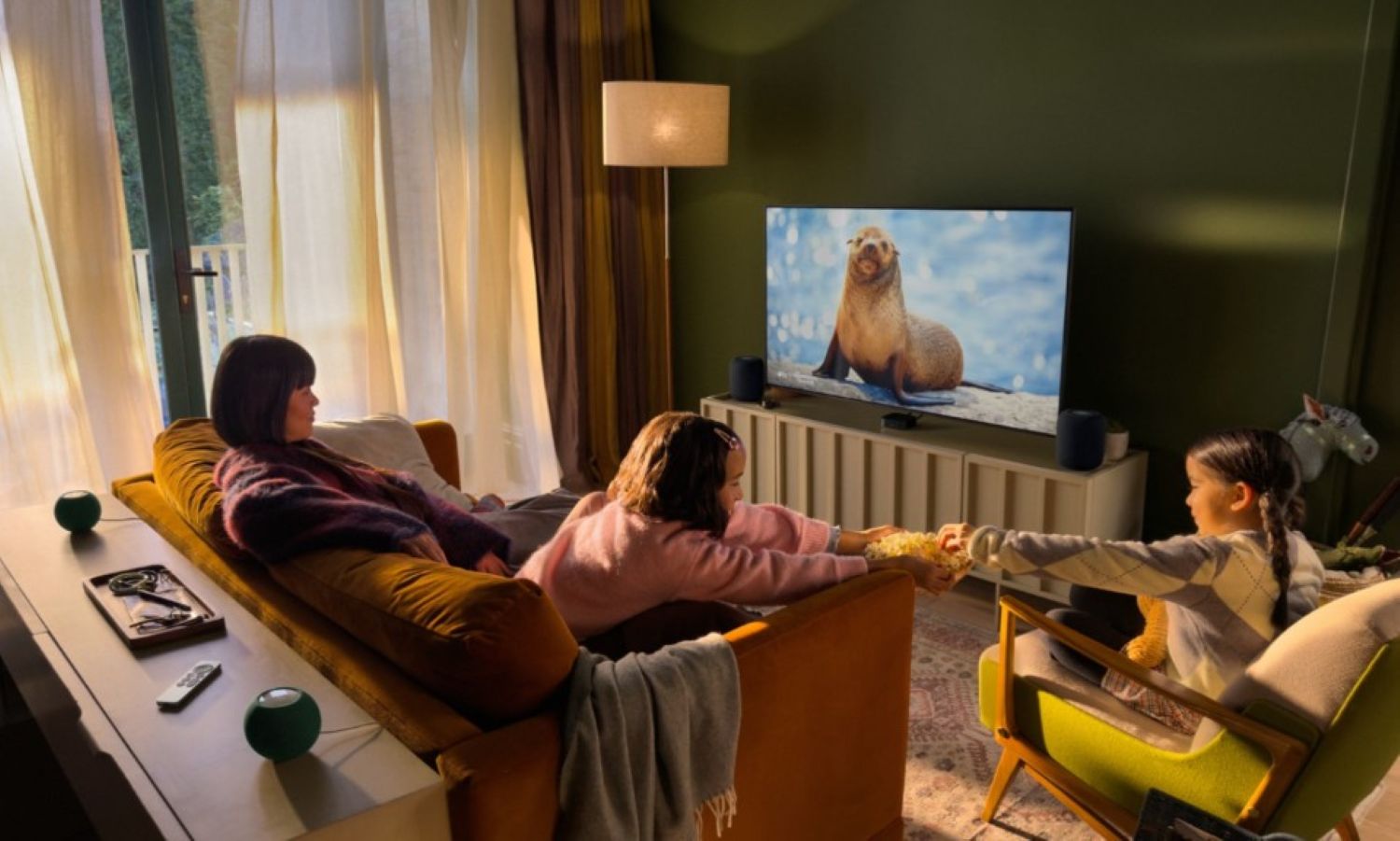
The fourth-generation model supports a four-speaker surround-sound system built around compatible HomePods. It requires four HomePod mini 2 or second-generation HomePod speakers in matched front and rear pairs, and Apple says the system calibrates automatically from there.
That capability is most relevant to households already invested in Apple’s speaker ecosystem. For everyone else, assembling four compatible HomePods represents a substantial additional cost before the Apple TV 4K itself even ships.
Who Should Buy and Who Should Wait
New Apple TV buyers and households with multiple HomePods have the clearest reason to spend $299. The A19 chip, hands-free microphones, Wi-Fi 7, standard Gigabit Ethernet, and the surround-sound system represent a cohesive platform upgrade rather than a routine spec refresh.
Third-generation owners who mainly stream video, find the current remote comfortable, and do not own several HomePods will find less urgency here. Siri AI arriving free via software update removes one of the more visible reasons to upgrade.
At $299, the new model costs more than the previous generation at launch, according to reporting from The Verge and CNET. That makes this a deliberate purchase rather than a reflexive one.
If you are building an Apple Home entertainment setup from scratch, the fourth-generation Apple TV 4K offers a strong foundation. If you are deciding whether to retire a working 2022 device, the hands-free microphones and trackable remote are the hardware-dependent features your current box is not designed to replicate.