Researchers drove a NIO ES8 electric SUV deep into a Norwegian underground mine specifically to sever its external connections. The car kept attempting to reach servers, most of them located in China. These findings echo broader concerns about hidden data collection, similar to how a surveillance app was built to covertly target users without their knowledge.
That finding sits at the center of Project Lion Cage, a multi-year study initiated in 2022 by Tor Indstøy, a risk management and threat intelligence executive at Telenor Group. Indstøy purchased the NIO ES8 as a dedicated research platform.
The project arrives as Chinese EV brands expand across European markets with assurances about local data processing. Observed network behavior appears to contradict those assurances.
90 Percent of the Traffic Went to China
The car’s connections told researchers where the data was going; encryption meant they could not see what.
Over roughly 2.5 years of monitoring, Indstøy’s team found that approximately 90 percent of the NIO ES8’s outbound connections went to servers in China. The remainder reached infrastructure in Germany, the United States, the Netherlands, and Switzerland.
NIO has told European customers that their data is processed in Europe. The observed traffic patterns put that claim under pressure.
The critical caveat: the traffic was encrypted. Researchers could document destinations and data volumes, but not the content of the packets themselves. No evidence of specific personal data exfiltration was found, and the tests do not prove that NIO is transmitting sensitive information to Chinese authorities.
Buses in a Mine, a Romanian SIM Card, and a Theoretical Off Switch
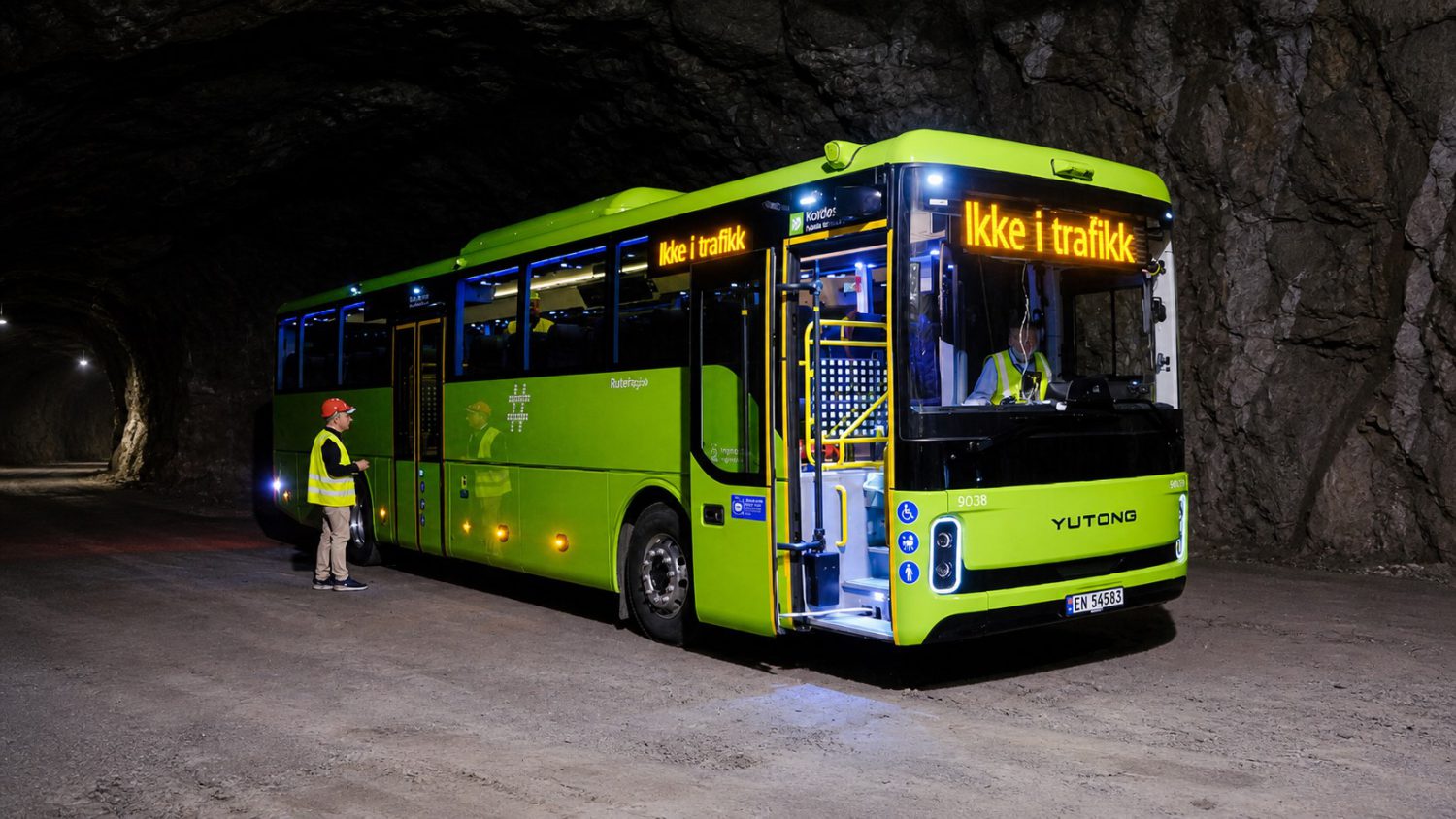
Ruter’s parallel test on Yutong buses found manufacturer access to battery and power systems that could, in theory, disable a fleet.
Norway’s public transport operator Ruter conducted a separate mine test comparing a Chinese-made Yutong electric bus against a Dutch-made VDL bus. The results split cleanly along lines of connectivity.
The VDL had no over-the-air software update capability and maintained no standing remote connection. That made it significantly less exposed to remote manipulation.
The Yutong carried a Romanian SIM card and was designed to receive remote software updates and diagnostics over mobile networks. Manufacturer access extended to battery and power management systems , a remote-access risk that recalls how Iran-linked hackers took a UK power plant offline, illustrating how such access vectors can be weaponized against critical infrastructure.
Ruter, citing findings reported by the Associated Press, stated that “in theory, this could be exploited to affect the bus.” Advisors from the University of South-Eastern Norway supported the testing process.
Ruter was equally clear about what the tests did not show. The Yutong’s cameras were not connected to the internet and could not be used for remote surveillance, and no evidence of misuse was detected.
After Ruter published its findings, Yutong and platform providers patched the identified vulnerabilities. Norway subsequently tightened cybersecurity requirements for public transport procurement.
Two Arguments, One Unresolved Question
Remote connectivity is standard across modern EVs, but China’s legal framework adds a dimension that corporate assurances cannot fully address.
The manufacturer-side argument is that always-on connectivity and over-the-air updates are not unique to Chinese vehicles. Tesla and other Western EV brands use the same architecture, and remote diagnostics improve safety and reduce fleet downtime.
The structural counterargument is harder to set aside. China’s National Intelligence Law obliges organizations operating under Chinese jurisdiction to cooperate with state intelligence work when required. That legal obligation does not disappear because a company’s intentions appear benign today.
Norway’s response mirrors the logic that drove the earlier Huawei debate in 5G networks, a debate that also shaped why Europe restricts major cloud providers from handling sensitive government data. The question is not whether misuse is happening now; it is who could be legally compelled to hand over data streams, or exercise remote access, if a government demanded it.