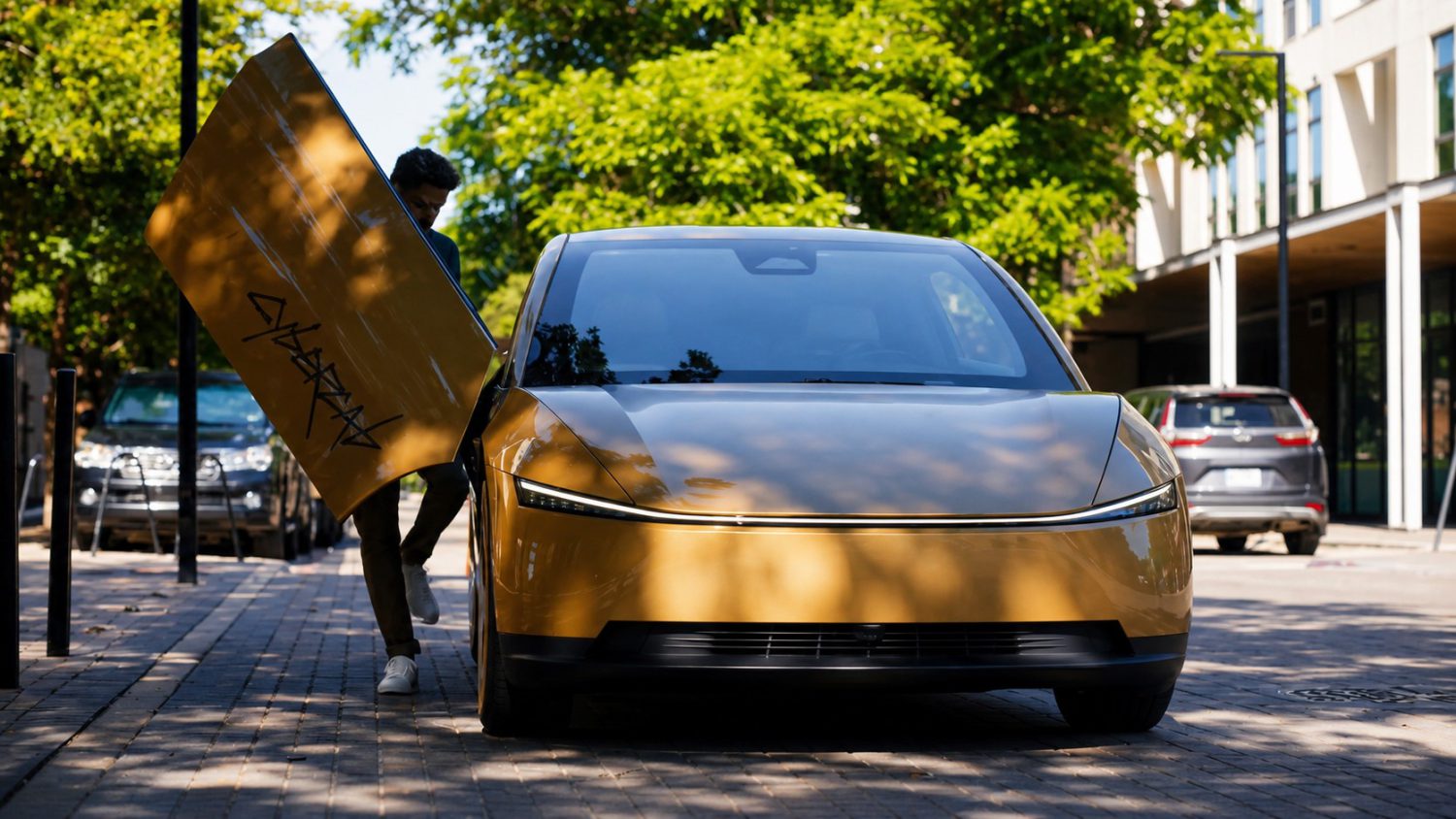
Most transportation tech treats accessibility like a legal checkbox — slap on a ramp, call it compliant, ship it. Tesla is doing something different with its Robotaxi service, or at least making a convincing case that it is. The new “Making Autonomy Accessible” video and refreshed tesla.com/robotaxi site aren’t vague gestures. They show specific hardware choices, backed up by bringing Cybercabs to the National Federation of the Blind’s Annual Convention in Austin — putting blind and visually impaired riders in the seat, hands on actual Braille controls, no driver anywhere in sight.
That’s a demo with real stakes.
What Tesla Is Actually Claiming
These are design decisions baked into a purpose-built vehicle, not retrofits bolted onto an existing model.
According to official posts from the @robotaxi account and Elon Musk on X, the Cybercab’s confirmed accessibility features include:
- Braille lettering on physical controls
- Wheelchair-height seating designed for easier transfers
- Space for service animals and select assistive devices
- App support for 29 languages, with more planned
- Hands-on NFB convention demonstrations held in Austin
Tesla’s framing: autonomy inclusive from day one. Here’s the grounding. What you can actually book right now is a Model Y robotaxi, not a Cybercab. The service operates 6 a.m. to 10 p.m. daily across multiple cities including Austin and Dallas. Cybercab mass production began April 2026 at Giga Texas, with a formal launch event confirmed by Reuters and Motor1 for September 3, 2026. Business Insider reported multiple units already rolling off the production line — so this isn’t vaporware, but it isn’t at scale either.
The Cybercab is purpose-built in ways that matter: no steering wheel, no pedals, two seats, Tesla’s AI4 compute powering full autonomy, and inductive charging. Musk projects fares cheaper than a bus ride — a stated ambition, not a published price. Waymo is already running robotaxis across several U.S. cities, making this effectively a two-horse race in autonomous mobility.
Good Intentions Need a Wider Map
The hardware features are credible design choices, but critical details about reliability and compliance remain unpublished.
The NFB partnership is specific and verifiable. The hardware features are real design decisions. But formal reliability statistics aren’t published, and explicit ADA compliance documentation hasn’t surfaced in any official materials.
For a tech enthusiast, “coming soon” reads as exciting. For someone who is blind or uses a wheelchair and depends on transportation daily, that phrase lands completely differently — like a rideshare app that shows a car two minutes away and then cancels.
If Tesla delivers a driverless cab that a blind rider can summon, board, and trust independently, that’s a genuine shift in what mobility means. Whether this video marks the beginning of that reality — or just its most polished preview — the riders who need it most will be the ones keeping score.