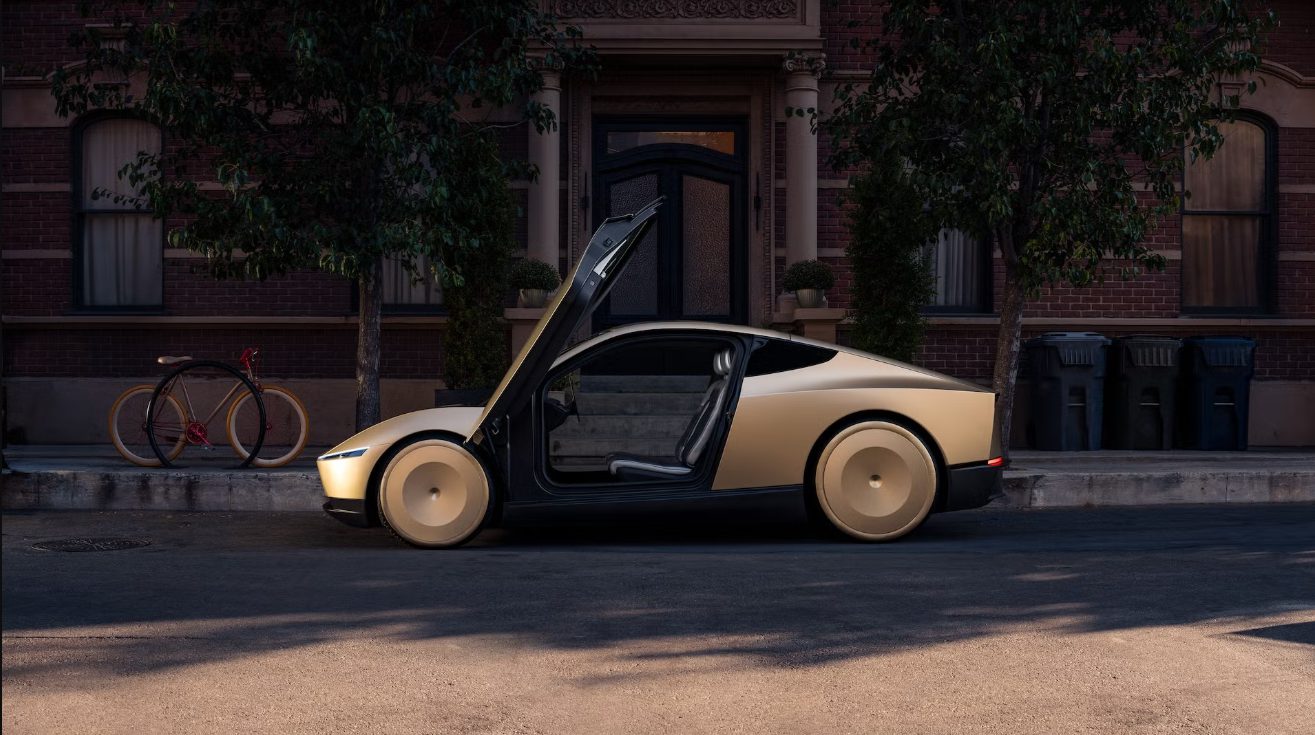
Tesla’s Cybercab has been certified at 165 Wh per mile, officially making it the most energy-efficient production EV ever built. According to Tesla VP of Vehicle Engineering Lars Moravy, this isn’t just incremental improvement—it’s a fundamental rethinking of what an electric vehicle can be. The typical family sedan suddenly looks like a gas-guzzling SUV by comparison.
The Numbers Game Changes Everything
The Cybercab consumes 28-40% less energy than current efficiency champions like the Lucid Air Pure. Its sub-50 kWh battery pack delivers nearly 300 miles of range—performance that would have required a 75-80 kWh pack just a few years ago. Energy costs drop to roughly $0.026 per mile compared to $0.038 for a Model 3, which might sound trivial until multiplied across thousands of fleet vehicles.
Efficiency Through Radical Subtraction
The Cybercab’s teardrop shape, two-seat cabin, and complete absence of driver controls—no steering wheel, no pedals, no dashboard—represent aggressive weight and drag reduction. Think of it less like a shrunk-down sedan and more like a purpose-built efficiency capsule. Comparing this to a Model Y makes as much sense as comparing a Formula 1 car to a minivan. Different tools, different missions.
Fleet Economics Could Reshape Ride-Hailing
Consider a ride that costs half as much as current Uber rates—that’s the economic disruption Tesla is targeting. The smaller battery pack uses fewer critical materials, charges faster, and enables more duty cycles per day. At the planned $30,000 price point, fleet operators could potentially undercut human drivers even before factoring in labor costs.
The Autonomy Asterisk Remains Massive
While the 165 Wh/mi figure is real and impressive, the Cybercab’s driverless operation remains entirely theoretical. Current Tesla systems face ongoing safety scrutiny from regulators and insurers. The scenario presents brilliant engineering married to unproven software—like building the perfect airplane before learning to fly. The efficiency breakthrough is undeniable; whether anyone will actually ride in these autonomous pods at scale is the billion-dollar question.