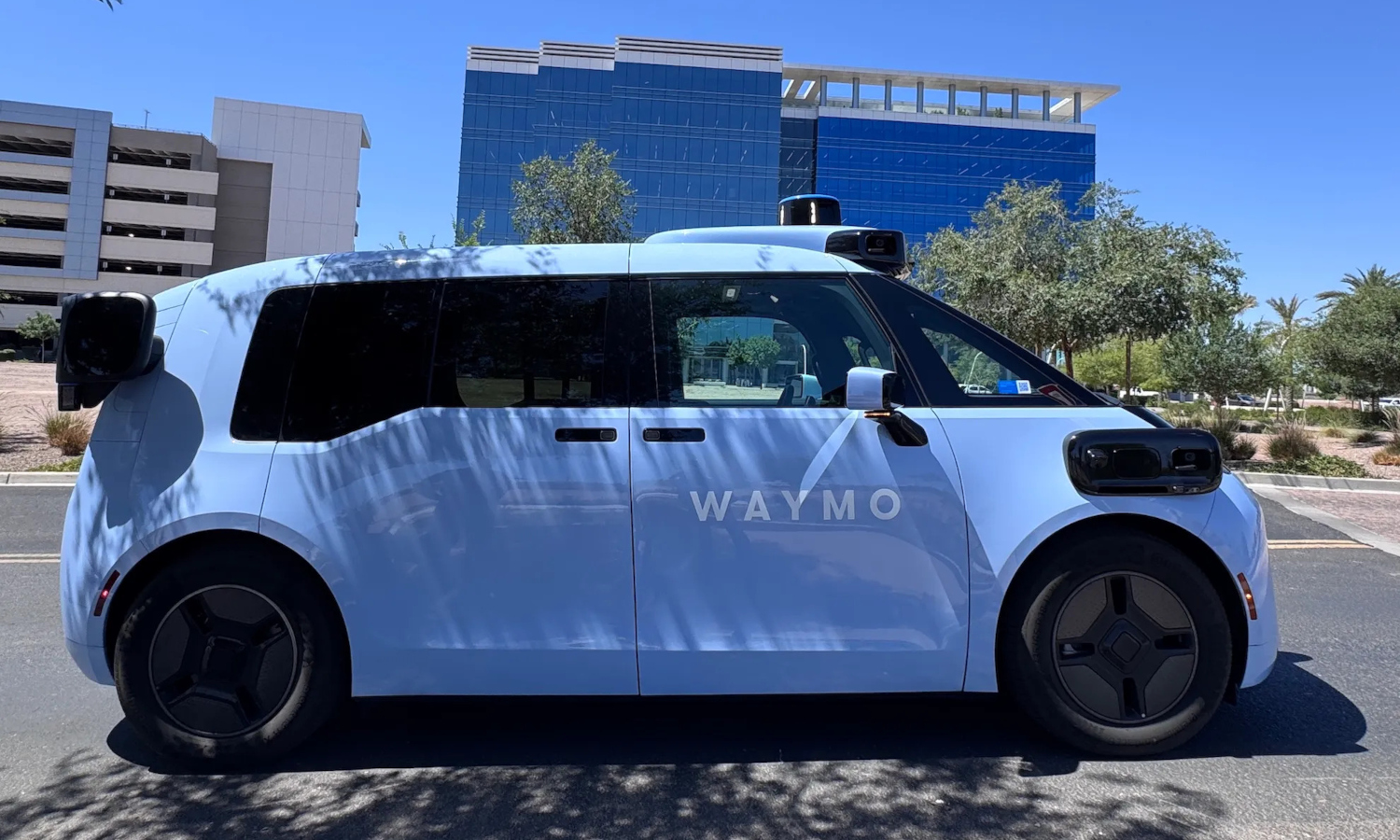
Open the Waymo app in Denver or San Diego right now, and a minivan shows up. No driver. Just a vehicle that knows exactly where it’s going. On September 1, 2026, Waymo launched paid, fully driverless service in Denver, San Diego, and Tampa — bringing its U.S. footprint to 14 cities and its fleet to somewhere between 3,500 and 4,000 vehicles. Denver and San Diego get only the new Ojai minivan. Tampa gets a mix of Ojai and the older Jaguar I-Pace. That distinction isn’t cosmetic. It’s the whole strategy.
Meet the Ojai: Waymo’s Bet on Cheaper Rides
The Zeekr-built Ojai minivan isn’t just a new vehicle — it’s Waymo’s clearest signal yet that purpose-built economics are replacing borrowed hardware.
The three new markets add roughly 150 square miles of new coverage in a single day:
- Denver covers 59 square miles of service area
- San Diego covers 47 square miles
- Tampa covers 44 square miles
Analysts at MoffettNathanson project the fleet could reach approximately 5,000 vehicles by year-end. The Ojai runs Waymo’s sixth-generation Driver hardware and software stack, and only around 100 units were in service as of mid-2026. Waymo’s head of design Ryan Powell told CNBC the vehicle is “cheaper to manufacture” — and that Waymo aims to have thousands on the road before January.
The luxury EV retrofitted for robotaxi duty — the automotive equivalent of using a Sonos speaker as a permanent PA system. The Ojai is designed from the ground up for high utilization, easier maintenance, and lower per-mile cost. Denver and San Diego going Ojai-only is a clear signal that this is the template for every market Waymo enters from here.
“Waymo aims to have thousands of Ojai cars on the road by the end of the year.” — Ryan Powell, Waymo Head of Design, via CNBC
Waymo’s expansion over the past 18 months has moved fast. Phoenix and San Francisco were the foundation. Then Los Angeles, then Austin via an Uber partnership in March 2025, then a wave across Atlanta, Dallas, Houston, Miami, Nashville, Orlando, and San Antonio. London and Munich are planned, though no timelines have been confirmed. California’s two-permit process — one for driverless deployment, one for fare-charging — is notoriously layered, but it has forced Waymo to build a repeatable regulatory playbook that newer entrants are still scrambling to replicate.
Tesla Is Watching. So Is Vegas.
Nevada’s freshly approved fleet caps have turned the Las Vegas Strip into the highest-stakes robotaxi proving ground in the country.
In August 2026, Nevada’s Transportation Authority approved fleet caps for Clark County:
| Operator | Authorized Vehicles |
|---|---|
| Tesla | up to 5,000 |
| Waymo | 1,000 |
| Aviari (Uber’s autonomous subsidiary) | 1,000 |
Tesla is also promoting its upcoming Cybercab — a purpose-built two-seat driverless Tesla robotaxi with no steering wheel or pedals — as its answer to Waymo’s Ojai. The Las Vegas Strip, a city that has always run on spectacle and probability, is quietly becoming one of the most-watched robotaxi proving grounds in the world.
Regulatory observers note that Nevada’s fleet caps are upper limits — not guaranteed deployments — making real-world availability likely slower than the permit headlines suggest, according to Engadget.
The race between Waymo and Tesla isn’t really about who has more vehicles authorized on paper. It’s about who builds the unit economics first to make driverless rides genuinely cheaper than car ownership. For riders in Denver, San Diego, and Tampa, the science-fiction part is already over. The profitable part is just getting started.