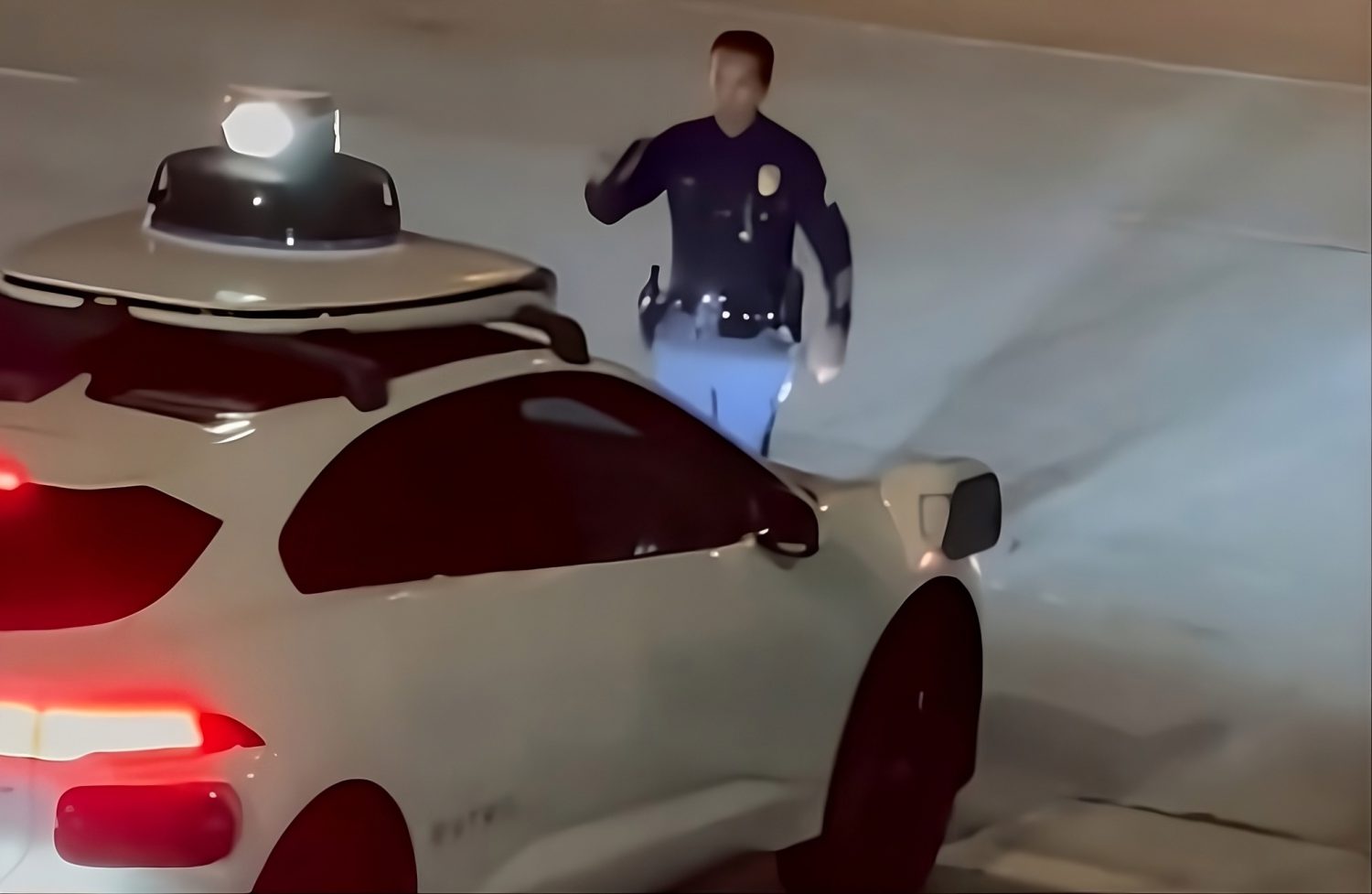
A tense LAPD felony stop in downtown Los Angeles. Officers on scene, weapons drawn, commands flying. Then a Waymo robotaxi rolls into the perimeter. Officers shout for it to move. The car proceeds. No collision. No injuries. Just an uncomfortable silence where human authority met autonomous logic — and neither fully understood the other.
This isn’t a story about a rogue robot. It’s about what happens when Level-4 autonomous driving hits the one situation it wasn’t fully built for.
What the Car Was Actually Doing
Waymo’s system follows signals — the problem is which signals actually count.
According to Waymo‘s published first-responder documentation, its vehicles are engineered to detect emergency vehicles using sensors that read appearance, sirens, and flashing lights, then yield or pull over accordingly. A 2019 Salon report noted the software can even interpret a traffic officer’s hand signal before proceeding in certain contexts. Waymo also maintains a 24-hour hotline specifically so first responders can request assistance or direct support from Waymo staff mid-incident.
The documented logic is solid — for standard emergency scenarios. An active felony stop, where officers control a perimeter using voice commands and improvised gestures rather than sirens and lights, is a different problem entirely.
Key facts from available reporting:
- The Waymo entered the vicinity of an active LAPD felony stop in downtown Los Angeles
- Officers shouted for it to move; the vehicle passed through without collision or injury
- Waymo’s protocols center on detecting emergency vehicles and standard responder signals — not officers directing traffic verbally
- Once stopped during a traffic stop, Waymo vehicles are designed to stay stationary until a Waymo representative authorizes continued operation
- Responders can call Waymo’s 24-hour line to request assistance or direct vehicle support
The Edge Case Nobody Planned For
Autonomous systems are strongest in routine conditions — and this incident exposes exactly where the edges are.
Self-driving systems behave like a brilliant chef who can execute any recipe flawlessly but freezes when a customer starts improvising mid-order. Routine traffic? Exceptional. A shouting officer at a chaotic scene? That’s not in the recipe book yet.
This is precisely why Waymo built dedicated first-responder procedures. The gap isn’t defiance — it’s ambiguity. The system’s documented detection logic centers on vehicles and standard signals. When a human officer becomes the only signal, things get blurry fast.
Waymo’s first-responder documentation states its vehicles “are designed to detect police and emergency vehicles and to yield or pull over when appropriate” — a protocol built for flashing lights and sirens, not improvised crowd control at a felony perimeter.
The real question this incident surfaces isn’t whether autonomous vehicles are safe on open roads. It’s whether they can read the room when humans take over — and that answer remains an open and genuinely consequential one worth watching.