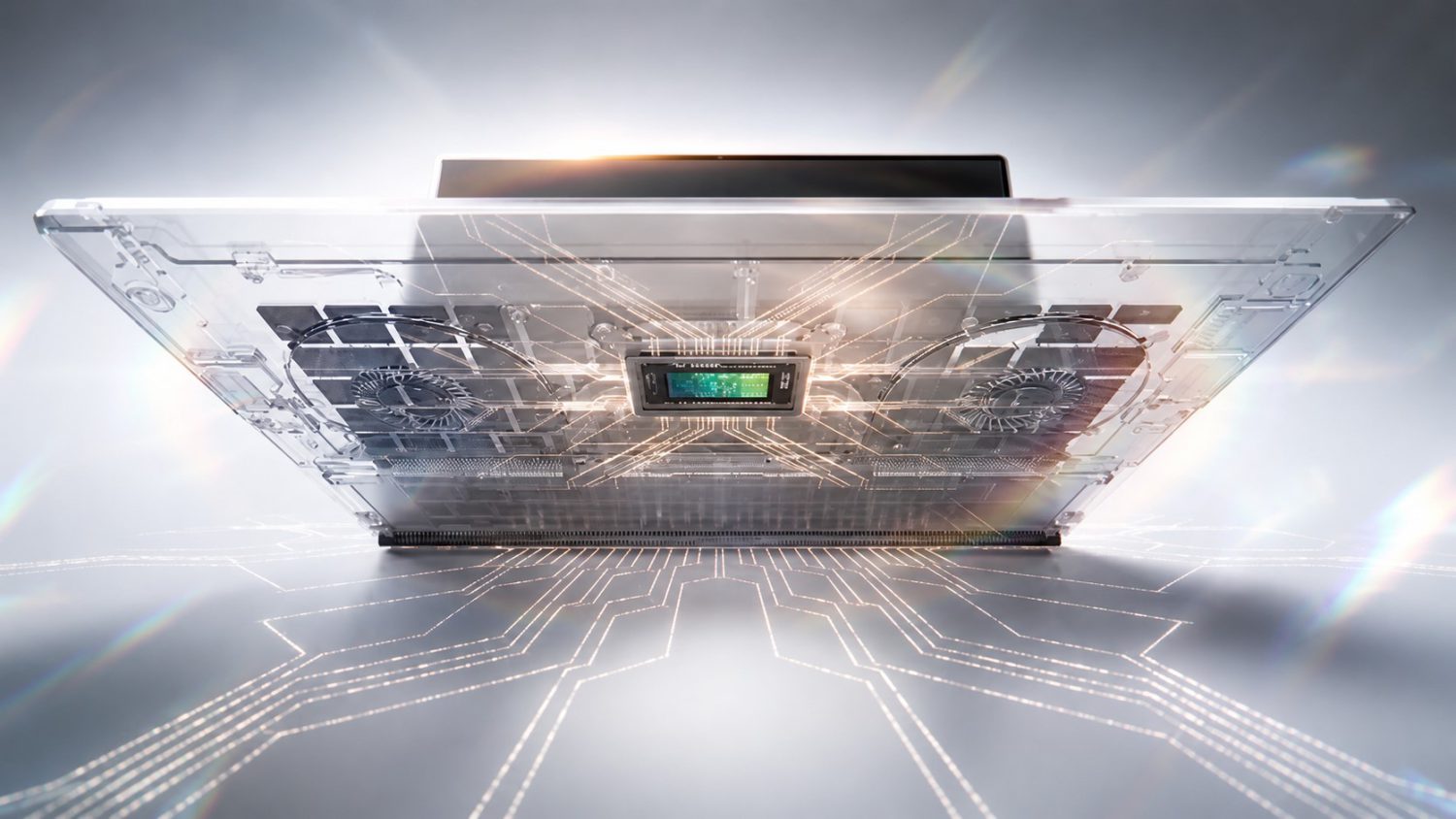
The Nvidia RTX Spark superchip — a Grace Arm CPU and Blackwell RTX GPU fused into a single 3nm package — powers the first wave of AI-native Windows laptops arriving fall 2026, including the Dell XPS 16 and Microsoft Surface Laptop Ultra.
Nvidia just did what Apple did with the M1 — collapsed a discrete custom silicon CPU and GPU into a single package — except this time it runs Windows and speaks fluent CUDA. RTX Spark pairs a 20-core Grace Arm CPU (co-designed with MediaTek) with a Blackwell RTX GPU carrying 6,144 CUDA cores and up to 128GB of unified memory, connected via NVLink-C2C at roughly 600 GB/s on a 3nm process. The headline number: 1 petaflop of FP4 AI compute. That’s not a spec. That’s a mission statement.
The Laptops Carrying RTX Spark This Fall
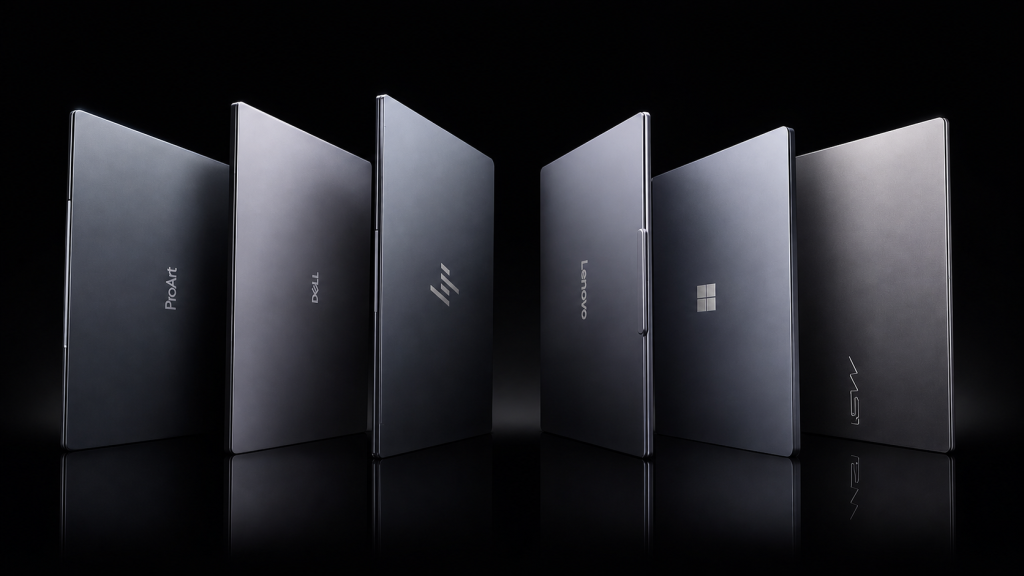
Six machines confirmed at Computex 2026 represent the first wave — with more OEMs to follow.
The initial RTX Spark lineup spans most of the premium Windows laptop market, with Acer and Gigabyte joining later:
- ASUS ProArt P14, P15, and P16 — creator-focused across three screen sizes
- Dell XPS 16 — premium thin-and-light
- HP OmniBook X 14 and OmniBook Ultra 16 — productivity and creator range
- Lenovo Yoga Pro 9n — high-end creator machine
- Microsoft Surface Laptop Ultra — flagship, tuned explicitly for AI agents
- MSI Prestige N16 Flip AI+ — convertible aimed at creators and developers
Every model shares the same RTX Spark SoC. Differences come down to chassis, cooling, display (OLED or high-refresh LCD), and memory configuration. One practical warning: Intel and AMD variants of some models exist in the same product lines. Always confirm “RTX Spark” on the actual spec sheet before handing over your money.
“Nvidia claims RTX Spark can run 120-billion-parameter LLMs with up to 1-million-token context windows entirely on-device.” — according to PCWorld
What 128GB of Unified Memory Actually Unlocks
The real story isn’t the GPU core count — it’s the memory pool that makes local AI genuinely viable.
Where cloud compute once dominated serious AI workloads, that wall is finally moving. The 128GB unified memory pool lets massive models run locally without hitting VRAM ceilings that have historically forced everything interesting onto a server. Nvidia’s full stack — CUDA, TensorRT, DLSS, OptiX — arrives day one, meaning Stable Diffusion, professional 3D tools, and GPU-accelerated video editors are broadly compatible. Developers get on-device inference with no cloud costs and no data leaving the machine — a major advantage for AI compute workflows. Gamers get Blackwell-class ray tracing and DLSS targeting 1440p AAA performance above 100 fps. In a thin-and-light.
The Caveat That Will Define Your Experience
Same chip, different machines — and the difference comes down entirely to cooling.
Same chip. Wildly different results. RTX Spark scales from single-digit watts up to roughly 80W — and buying a thin Spark laptop versus a proper creator chassis is like streaming a track versus playing it through real speakers. The file is identical. What you actually hear depends entirely on the hardware around it. Sustained AI inference or long renders will expose thermal limits fast in ultra-slim designs. The Surface Laptop Ultra and ASUS ProArt P16 are not equivalent machines despite sharing silicon. Wait for independent thermal benchmarks before committing.
Who Should Actually Buy One
RTX Spark laptops reward power users — but carry real caveats for everyone else.
If you’re running local LLMs, building with CUDA, or editing 4K footage with RTX-accelerated tools, RTX Spark laptops were built precisely for your workflow. Pricing across the lineup is unconfirmed at time of publication, though early reports place configurations in the $1,800–$3,000+ range depending on model and memory tier — treat any specific figures as speculative until OEMs publish official sheets. If your work depends on niche legacy Windows software, pause. Windows on Arm compatibility gaps still exist, and emulation behavior varies enough that real-world reviews should inform your decision.
Nvidia just became a PC company. Your next laptop purchase will feel that.