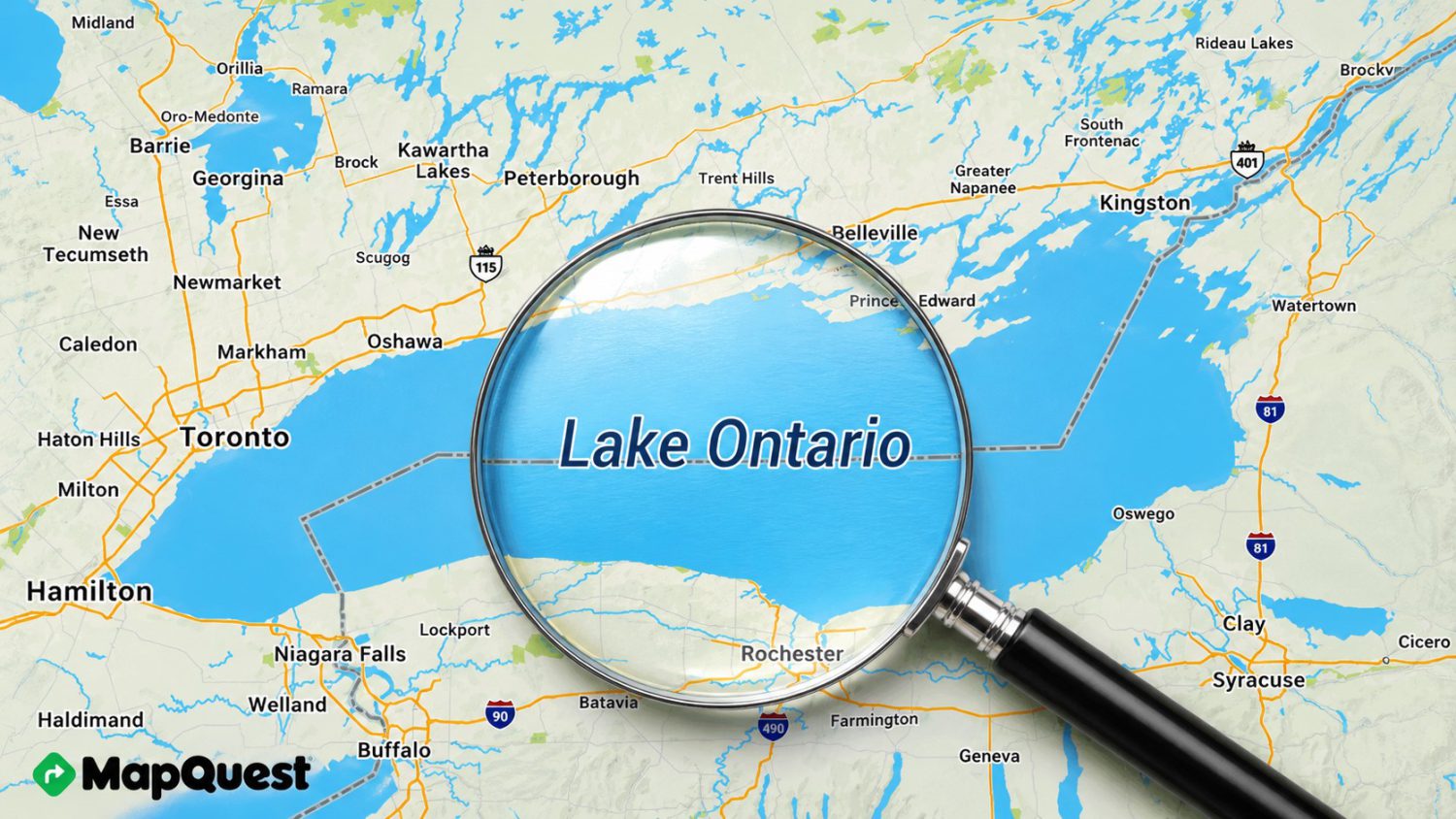
On August 27, 2026, President Trump signed an executive order directing federal agencies to rename Lake Ontario “Lake America” — the latest symbolic escalation in a trade war with Canada that already includes 50% tariffs on roughly $20 billion in Canadian goods. Google updated its maps accordingly for U.S. users. MapQuest posted its refusal on X. Users responded by downloading the app in droves.
What the Numbers Actually Look Like
The download surge that followed MapQuest’s stand was anything but subtle.
MapQuest reported usage running 50× above normal over the August 27–31 weekend, with Sensor Tower estimating 184,000 global downloads and 162,000 U.S. downloads for the week of August 24 — each more than 10× week-over-week. U.S. daily downloads jumped 128% day-over-day from August 26 to August 30, lifting the iOS app to:
- No. 1 in U.S. Navigation
- No. 4 in the U.S. App Store overall (excluding games)
- No. 2 overall in Canada’s App Store
Three navigation apps. One executive order. Three completely different answers:
- Google says it aligns with the Geographic Names Information System — the federal database that assigns official U.S. place names — showing “Lake America” domestically, “Lake Ontario” in Canada, and both names elsewhere.
- Apple Maps, which previously updated the Gulf of Mexico to “Gulf of America” after Trump’s earlier order, had not yet renamed Lake Ontario and issued no statement.
- MapQuest went the other direction entirely.
“We took the same approach we did with the Gulf of Mexico: be part of the conversation, and give people an app that keeps the names they’re familiar with,” MapQuest GM Doug Berger said, according to Yahoo Tech.
Here’s the legal reality: Trump cannot actually compel MapQuest to do anything. The U.S. Board on Geographic Names governs federal usage — private companies operate outside its reach. Former federal prosecutor Alyse Adamson told CNN the order has “zero impact” on anyone outside U.S. jurisdiction. Lake Ontario is a binational lake jointly managed with Canada. The president renamed it on federal maps the way someone renames a shared Google Doc folder without telling the other collaborators.
The Bigger Question Nobody’s Asking Yet
A download spike is one thing — turning it into a lasting comeback is another.
MapQuest also launched an interactive tool letting you rename Lake Ontario whatever you want and share the result — the same playbook it ran when Trump renamed the Gulf of Mexico. A legacy mapping service becoming a protest symbol in 2026 has a certain absurdist charm, but the underlying business question is harder to dismiss. Download spikes are not comebacks.
“Hundreds of thousands of people signaled to us this weekend that we got it right by downloading our app,” Berger said, according to Yahoo Tech.
Context matters. Sensor Tower estimates MapQuest has logged 687,000 global downloads in 2026 so far — up 29% year-over-year — with 24.4 million total since 2012, 97% from U.S. users. This brand never fully disappeared. Whether its navigation experience can hold these new users once the controversy fades is a different story entirely.
Digital maps are no longer neutral tools. When naming a lake becomes a political act, every app showing you the world is making a choice — and users are paying close attention to which choice that is.