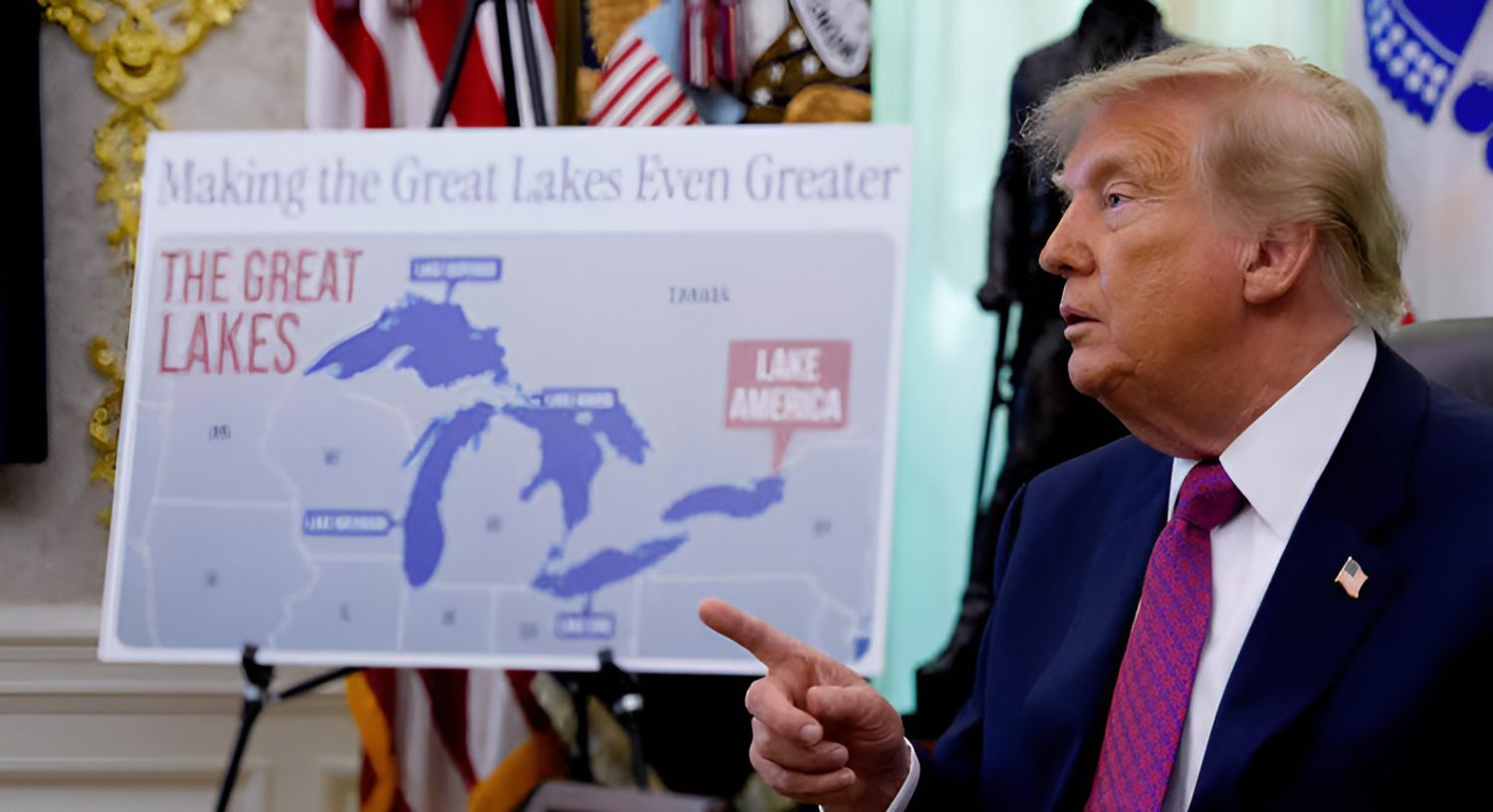
A platform most people assumed died with the flip phone just had its best week in fifteen years. No product update. No relaunch. Just four words posted to X in response to a presidential executive order.
That’s MapQuest — the self-described OG of online mapping — posting a screenshot of Lake Ontario, labeled exactly as it’s always been, after President Trump signed an executive order on August 27, 2026 directing federal systems to rename it “Lake America.” The post pulled 70,000 likes. For context, MapQuest’s July posts averaged fewer than two likes each.
That number deserves a second read. Fewer than two likes. Per post. In July.
Lake America, Meet the Map That Won’t Budge
Trump ordered the rename, federal maps moved fast, and private apps discovered they didn’t have to follow.
The executive order directed the Secretary of the Interior and the Board on Geographic Names to update the Geographic Names Information System within 30 days, scrubbing “Lake Ontario” from federal maps, contracts, and communications. The White House framed the change as honoring American history amid ongoing trade tensions with Canada. The US Geological Survey updated GNIS within hours of the signing.
Here’s what the order can’t do: compel Google Maps or Apple Maps to follow. Commercial mapping platforms operate under their own editorial and data governance policies — particularly for transboundary features shared with another country. As of publication, Google and Apple have issued no public position on whether they’ll adopt “Lake America.” MapQuest didn’t wait for a memo.
- Trump’s order, signed August 27, 2026, frames the renaming as honoring American history
- USGS updated GNIS within hours of the signing
- MapQuest posted Lake Ontario — still labeled Lake Ontario — with caption: “We’re not changing it”
- The post hit 70,000+ likes against a July baseline of fewer than two likes per post
- Google and Apple have made no public statement on adopting “Lake America”
Who Actually Controls What Your Map Says?
Canada already answered that question, and the fragmentation is just getting started.
MapQuest followed up with a lake-naming generator — a web tool letting users slap any name they wanted onto a mock MapQuest map of the lake. Popular entries included “Lake of Hormuz” and “Lake Gulf of Mexico.” It’s the Wendy’s Twitter playbook applied to cartography: use a political moment not to take sides, but to become the most entertaining thing in the room.
Eric Trump’s reply delivered exactly the energy MapQuest needed. “Shocking to see you’re still alive. I thought the iPhone 3 took you out 15 years ago,” he posted — handing the legacy brand a perfect straight-man foil without realizing it.
“We’re not changing the name of Lake Ontario. Name it whatever you want at your leisure.” — MapQuest’s official X account
Canada wasn’t amused so much as unmoved. Ontario Premier Doug Ford and federal Industry Minister Mélanie Joly both stated the lake stays “Lake Ontario” on their side of the border, regardless of Washington’s paperwork.
“We’ll always call it Lake Ontario. Period.” — Canadian Industry Minister Mélanie Joly
That stance creates genuine fragmentation: U.S. federal maps showing “Lake America,” consumer apps potentially showing something else, Canadian maps showing a third label entirely. MapQuest — launched in 1996, acquired by AOL for $1.1 billion in 2000, outpaced by Google Maps around 2008, and sold to ad firm System1 in 2019 — stopped being a navigation competitor a long time ago. It runs on attention now. This week, it played that game better than anyone with a billion-dollar mapping budget.
Your map app makes editorial decisions every time it loads. The fight over what a Great Lake gets called just made that impossible to ignore.