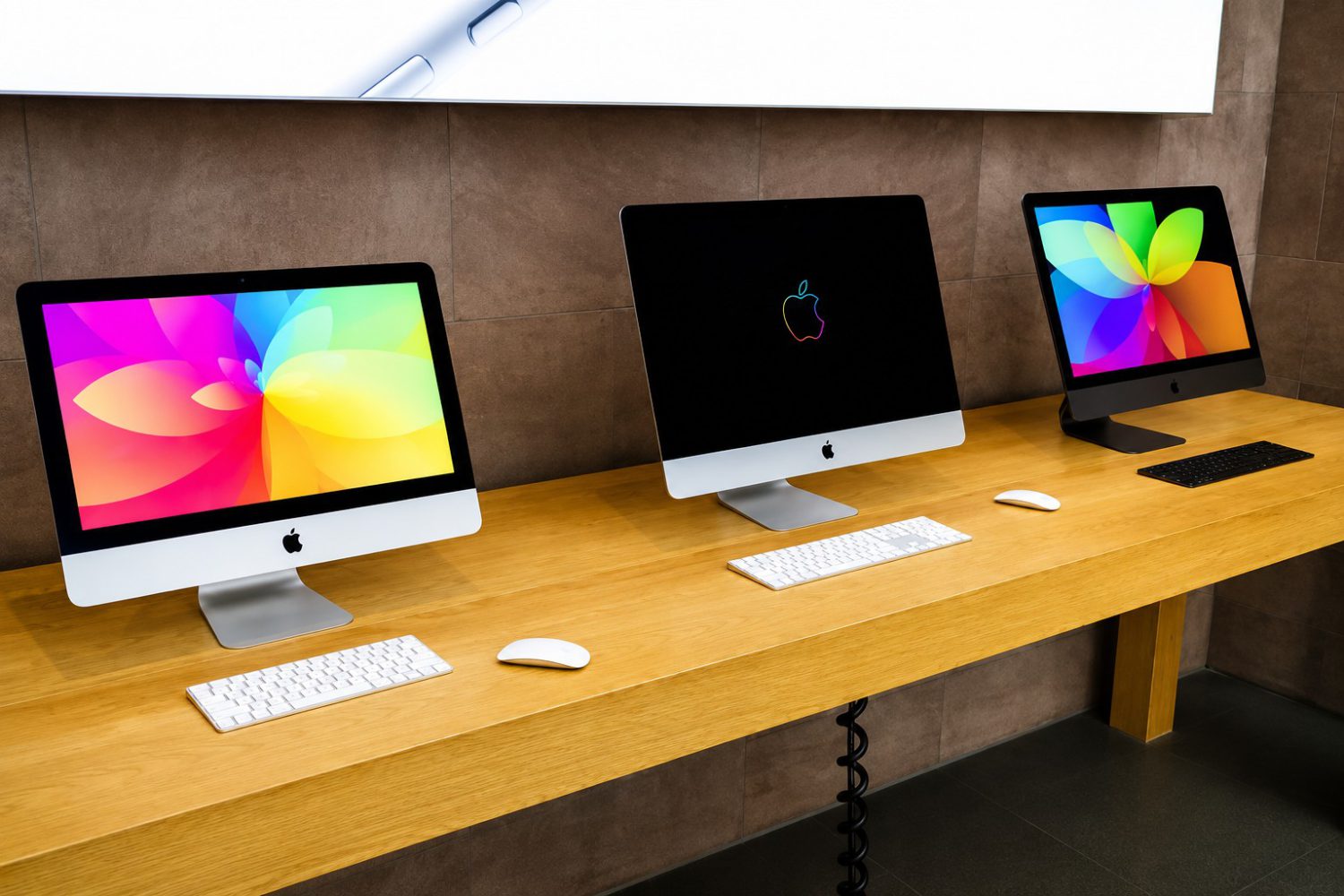
For developers who need to run large AI models locally, Apple has made its intentions clear. The company now positions the M5 Pro mini around always-on agentic AI workflows, four clustered Mac Studios reportedly deliver up to 3× faster AI chips inference than a single unit, and the launch press release barely mentions Final Cut Pro. These machines aren’t creative workstations with AI features bolted on — they’re local inference nodes that happen to run macOS.
Two Chips, Two Jobs
M6 headlines the node shrink; M5 Ultra does the real AI heavy lifting.
M6 is Apple’s first 2nm SoC, fabricated by TSMC, featuring a tri-tier CPU:
- 2 super cores
- 4 performance cores
- 6 efficiency cores
It delivers roughly 30% higher GPU AI compute versus M5, and approximately 170GB/s memory bandwidth. Its 32GB unified memory ceiling, however, tells the more important story. Running a serious 70B-parameter model in 32GB is effectively impractical by current local-AI benchmarks. That limitation isn’t a flaw in the design — it’s the structural reason clustering exists.
M5 Ultra is the actual AI workhorse here, despite running on the older 3nm node. Its quad-die UltraFusion architecture operates at over 4.4TB/s inter-die bandwidth and presents as one logical processor:
- 80 GPU cores
- 32-core Neural Engine
- Up to 512GB unified memory at 1.2TB/s
- 4.5× the GPU AI compute of M3 Ultra, according to Apple
Specialist local-AI testing places it at roughly 40–60 tokens per second on a 70B model — fast enough for real-time conversational agents running entirely at your desk.
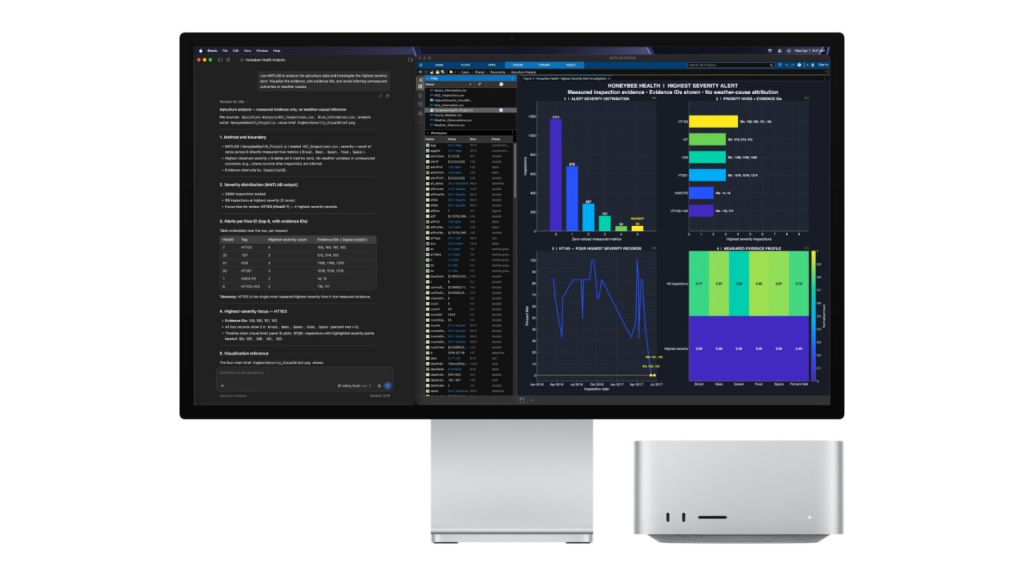
The Cluster Is the Product
Thunderbolt 5 RDMA officially turns a stack of Macs into a mini rack.
Developers have been daisy-chaining Mac minis and Studios informally for months — the kind of multi-box setup that looks like a prop from a hacker drama — to host models too large for a single machine’s memory. Apple has now formalized exactly that practice. Thunderbolt 5 RDMA support, macOS 26.2’s low-latency host-to-host communication, and the new Core AI framework alongside MLX make distributed inference a first-class, officially supported feature. One critical distinction worth noting: the M6 mini ships with Thunderbolt 4, which means it cannot participate in Apple’s supported clustering. Only Thunderbolt 5 models — the M5 Pro mini and Mac Studio — qualify.
The entry point to Apple’s desktop lineup has risen roughly 50% in two months. The $599 M4 mini configuration is gone. $899 is now the floor, covering 16GB RAM and a 256GB SSD. Memory upgrades run approximately $200 per 8GB increment, and a fully configured Mac Studio with 512GB unified memory exceeds $15,000. This pricing pressure isn’t unique to Apple. TrendForce reported approximately 90–95% quarter-over-quarter DRAM contract price increases in Q1 2026, and analysts at IDC have described the HBM wafer reallocation as “a crisis like no other,” with no meaningful relief expected before 2028. Samsung, SK Hynix, and Micron have all shifted wafer capacity toward HBM for AI accelerators — HBM consumes roughly 3× the wafer capacity of standard DDR5 — leaving a significant gap for consumer hardware. Nintendo, Sony, Microsoft, and Valve have each raised hardware prices for the same underlying reason.
The cheapest path into Apple’s officially supported AI clustering story starts at $1,699 for the M5 Pro mini. That figure doesn’t include the second machine you’ll need to actually run a cluster.
Who This Actually Makes Sense For
A narrow but fast-growing group of users will find genuine value here.
If your team runs 70B+ parameter models locally, keeps sensitive data off cloud APIs, or wants to reduce recurring inference costs by front-loading compute investment, the M5 Pro mini cluster or a Mac Studio stack makes a legitimate case. Most standard SKUs ship September 22, with 512GB unified memory configurations arriving in late October 2026. Reports suggest Apple plans to skip M6 Pro, Max, and Ultra variants entirely, fast-tracking M7 AI-powered Macs toward mid-2027. These are Tim Cook’s final major Mac desktops — his last day as CEO is August 31, 2026, with John Ternus taking over. Whatever Ternus builds next inherits this foundation.