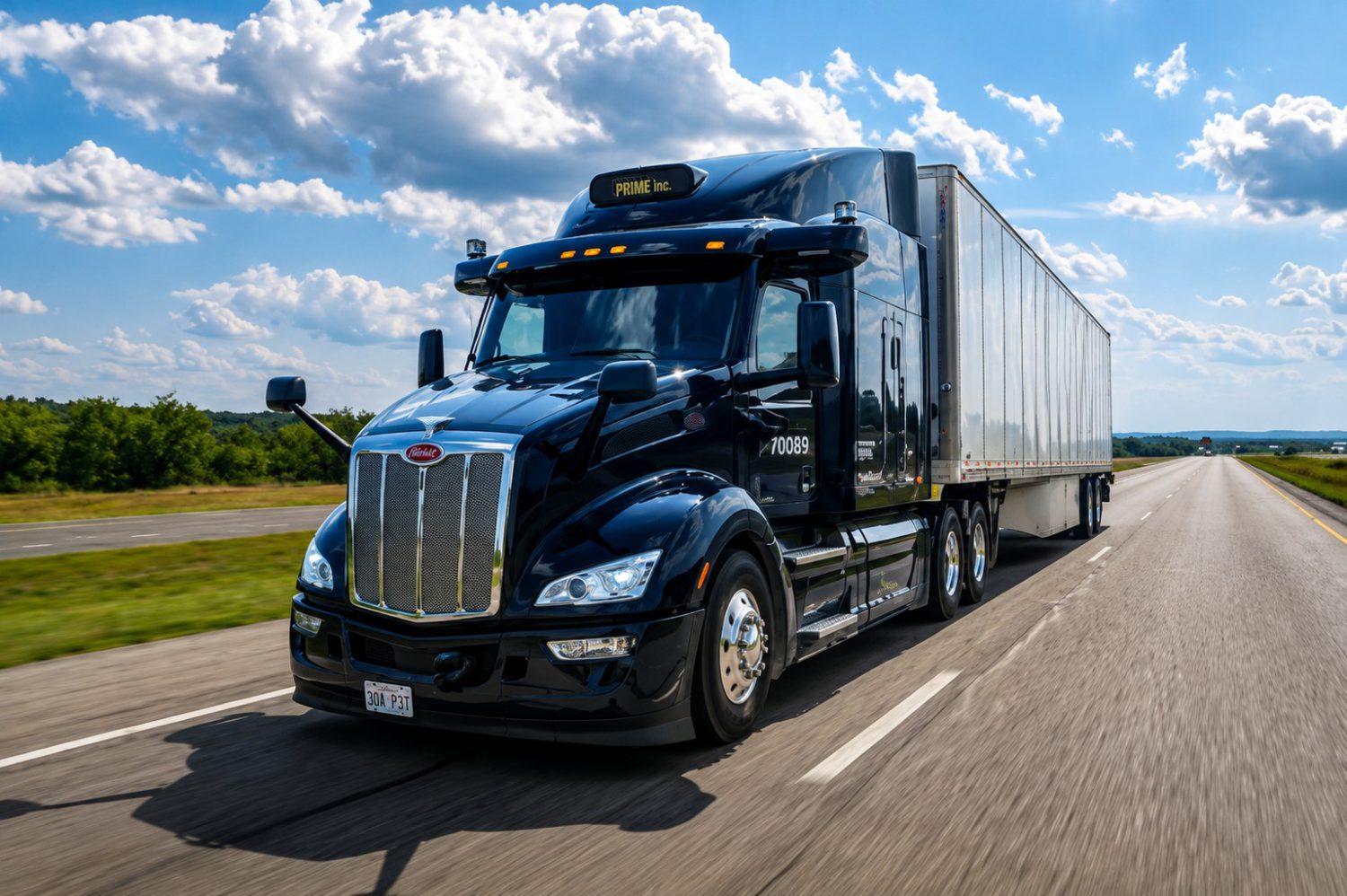
On any given night, an 80,000-pound tractor-trailer hauls freight down the Dallas–Houston corridor with no human in the cab. Not a simulation. Not a test track. A public highway, shared with your car. Aurora Innovation has run commercial autonomous freight routes connecting Dallas, Houston, El Paso, Fort Worth, and Phoenix since 2025. Gatik moves PepsiCo products driverlessly across Arizona, Arkansas, and Texas. This isn’t a pilot program quietly gathering data. It’s scaling — and the regulatory landscape looks like it was designed by five different committees who never spoke to each other.
A Map of Who’s Letting This Happen – and Who’s Pushing Back
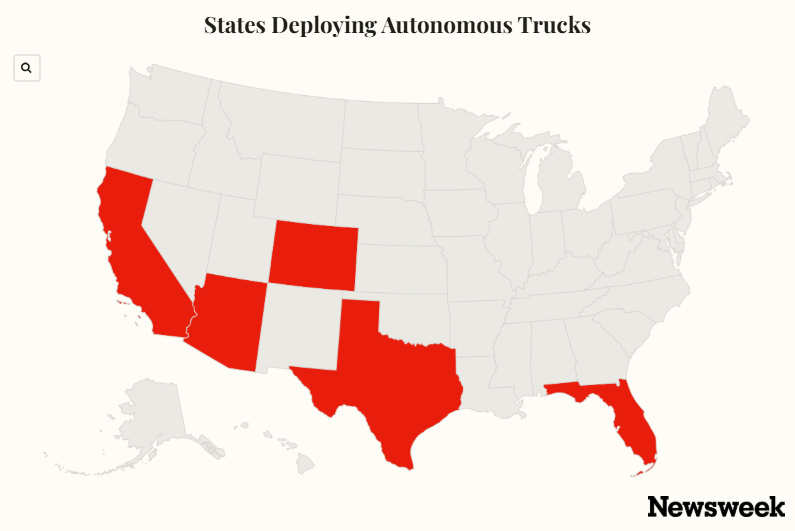
Five states, five completely different answers to the same question.
- Texas: Aurora’s commercial routes run day and night, within standard operational constraints. The Dallas–Houston corridor has been active since 2025.
- Arizona: Permissive AV policies dating back to the robo-taxi era. Gatik’s autonomous box trucks move PepsiCo freight across Arizona, Arkansas, and Texas.
- California: New DMV rules opened heavy-duty autonomous truck testing for Aurora, Kodiak AI, and Gatik — safety drivers still required for now. Teamsters California has filed suit arguing the DMV failed to properly assess economic impacts on the state’s more than 200,000 employed semi-truck drivers and a comparable number of owner-operators.
- Colorado: Governor Jared Polis vetoed human-operator mandates in both 2025 (HB 25-1122) and 2026 (HB 26-1286). Frustrated lawmakers restructured the 2026 bill as a statewide ballot referendum — described by CBS News Colorado as potentially the first of its kind in U.S. history — letting voters decide in November whether autonomous trucks over 26,000 pounds require a licensed human onboard.
- Florida: No human required. Full stop.
“Driver mistakes are the primary cause of accidents,” Polis wrote in his veto letter for HB 25-1122. That’s not wrong. But a March 2026 poll from Advocates for Highway and Auto Safety found 85% of respondents concerned about sharing roads with driverless trucks — numbers nearly identical to their 2023 survey showing roughly 86% expressing the same worry. This isn’t novelty fear burning off. It’s sustained, consistent unease across three years of polling.
The liability question makes it worse. No federal framework clarifies whether responsibility for a crash falls on the fleet operator, the software developer, or the hardware supplier — and right now, nobody has a clean answer.
The Jobs Question Isn’t Going Away
The math behind the “existential threat” label is harder to dismiss than the rhetoric.
The Teamsters describe autonomous trucking as an “existential threat,” according to reporting by the Arizona Capitol Times in August 2026. Their California chapter is in court ov-r it. Colorado union locals accused Polis of “siding with Big Tech companies” over workers and constituents, according to a March 2026 Teamsters press release. Automation advocates counter that trucking faces chronic driver shortages and that new roles in fleet oversight and complex-route operations will eventually emerge alongside the technology — a pattern already seen with the rise of the humanoid robot in other industries. That argument lands differently when you consider California’s more than 200,000 employed semi-truck drivers and a comparable pool of owner-operators potentially exposed to displacement over time.
Colorado voters may get the first direct democratic say this November. Until then, the trucks keep rolling.