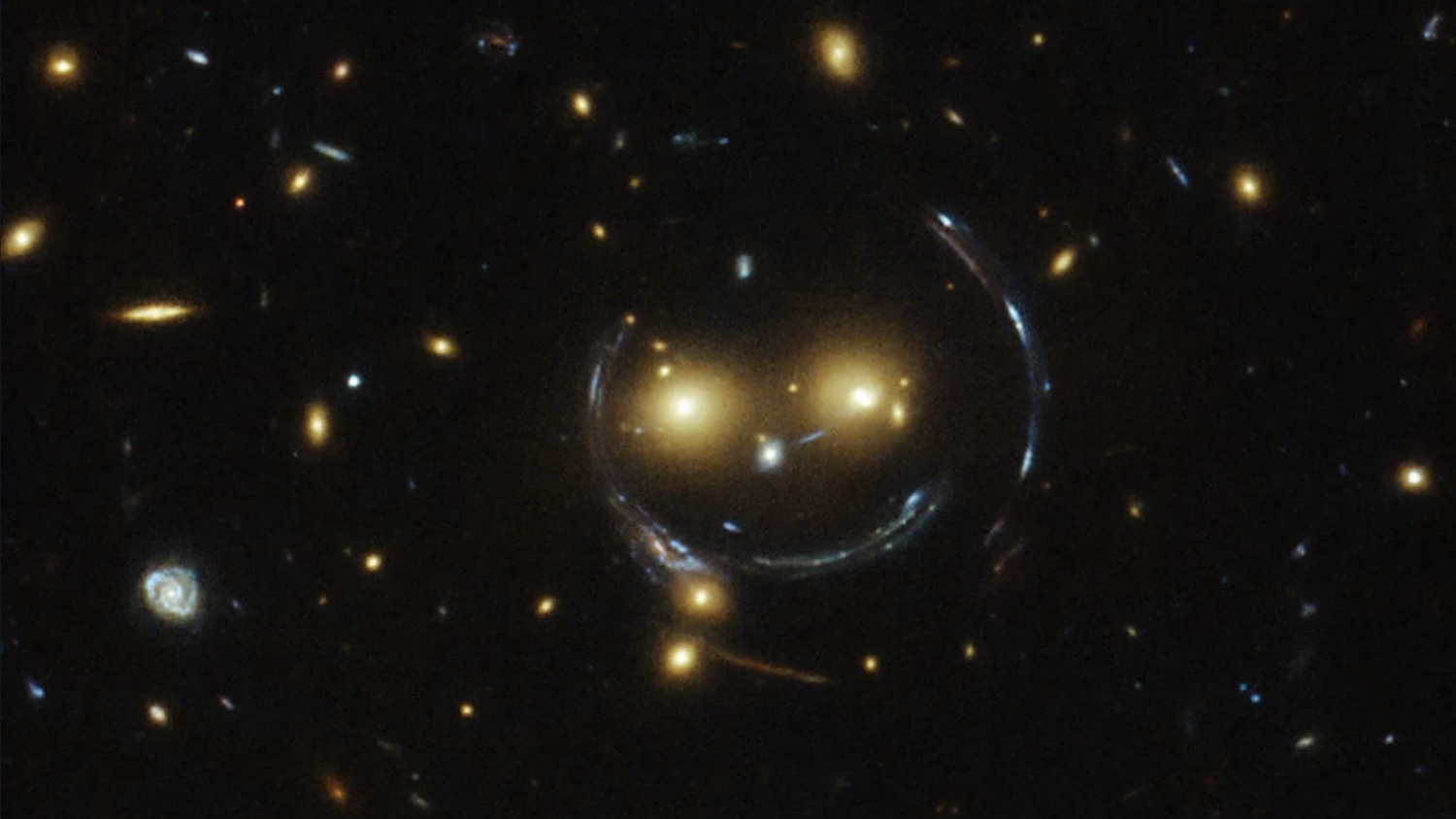
Soundgarden wrote “Black Hole Sun” as metaphor. The universe, apparently, took it literally. Astronomers publishing in Nature on August 12, 2026 identified MoM‑BH*-1—an object roughly the size of our solar system, radiating an estimated 100 billion times more energy than nuclear fusion could ever produce, wearing a star’s face while hiding something far stranger inside. Call it the cosmos doing method acting. And honestly? It held up for a while.
A Star That Isn’t
The object that fooled astronomers is actually a black hole in disguise—and it’s the first of its kind ever observed.
Nested inside MoM‑BH*-1 is a supermassive black hole of roughly 100,000 solar masses, wrapped in an ultra-dense hydrogen envelope. That envelope absorbs the black hole’s ferocious energy output and reradiates it with the spectral signature of a star—a cosmic matryoshka doll: black hole inside gas cloud inside the appearance of normalcy. Theorists had predicted objects like this, called “quasi-stars,” for over a decade. Nobody had actually seen one—until JWST’s NIRSpec instrument, part of the “Mirage or Miracle” survey program, captured MoM‑BH*-1’s spectrum. The light left its source 660 million years after the Big Bang, when the universe was roughly 5% of its current age.
Here’s what makes MoM‑BH*-1 unlike anything seen before:
- Emits roughly 100 billion times more energy than stellar fusion could explain—a model-based estimate, but a staggering one
- Shows one of the largest hydrogen Balmer breaks ever recorded at any redshift—a sharp spectral drop in brightness that no ordinary collection of stars can produce
- Contains virtually no heavy elements, pointing to pristine early-universe hydrogen, untouched by generations of stars; its hydrogen envelope sits 13.1 billion light-years away in Cetus, making it the most distant black hole star candidate with a well-characterized spectrum
- Outshines its own host galaxy so completely the galaxy nearly vanishes from the data
Pure Black Hole Star Light
Lead author Rohan Naidu says the object’s brilliance erases every trace of the galaxy behind it.
As JWST has catalogued dozens of these mysterious “little red dots” since launch, the question of what powers them has grown louder. MoM‑BH*-1 may finally supply an answer. Rohan Naidu, of the University of Hawaiʻi Institute for Astronomy, put it plainly to WIRED: “The black hole star is essentially completely outshining its surrounding host galaxy, such that we’re seeing pure black hole star light.” If black hole stars are common at cosmic dawn, they offer a natural explanation for how supermassive black holes reached billions of solar masses so quickly—a question that has nagged cosmologists for years.
Still a Suspect, Not Yet Convicted
The evidence is compelling, but other researchers caution that alternative explanations haven’t been fully eliminated.
Not everyone is ready to close the case. Extremely compact star-forming galaxies and unusual active galactic nuclei haven’t been fully ruled out as explanations for MoM‑BH*-1’s peculiar signature. X-ray and radio follow-up observations are still needed to confirm an accreting black hole at the core. The Nature paper makes a compelling argument. It doesn’t make a final one—and that’s normal science, not a scandal.
If black hole stars do turn out to be common at cosmic dawn, the early universe was crowded with disguised monsters that no model predicted. JWST has only just started looking, and what you thought you knew about the universe’s first billion years may need a serious revision—much as lost civilization discoveries have upended assumptions about human history through advanced scanning technology.