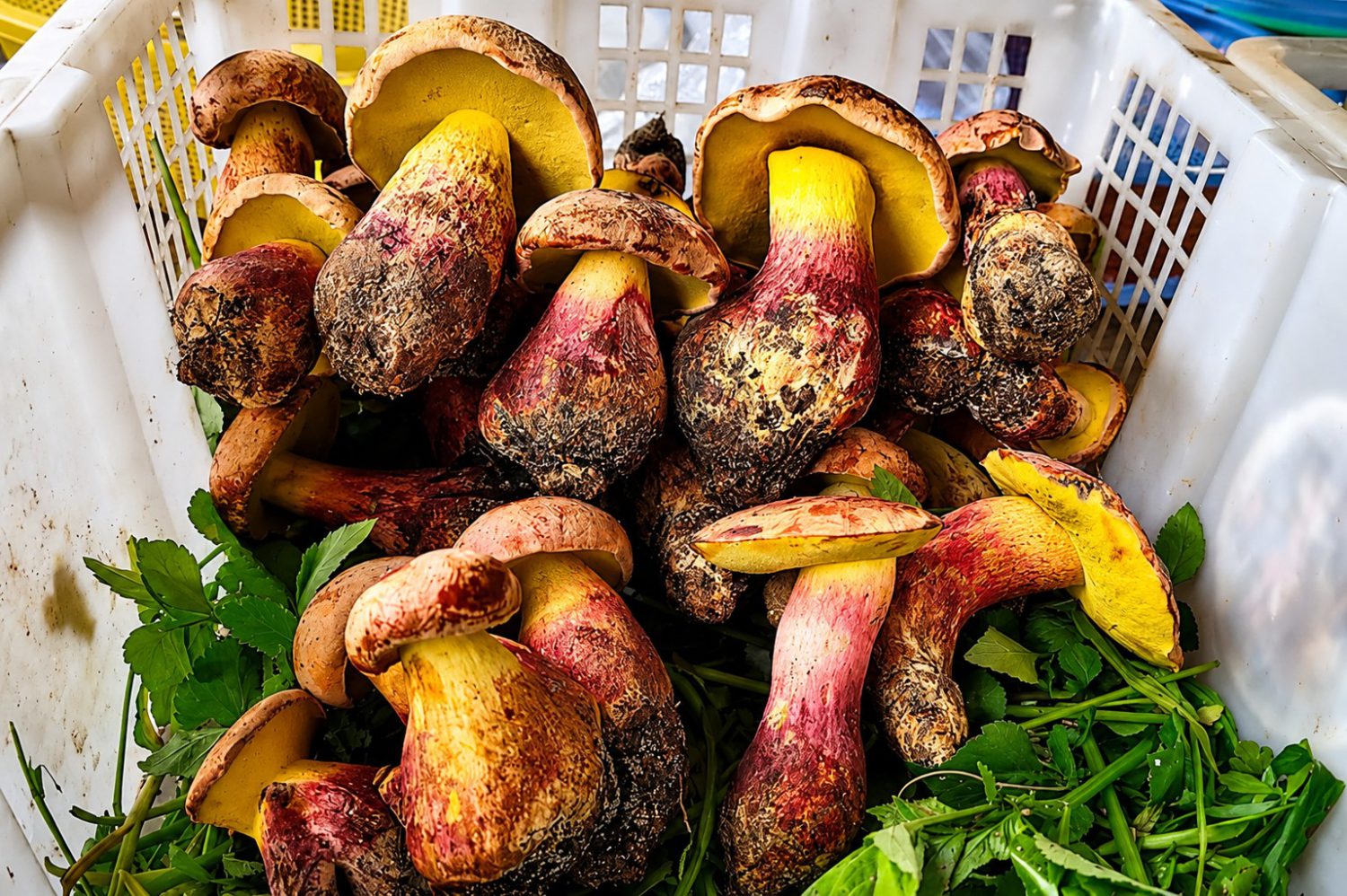
Tiny figures, 3 to 30 centimeters tall, dressed in bright colors, moving through your kitchen as if they own it. They walk along table edges, fall off surfaces, and swim through your soup bowl. Not floating, not phasing through walls — obeying gravity, perfectly. This is what eating undercooked Lanmaoa asiatica does to you. And until recently, nobody knew exactly which mushroom was responsible.
University of Utah researchers Colin Domnauer and Bryn Dentinger have now genomically confirmed it. After sequencing 53 samples across the entire Lanmaoa genus — identifying 17 species, including four potentially new ones — only L. asiatica appears psychoactive. The taxonomic gut-punch: it’s more closely related to porcini than to any psilocybin-containing mushroom.
The hard facts are strange enough to stand alone:
- Hallucinations appear 12–24 hours after eating the mushroom undercooked and can last 1–7 days, occasionally weeks.
- Figures are consistently described as elves, clowns, or fairy-like beings — rendered in fine detail, embedded in real environments, subject to normal physics.
- No psilocybin, ibotenic acid, muscimol, or any known psychedelic biosynthesis genes were detected.
- Thorough cooking — roughly 15 minutes — appears to destroy whatever the unknown compound is before it reaches your nervous system.
“People pretty much always report seeing dozens or hundreds of little people, about 3 to 30 centimeters tall, in incredible detail, like they’re actually there.” — Colin Domnauer, University of Utah
What makes this biochemically bizarre is the lucidity. No euphoria. No synesthesia. Your world looks completely normal — except for the miniature population living in it. Neurologists note that Lilliputian hallucinations — the clinical name, coined in 1909 after Swift’s Gulliver’s Travels — otherwise arise from alcohol withdrawal, high fever, or certain psychiatric conditions, making a fungal trigger biochemically unprecedented. The syndrome describes vivid visions of tiny autonomous figures moving through real space, and L. asiatica is currently the only known food or fungus that reliably produces it.
When Science Catches Up to Fairy Tales
Three independent cultures report identical visions — and that pattern looks less like shared folklore and more like a biological fingerprint.
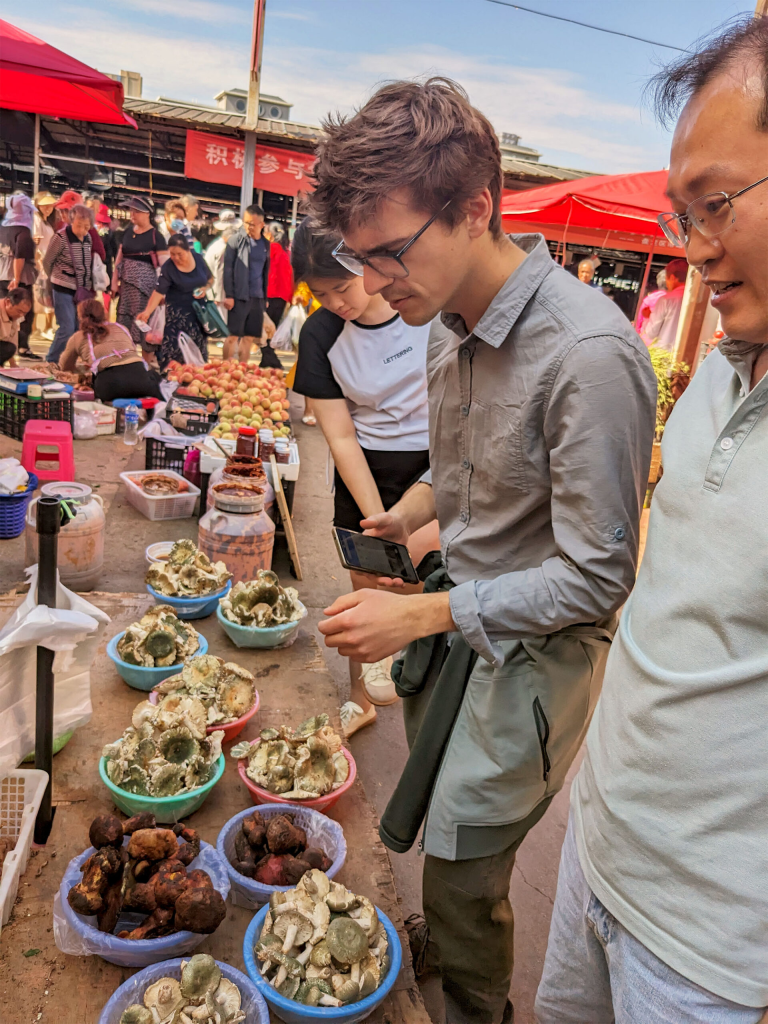
Earlier researchers dismissed bolete-linked “little people” visions in Papua New Guinea as purely socio-cultural. DNA evidence from L. asiatica — documented now in both Yunnan and the remote Northern Cordillera of the Philippines — makes that argument hard to sustain. The mushroom sells openly in Yunnan markets between June and August, known locally as “Jian shou qing” (turns blue in the hand), prized for its umami depth. Yunnan hospitals brace for seasonal surges of patients arriving with tiny houseguests they didn’t invite.
“Now, three completely independent cultures have reported the same specific type of hallucination… They must have a shared underlying chemical and neurological basis.” — Colin Domnauer
Domnauer, who pivoted from planetary astronomy and a NASA Jet Propulsion Laboratory internship to what he calls “psychedelic innerspace,” is now working to isolate the unknown compound. If he finds it, the implications reach well beyond food safety. Understanding how one molecule reliably triggers a specific, stable hallucination of miniature humans could reshape neuroscience’s grasp of brain tissue — and perhaps illuminate why tiny people surface in myths from County Clare to West Africa, without reducing those traditions to mere chemistry. That’s a question worth chasing.