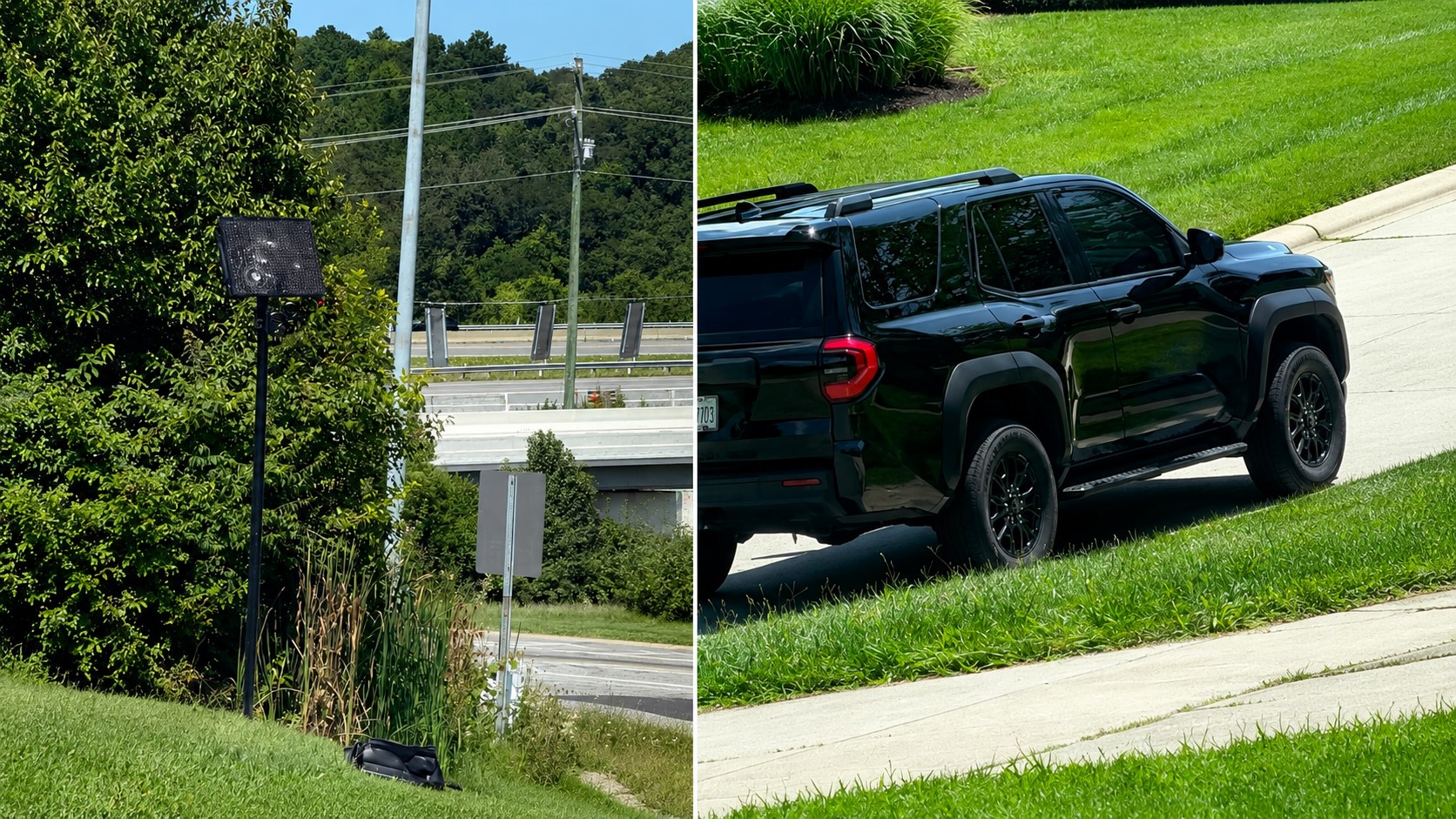
A Cincinnati candle maker who describes herself as someone who keeps to herself returned home from vacation to find the Flock camera near her street vandalized — and a heavily tinted “fleet” vehicle parked two houses down. No documented evidence links that vehicle to police or Flock operations, but the anxiety it triggered is its own kind of data point. Across at least five states, more than two dozen Flock Safety license plate readers have been smashed, sawed down, or hauled off since early 2025, according to Yahoo News and Gizmodo. This isn’t isolated mischief. Something is breaking — and it isn’t just the cameras.
The Camera You Never Agreed To
Flock Safety‘s solar-powered readers capture every passing plate into a searchable cloud database, and thousands of U.S. cities already have them.
Think of it as Spotify Wrapped for your commute, except you never hit “accept” and law enforcement holds the playlist. According to WVXU’s Cincinnati Edition, Flock cameras sit on poles at intersections and roadsides, logging vehicle details into an AI-enhanced platform that can integrate with gunshot detection and other sensor networks. Greater Cincinnati has them. Your town probably does too — and you almost certainly drove past one without knowing it.
The documented backlash reads like a cross-country road trip of frustration:
- Clermont County, Ohio: Cody Morelock, 35, charged after allegedly unbolting a camera, solar panel, and computer box from a pole on Mt. Carmel Tobasco Road, according to Local12 and WLWT.
- Pleasant Hill, Iowa: A pole cut clean in half, with replacement estimated at $7,000, according to KCCI.
- Suffolk, Virginia: An engineer allegedly destroyed 13 cameras over several months and now faces multiple felony charges, according to surveillance accountability reporting.
- Eugene and Springfield, Oregon: After cameras were cut down, both cities voted to turn their Flock systems off entirely amid community backlash.
- DuPage County, Illinois: Three men allegedly stole multiple cameras in a single overnight spree; police found five units and a ladder in their vehicle, according to Local12.
Here’s the recursive punchline: law enforcement uses Flock footage to identify the people destroying Flock cameras. One official told CNN, “I’m not particularly fond of vandalism… opinions should be expressed through voting and debate.” Most camera smashers end up facing felonies. The system, somewhat grimly, proves its own point.
The Weight of Being Watched
No evidence confirms surveillance vehicles target vocal critics, but the psychological toll of ubiquitous tracking shapes how people feel in their own neighborhoods regardless.
The “nothing to hide, nothing to fear” argument — the kind your most confident LinkedIn connection deploys without blinking — misses something fundamental. Constant, automated monitoring changes how ordinary people experience their streets, even when they’re doing nothing wrong. Even candle-making homebodies who just want to be left alone. Eugene, Oregon, demonstrated that civic pressure works without bolt cutters: those cameras went dark through council votes, not crowbars, after residents organized and pushed back through public channels.
Surveillance tech expanded fast and quietly over the past several years. The backlash is getting louder. Without clearer rules governing who can access your plate data, how long it’s retained, and for what purpose, this debate won’t stay contained to council chambers. It’ll stay in the streets — and occasionally, in pieces on the ground. For those seeking vetted home security alternatives, options exist that keep oversight firmly in your own hands.