A Spotify playlist does not float in a cloud. It sits in a building burning power somewhere — a hyperscale data center, an industrial-scale facility purpose-built for massive AI and cloud workloads. Those buildings need land, water, and electricity in staggering quantities. Big Tech has turned its attention to Native American tribal lands, where at least 37 proposed data centers have been mapped on or near Indigenous territory, according to trackers cited by Honor the Earth. Some estimates run north of 150 projects affecting Native and rural frontline communities. Federal policy is accelerating the push. Executive Order 14318 directs federal and military lands toward data center use, and 36 state legislatures have introduced 157 related bills.
The Business Case Is Simple. The History Is Not.
Amazon, Google, and federal agencies see tribal lands as ideal sites — large parcels, renewable energy, and sovereign permitting pathways.
Native Nations often control large, contiguous territory with wind and solar potential, transmission access, and sovereign status — meaning distinct regulatory and tax authority that can speed permitting. The DOE’s Indian Energy program reportedly frames this as a “big economic opportunity for Tribes,“ according to agency materials. Amazon and Google both have projects mapped near Indigenous lands. The numbers behind these facilities tell a blunter story:
- A single large data center can consume hundreds of thousands to several million gallons of water daily for cooling
- Local electricity costs in data center clusters can spike over 200%, hitting low-income tribal ratepayers hardest
- Construction generates roughly 1,500 jobs per facility, but most go to specialized outside contractors — operational staffing drops sharply once building stops
- The DOE has identified 16 federal land sites suitable for data center development
Opportunity or Extraction — Tribes Are Deciding
Some Nations are pursuing equity partnerships; others are slamming the door.
Tribal responses span the full spectrum. Some Nations pursue ownership stakes, power sales, and tribally operated facilities — genuine tools for revenue and digital sovereignty. The Seminole Nation of Oklahoma chose differently. According to Native News Online, it became one of the first Indigenous Nations to formally pass a moratorium on hyperscale data centers and certain generative AI uses on its lands after evaluating a proposal and voting no.
That vote landed like a thunderclap.
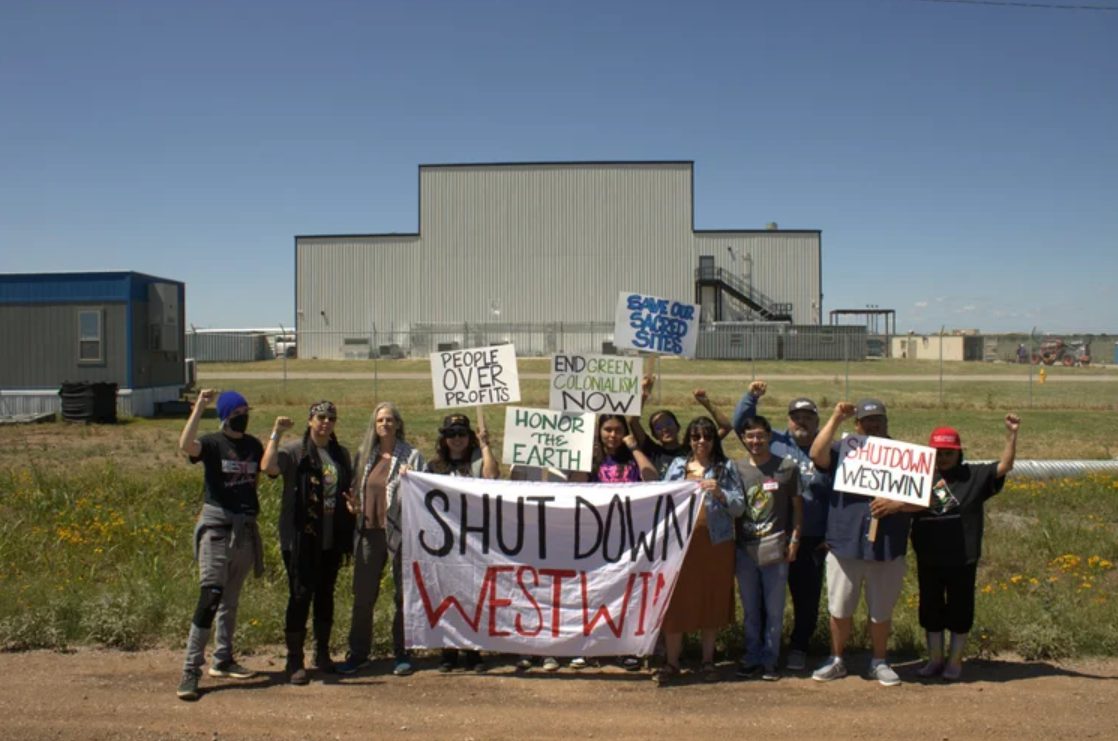
Indigenous organizers from Honor the Earth describe the AI buildout as a “modern-day iteration” of settler colonialism, arguing Native communities are again “the ones that end up having to sacrifice” their relationship to land, water, and community health.
The core problem is structural. Most current deals are framed as simple land leases, leaving tribes to absorb heat pollution, noise, grid strain, and water stress while collecting modest rent. Policy analysts argue the only defensible model requires tribal equity stakes and profit-sharing. Full community consent is the non-negotiable third pillar. Without that framework, critics say the playbook mirrors mining, fossil fuels, and military installations — extraction dressed in fiber optic cable. Big Tech’s move-fast ethos is colliding with communities whose relationship to land is measured in generations, not funding rounds. Tribes that build strong regulatory frameworks could reshape national siting standards. If more Nations follow the Seminole model, the physical geography of AI shifts — and that shift could cost Silicon Valley considerably more than it bargained for.