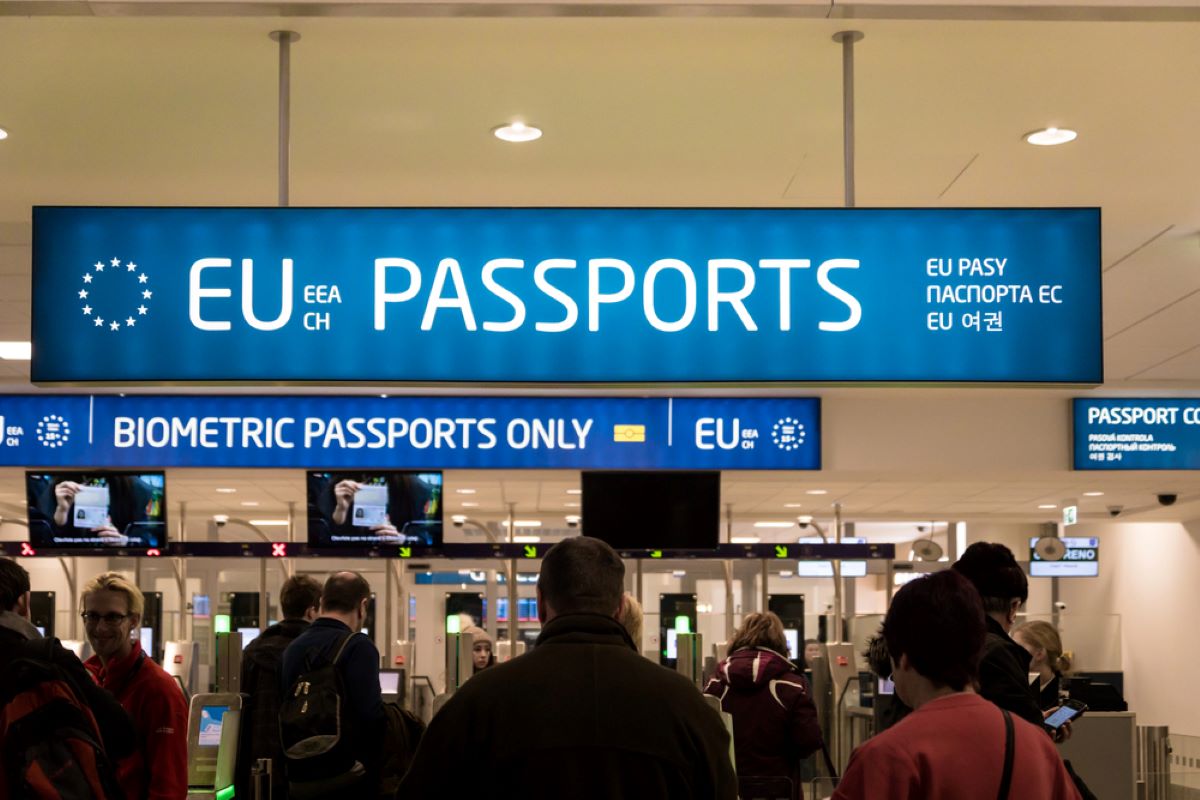
You’ve landed in Europe. Bags are overhead, seatbelt unbuckled, vacation mode engaged. Then you hit passport control and discover a five-hour line because a biometric system nobody warned you about can’t keep up with summer demand. Welcome to the Entry/Exit System — the EU’s new border control technology that records fingerprints and facial data for non-EU nationals entering Schengen countries. It replaced the old passport stamp. The stamp was faster.
Queue Chaos: What’s Actually Happening
Inconsistent rollout means your airport experience depends entirely on which terminal you walk into.
Waits of up to five hours at peak times were reported in June, according to Airports Council International Europe. The problem isn’t the concept — it’s the patchwork execution. Some airports have self-service kiosks. Others rely on border officers manually registering every traveler. Only Sweden and Portugal currently offer a dedicated app. Ryanair warned passengers about “queue chaos” at airports including Tenerife South, Palma, Alicante, Málaga, Milan Bergamo, Kraków, and Paris-Beauvais.
Here’s what you need to know:
- EES covers 29 Schengen-area countries and applies to most non-EU nationals, including UK and US travelers.
- Children under 12 are exempt from fingerprint collection.
- Rome airport operators have been suspending biometric collection on a near-daily basis just to keep traffic moving.
- ACI Europe, Airlines for Europe, and IATA have formally asked the European Commission to allow full suspension during peak congestion.
The Commission Says It’s Working. The Airports Disagree.
One side counts 110 million trips processed; the other counts missed flights.
The European Commission points to 110 million recorded trips and 45,000 refused entries as evidence the system delivers on security. Industry groups call those numbers irrelevant when passengers are missing connections. The Commission says countries can already suspend biometric data collection temporarily — but only partially. Industry observers liken it to launching a streaming platform without sufficient server capacity, except the buffering happens to real people standing in real lines.
A coalition of ACI Europe, Airlines for Europe, and IATA described the situation as creating “severe operational consequences.” Partial suspension, the industry argues, does nothing material to reduce congestion at peak times.
Where staffing and standardization fall short, airports improvise. More hubs could follow Rome’s informal suspension playbook if delays persist through August. Political pressure for a harder rollback will build, and European tourism competitiveness could take a measurable hit. Travelers heading into Schengen this summer should build buffer time into connections and verify whether their destination airport uses kiosks or manual registration before departure.
What This Means for Your Trip
The right system at the wrong speed still causes real disruption for real travelers.
If you’re flying into Schengen this summer, assume longer processing times than you’re used to. Check whether your specific airport uses kiosks or relies on manual officer registration — the difference can be the gap between catching your connection and sleeping in a terminal. Build buffer time into your itinerary, especially through busy hubs, and consider packing the right travel gadgets to stay comfortable during unexpected waits. EES may well be the right idea for modernizing Schengen border control. It just arrived before the infrastructure, staffing, and consistency needed to make it work.