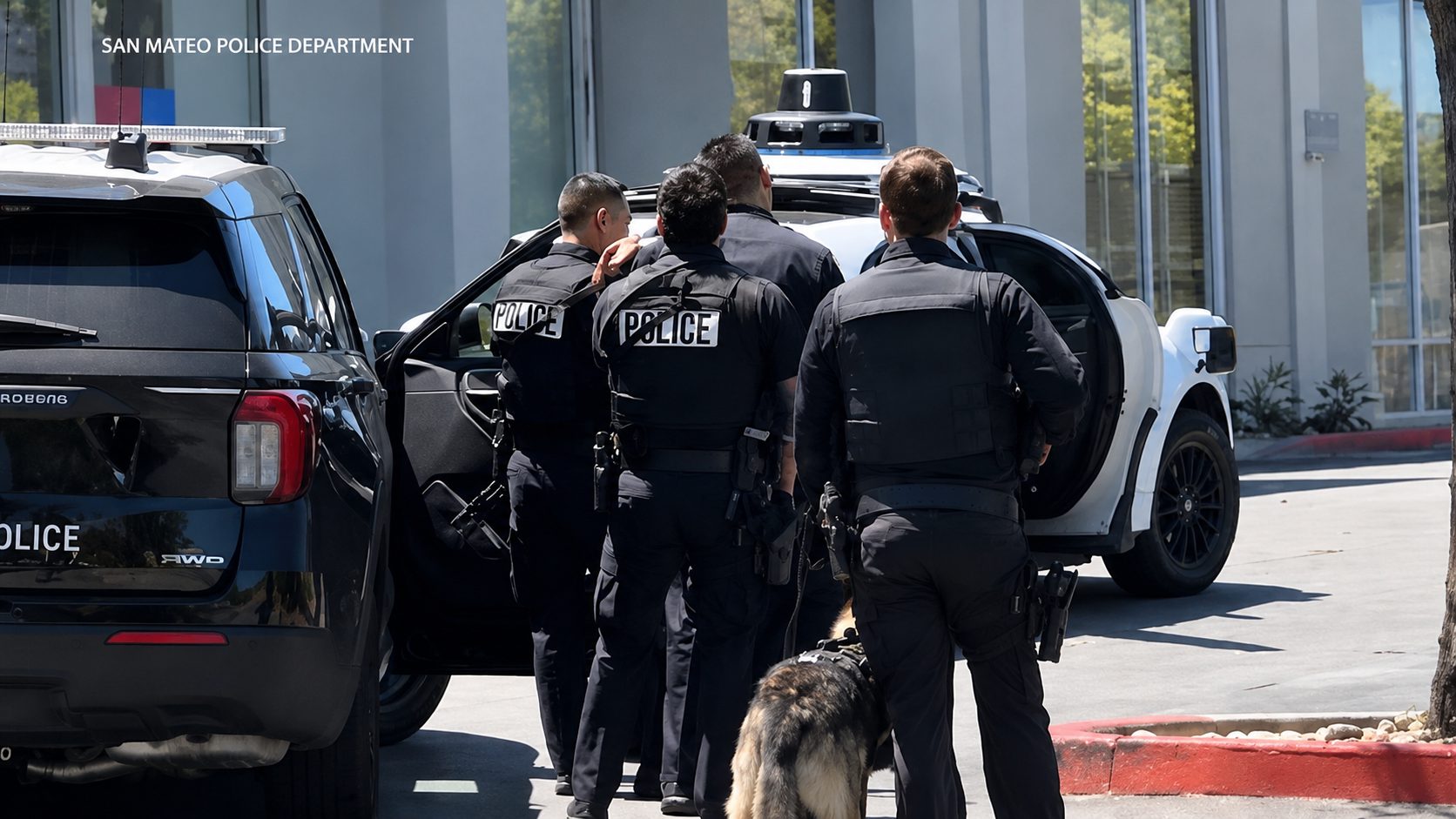
Two 15-year-olds climbed into a Waymo robotaxis in San Mateo, California on Monday. They brought alcohol and toy guns loaded with Orbeez — those squishy gel beads your younger cousin’s TikTok feed won’t shut up about. They allegedly started shooting the beads at strangers from inside the vehicle while drinking, according to the San Mateo Police Department, as reported by CBS News and ABC7.
Then the car pulled into a spot near the El Camino Real and Highway 92 interchange. And stopped. And called the police.
No driver slammed the brakes. No one yelled from the front seat. The vehicle executed a protocol — like getting shadowbanned, except with real-world consequences and a police dog.
The Car Was Always Watching
Waymo’s interior camera system is built for exactly this kind of moment.
Waymo vehicles run on a sensor suite — lidar, cameras, radar, and onboard AI compute. They operate fully autonomously on most rides. Interior cameras exist to “help trips go smoothly,” according to Waymo’s own support documentation, and staff can access live video feeds when situations turn urgent.
The car didn’t get angry or scared. It assessed, flagged, and waited. That’s colder than any human response — and arguably more effective. San Mateo police noted there was “some ingenuity” in the teens’ plan but emphasized that underage drinking and brandishing toy guns at strangers are “bad ideas.”
The safety argument writes itself: the system worked, dangerous behavior stopped, police responded quickly — multiple officers and a K-9 unit. But here’s the other side. Waymo employees can watch your ride in real time. That capability sits quietly in the background of every trip until an incident like this drags it into daylight. Privacy advocates have long flagged in-cabin surveillance as an unresolved gap in robotaxi regulation, and this incident makes that abstract concern very concrete.
What Every Robotaxi Rider Should Know Now
Autonomous vehicles have quietly crossed from transportation into active behavioral enforcement.
Robotaxi operators, regulators, and privacy advocates now face a pointed question: who decides when “urgent” justifies a live camera feed inside a vehicle you’re paying to ride in? Stories like surveillance app deployments and Tesla under investigation for traffic violations show the regulatory pressures facing the entire autonomous vehicle industry.
The next time you step into a Waymo, you’re not climbing into an empty car. You’re entering a monitored environment with a direct line to law enforcement. Whether that feels reassuring or unsettling, the question is no longer hypothetical — it’s the ride you already booked.