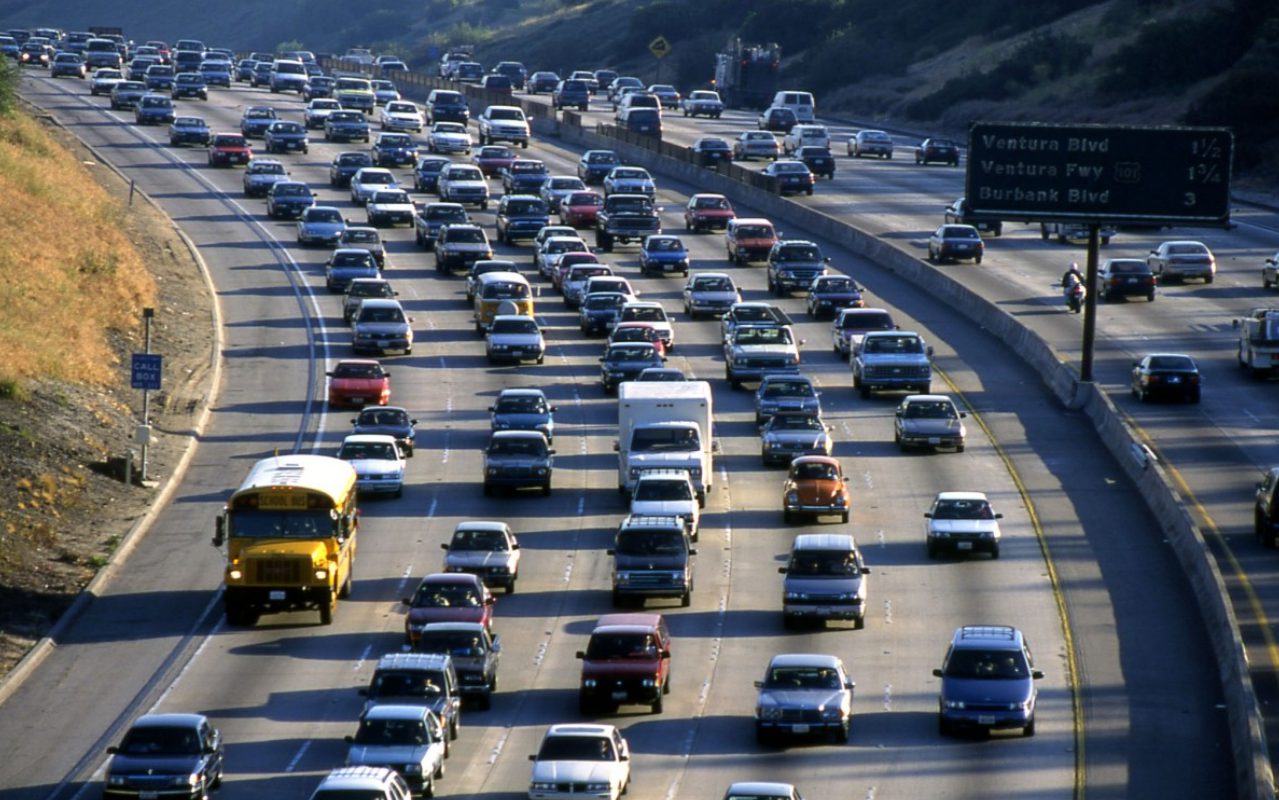
Your afternoon crawl through Temecula just became a high-tech experiment. California’s first smart freeway launched June 1 on an eight-mile stretch of northbound I-15, where algorithms now control when you merge instead of simple traffic lights. The $33 million pilot tackles a notorious bottleneck that stretches 10-minute drives into 45-minute ordeals during rush hour—but the solution might test your patience in unexpected ways.
The Four-Minute Gamble
Longer ramp waits promise shorter overall trips through sensor-driven coordination.
Here’s the trade-off: you could wait up to four minutes at on-ramps while sensors and algorithms coordinate traffic flow across three merge points. The system reads real-time conditions like your smartphone reads signal strength, then meters vehicles onto I-15 to prevent the stop-and-go waves that create those maddening brake-light chains. According to RCTC spokesperson David Knudsen, this approach costs “a lot less than trying to build new lanes” while making “the system that we have work better.”
Smart But Not Sentient
Officials emphasize the system uses algorithms, not artificial intelligence decision-making.
Despite the “smart freeway” branding, this isn’t AI controlling your commute. Advanced sensors embedded in the roadway feed traffic data to algorithms that adjust ramp meter timing and display recommended speeds on digital signs. Think less HAL 9000, more sophisticated traffic orchestra conductor. The system coordinates three adaptive ramp meters at:
- Temecula Parkway
- Rancho California Road
- Winchester Road
The system promises no personal data collection or automated tickets.
Proof of Concept with Stakes
Success could reshape California’s approach to congestion across the state.
The two-year pilot represents a fundamental shift in California transportation policy—software over cement mixers. Similar deployments in Australia reportedly cut travel times 35-65%, while Denver’s I-25 saw 20% improvements according to previous case studies. If Temecula’s metrics prove compelling, expect smart freeway packages rolling out to other choke points statewide. For now, commuters become unwitting beta testers in an experiment that could either revolutionize traffic flow or create new frustrations at every on-ramp.
RCTC plans a public dashboard showing performance data by year’s end, turning your daily drive into a measurable case study for algorithmic traffic control.