Can you imagine Wikipedia without its army of volunteer editors catching vandalism within minutes of publication? That nightmare scenario moved closer to reality when the Wikimedia Foundation dismantled its Community Tech team on May 20—the six-person unit that built tools volunteers actually requested and used.
Community Tech functioned as Wikipedia’s diplomatic corps, translating editor wishlist items like plagiarism detection and dark mode into actual code. WMF claims distributing these responsibilities across multiple teams will reduce “bottlenecks and delays.” Veteran editors see something darker: the systematic elimination of their voice in an organization they built through millions of unpaid hours.
Former “Wikimedian of the Year“ Hannah Clover publicly challenged Jimmy Wales, asking why WMF wasn’t “backtracking like hell” if money and union-busting weren’t factors.
When Volunteer Labor Meets Corporate Tactics
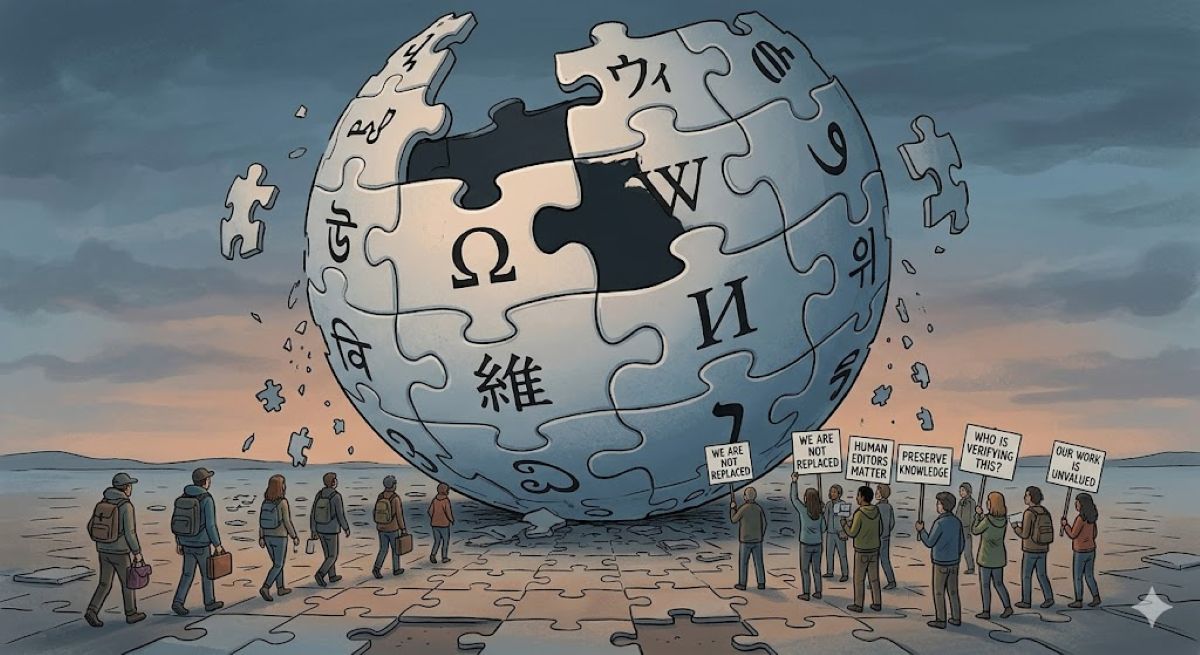
Seven hundred editors ready to withhold the work that keeps Wikipedia running.
The timing stinks worse than week-old sushi. Just as Wikimedia staff launched Wiki Workers United—their organizing drive for formal representation—management suddenly discovered Community Tech was redundant. WMF denies targeting union supporters, but volunteers aren’t buying the corporate speak.
Volunteer Tamzin Hadasa Kelly drafted a petition declaring solidarity with the union effort. More than 700 editors signed on, representing tens of thousands of articles and nearly 10 million edits. Their proposed strike wouldn’t involve picket lines—it would mean letting routine vandalism, spam, and misinformation accumulate like digital tumbleweeds across the site’s most vital pages.
Unlike gig workers who depend on platform payments, Wikipedia’s editors can’t be bought off or fired. That makes their collective action uniquely threatening to an organization that depends entirely on volunteer goodwill.
When Wikipedia breaks, the entire internet feels it.
This isn’t just internal drama between keyboard warriors and corporate suits. Wikipedia powers everything from Google’s AI Overviews to ChatGPT’s training data. Former employees warn that losing critical mass among active editors would make Wikipedia “quickly deteriorate”—and that degradation would ripple through every AI system trained on its constantly updated content.
Volunteer Femke Nijsse captured the absurdity perfectly: “The wishlist has been broken for two, three years, and the response has not been to fix that, but to fire the people that are still making it sort of work.” In an era where Twitter’s content moderation collapse showed how quickly trusted platforms can become toxic wastelands, Wikipedia’s volunteer revolt threatens something far more precious—the internet’s last genuinely reliable information commons.
The foundation that promised to democratize knowledge now faces its own democratic uprising.