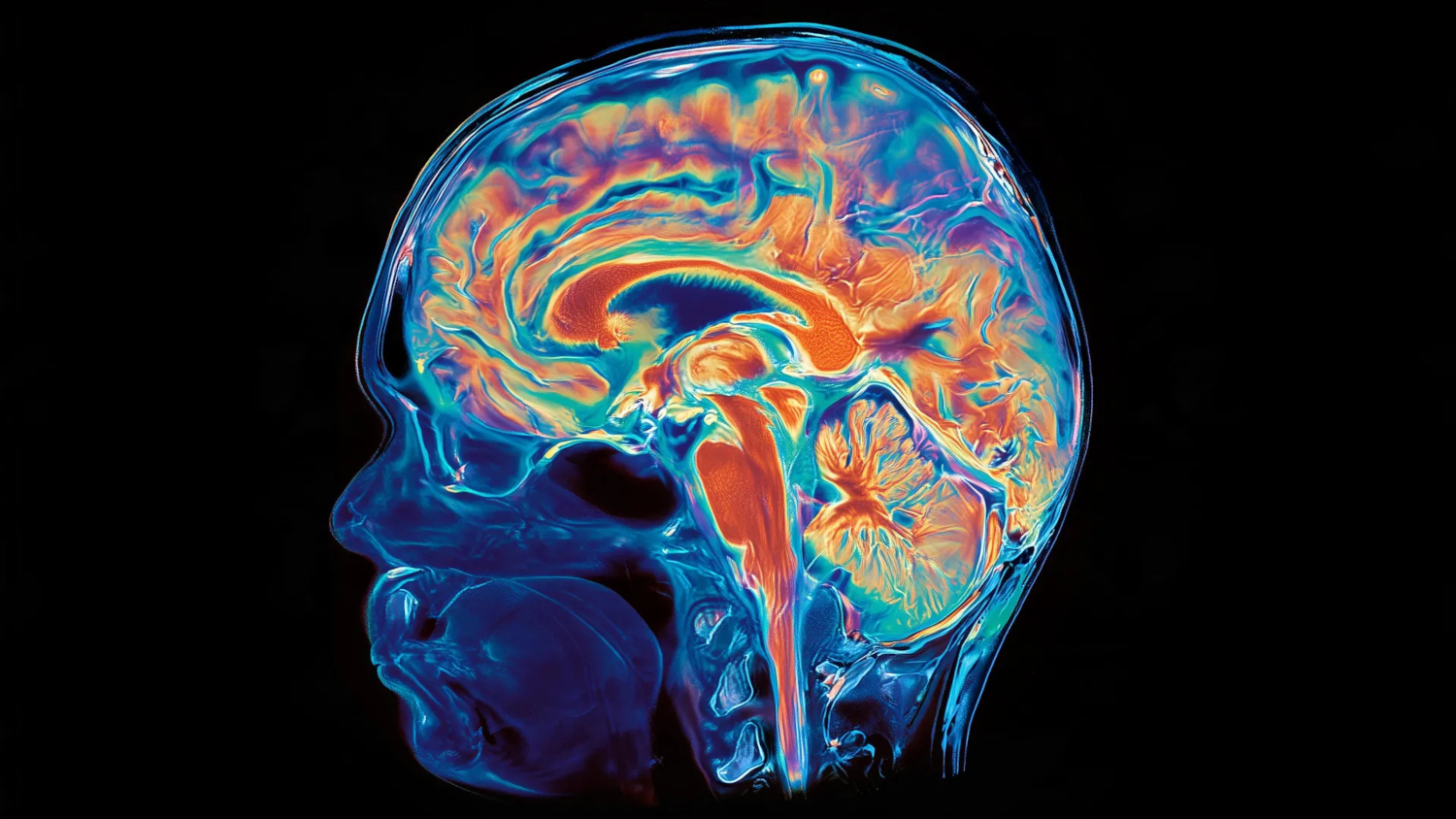
The brain has long been described as one organ. A Stanford Medicine study published September 18, 2026 in Nature Neuroscience complicates that picture considerably.
Researchers identified two mutually exclusive embryonic cell populations that give rise to the brain’s front and back regions separately, from the earliest developmental stages examined. This is not a claim that adults carry two detached brains; it is a finding about developmental origins, and its most immediate consequence plays out in the laboratory, not the clinic.
Two Starting Points, Not One
The forebrain and hindbrain trace back to separate embryonic lineages that never overlap, even from the earliest stages researchers examined.
The forebrain and midbrain arise from progenitor cells (embryonic cells that generate more specialized cells) expressing a gene called Otx2. The hindbrain, which regulates breathing, heartbeat, swallowing, sleep and hunger, arises from a completely separate progenitor population expressing Gbx2.
These two populations did not overlap from the earliest developmental stages examined. The two lineages were already distinct and running in parallel.
The study also identified fundamental differences in chromatin organization between the two populations. Chromatin is the material that packages DNA inside a cell; its structure influences which genes are accessible for expression. Those differences help explain why one progenitor population does not readily convert into the other.
Kyle Loh, the study’s senior author and an associate professor of developmental biology at Stanford, put it plainly: “We’ve shown for the first time that the front of the brain arises from a totally different progenitor cell than the back of the brain.”
Why This Changes Lab Work
Researchers trying to grow hindbrain neurons from forebrain-oriented stem cells were, according to the Stanford findings, starting from the wrong developmental lineage.
The practical consequence affects researchers who have attempted to grow hindbrain neurons from pluripotent stem cells (cells capable of developing into many cell types) directed toward forebrain or midbrain identities. The Stanford findings suggest that approach begins from a different lineage entirely.
Researchers observed the same two-origin pattern in chickens, zebrafish and acorn worms. That breadth suggests the separation between forebrain and hindbrain developmental programs is ancient and evolutionarily conserved, not a human quirk.
Loh described what the discovery now makes possible: “Our discovery means that we can now grow neurons from the back of the brain, the hindbrain, in a petri dish and study their functions.”
More accurately specified hindbrain neurons could improve laboratory models of ALS and spinal muscular atrophy. That gives researchers a sharper tool to study disease mechanisms and evaluate candidate treatments. This is a methodological advance, not evidence of a therapy. Any regenerative treatment would require additional evidence on cell function, safety and integration before clinical use could be considered.
What Comes Next
The distance between this developmental discovery and a clinical application depends on whether lab-grown hindbrain neurons can be produced at scale and whether they reproduce human disease features accurately enough to be useful.
Those answers will determine how far this finding travels toward the clinic.