Around 400 stalking victims in South Korea can now open a surveillance app and watch their stalker’s position update in real time on a map. The system launched nationally in late June 2026, replacing a text-message alert that told victims only how far away an offender was, with no indication of direction or movement.
How the Two-Threshold System Works
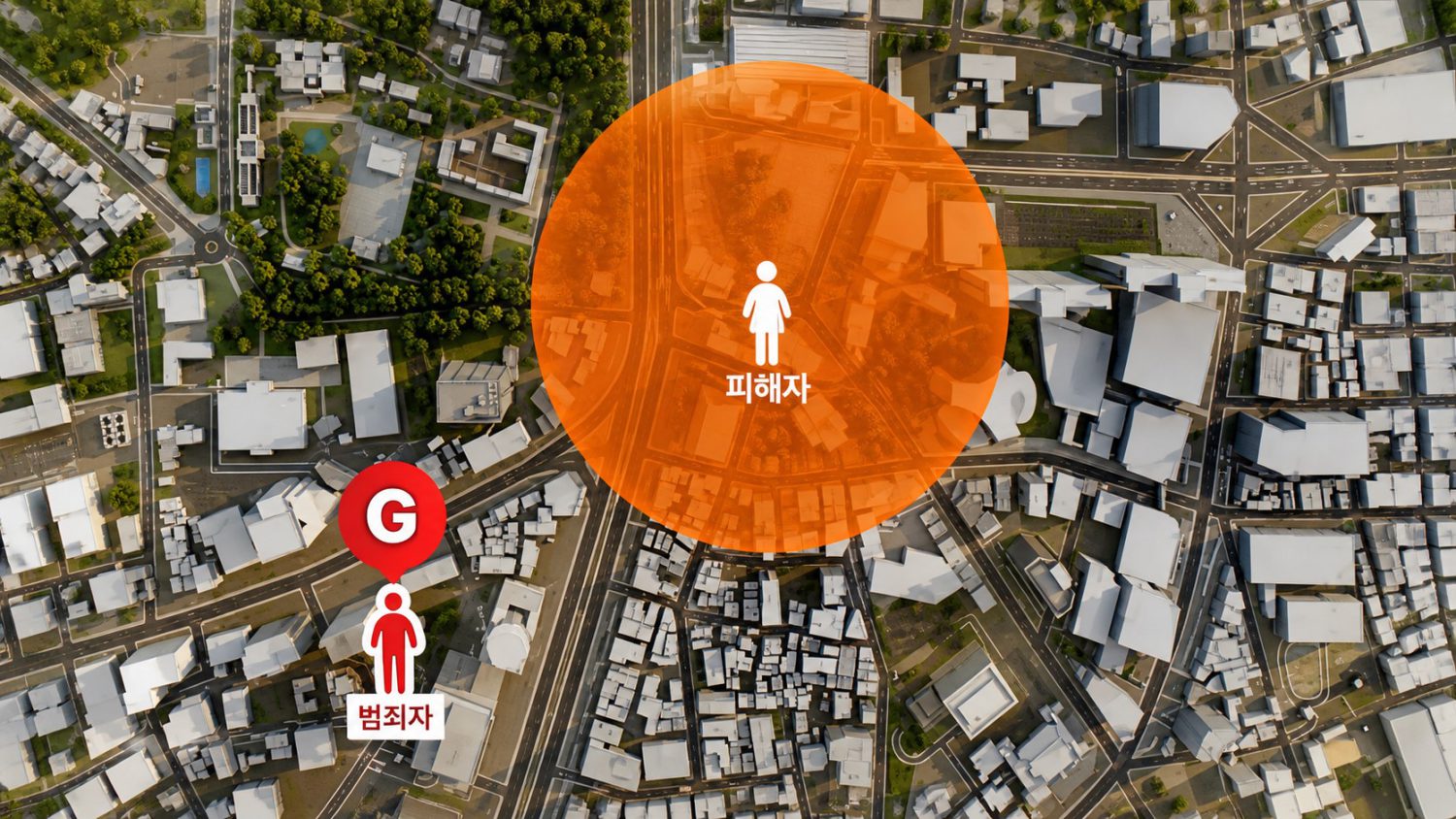
At roughly 2 kilometers, victims receive a push notification; at roughly 1 kilometer, police and probation officers are automatically alerted.
When a court-ordered ankle monitor comes within roughly 2 kilometers of a victim’s location, the app sends a push notification. Opening it reveals the offender’s current position and direction of travel.
The app also reads movement speed to infer whether the person is on foot or in a vehicle. If the distance drops to approximately 1 kilometer, police and probation officers receive an alert and contact the victim directly.
Evacuation routes and nearby safe locations, including police substations and probation offices, appear on the same screen with emergency contact numbers attached.
What the Old System Got Wrong
Knowing only a distance left victims unable to determine whether a stalker was approaching or retreating.
Before this app, protected victims received SMS alerts stating only that an offender was within a defined radius. Yoon Hyun-bong, director at a Seoul electronic monitoring center, described the experience under that system to The Guardian: “Waiting with no idea what’s happening is deeply distressing.”
Survivors and officials criticized the old alerts for providing no directional information, leaving victims, according to advocates, with little ability to gauge whether a stalker was approaching or moving away.
The Coverage Gap the Numbers Reveal
Most stalking suspects in South Korea wear no ankle monitor at all, limiting the app’s reach.
South Korean police arrested 29,404 people on stalking charges between 2024 and 2025. During that same period, authorities made only 1,187 applications for electronic monitoring orders; courts approved 427.
Reported stalking cases tripled after South Korea’s 2021 stalking law took effect, reaching approximately 44,687 cases in 2025. Roughly 80 percent of victims are women. The app currently enrolls around 400 of those victims.
The Criticism Advocates Are Raising
Critics argue the app may transfer the burden of safety monitoring onto survivors rather than strengthening institutional response.
Sujeong Kim, director of Korea Women’s Hotline, put the structural concern plainly to The Guardian: “If the authorities did their job properly, who would want to check it themselves?” Kim and other advocates argue the app risks secretly tracking users‘ movements being normalized while shifting surveillance responsibility onto survivors.
Critics also warn the app may allow the state to claim progress without substantively expanding policing capacity, shelter infrastructure, or legal protections. Supporters counter that, in high-risk cases where ankle monitors are already in place, real-time location data may give victims additional response time before an encounter escalates.
The Integration Still Being Built
Responding officers currently lack the same location picture the app shows victims, a gap authorities are working to close.
Working toward fuller integration, the Ministry of Justice is connecting the platform with the National Police Agency’s 112 emergency dispatch system. Once complete, responding officers will see both victim and offender positions on a shared map in real time.
That capability was absent in prior incidents, according to Hankyoreh. Victims pressed SOS buttons, but officers had no precise coordinates for the offender.
What the App’s Limits Reveal
The system represents a genuine advance for the narrow subset of stalking victims whose cases already cleared the high bar of a court-ordered ankle monitor. For the tens of thousands of victims whose stalkers wear no such device, it offers nothing. That gap is a policy problem technology cannot resolve on its own , and victims seeking broader protection may find that home security systems offer an additional layer of personal safety.