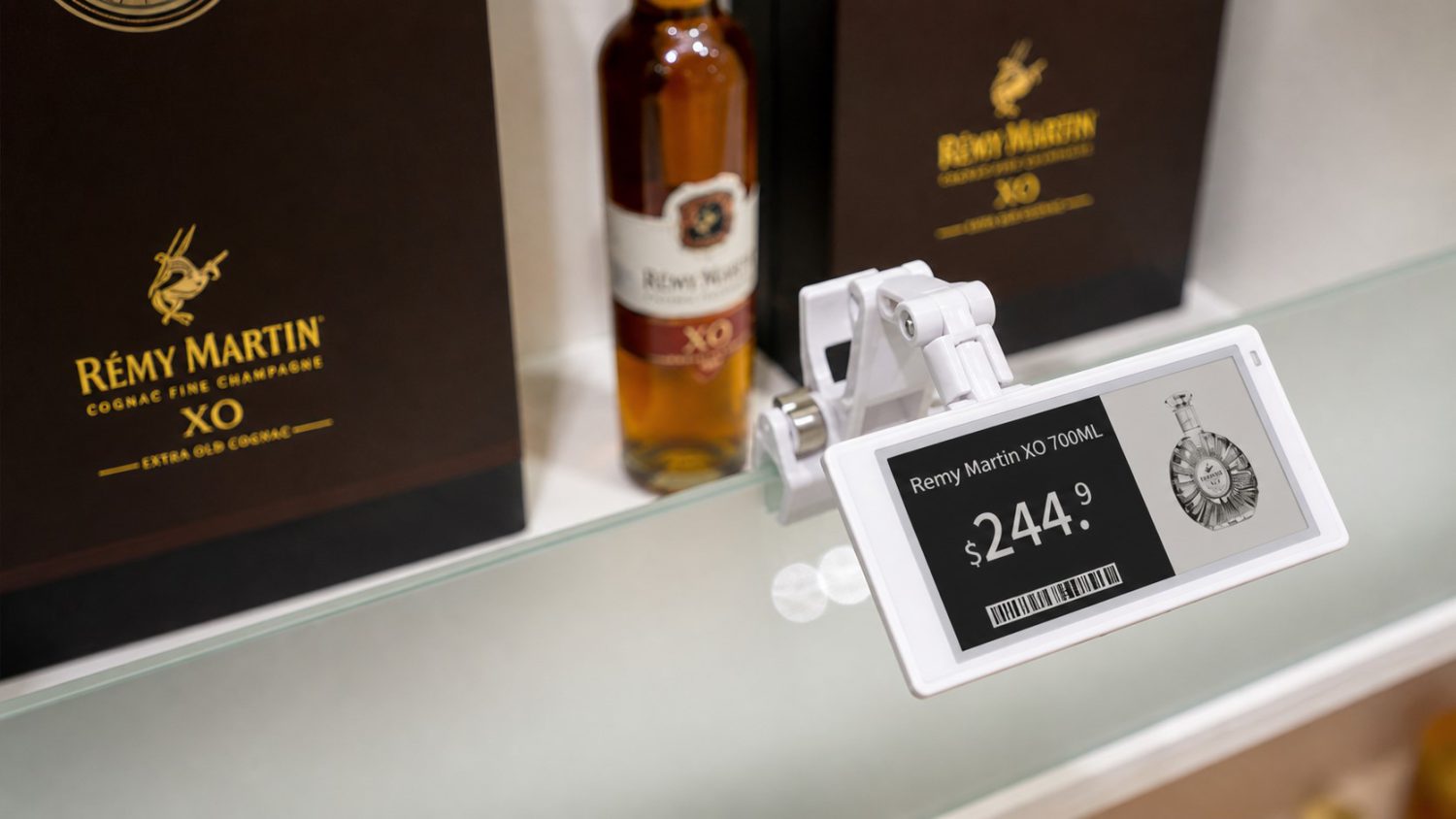
You’ve probably noticed them by now: small glowing screens where paper price tags used to be, blinking quietly on store shelves. Easy to ignore. A new AFL-CIO Tech Institute report titled “Priced Out, Pushed Out: Electronic Shelf Labels Raise Prices and Shrink Paychecks” argues that would be a mistake. Three states have already passed laws in response, which tells you something about how seriously policymakers are taking the warning.
What Electronic Shelf Labels Actually Do
These small networked displays do more than swap out paper tags, and the back-end capabilities are where the real debate begins.
Electronic shelf labels replace paper tags with digital screens connected wirelessly to a store’s pricing system, updating prices across an entire store almost instantly. Retailers and trade groups including FMI and the National Retail Federation frame this as straightforward modernization: fewer pricing errors, lower printing costs, faster promotional updates. Walmart is among the chains already adopting them.
Behind those efficiency gains, the AFL-CIO Tech Institute identified a more troubling picture. Pricer’s own 2022 case study found that automating price changes saved one store roughly 5,200 worker hours annually. The Tech Institute extrapolated that figure across nearly 60,000 U.S. grocery stores using Bureau of Labor Statistics data, arriving at a projected loss of between 44,000 and 191,000 jobs and between $1.6 billion and $6.9 billion in annual wages.
Worth flagging: that extrapolation assumes uniform adoption and operating conditions across a highly varied industry. The Tech Institute’s core point stands regardless: the manufacturers’ own productivity data tells a story about labor displacement that the industry’s modernization framing leaves out.
The report also flags what ESL manufacturers pitch to retailers as selling points. Dynamic pricing refers to staple prices that can shift multiple times per day based on demand, inventory, or time. Surveillance pricing goes further, setting individualized prices using your personal data, shopping habits, or inferred income: the grocery-store equivalent of an airline ticket that costs more because the algorithm knows you need to fly tomorrow. Rounding out the pitch are marketing language like “margin optimization” and “frequent price changes,” framed explicitly as retailer benefits, alongside labor savings drawn from manufacturers’ own productivity data.
States Are Starting to Draw Lines
Maryland, Connecticut, and New Jersey have each moved to restrict how personal data can be used to set grocery prices, with New Jersey going furthest by targeting the labels themselves.
Maryland moved first, passing the country’s first state ban on surveillance pricing for groceries. The law requires prices to remain fixed for at least one business day and prohibits retailers from feeding consumer data into automated systems that set individualized prices.
Connecticut followed with its own ban covering groceries and delivery services. It added a disclosure requirement worth noting: if personal data caused a price to rise, the shelf label must say so in plain language, a rule that has a way of clarifying exactly what a technology is actually doing.
New Jersey’s Fair Price Protection Act went furthest on ESLs specifically. It bans surveillance pricing with penalties up to $50,000 per violation, allows private consumer lawsuits, and imposes a one-year moratorium on new ESL installations while the state studies their impact. Existing systems can keep running, but no new ones go in during the pause.
The Question Retailers Haven’t Answered
No major independent study has shown that ESL adoption consistently lowers grocery bills, and that gap matters.
No major independent study has yet shown that ESL adoption consistently lowers grocery bills for shoppers. Industry groups point to faster markdowns and promotional accuracy as potential consumer benefits, but those remain theoretical. What is documented, in the manufacturers’ own marketing materials, is the promise of higher margins and reduced labor costs. Until retailers provide transparent evidence that ESL savings reach shoppers rather than shareholders, regulators and consumers have every reason to keep asking what these blinking price tags are really for.