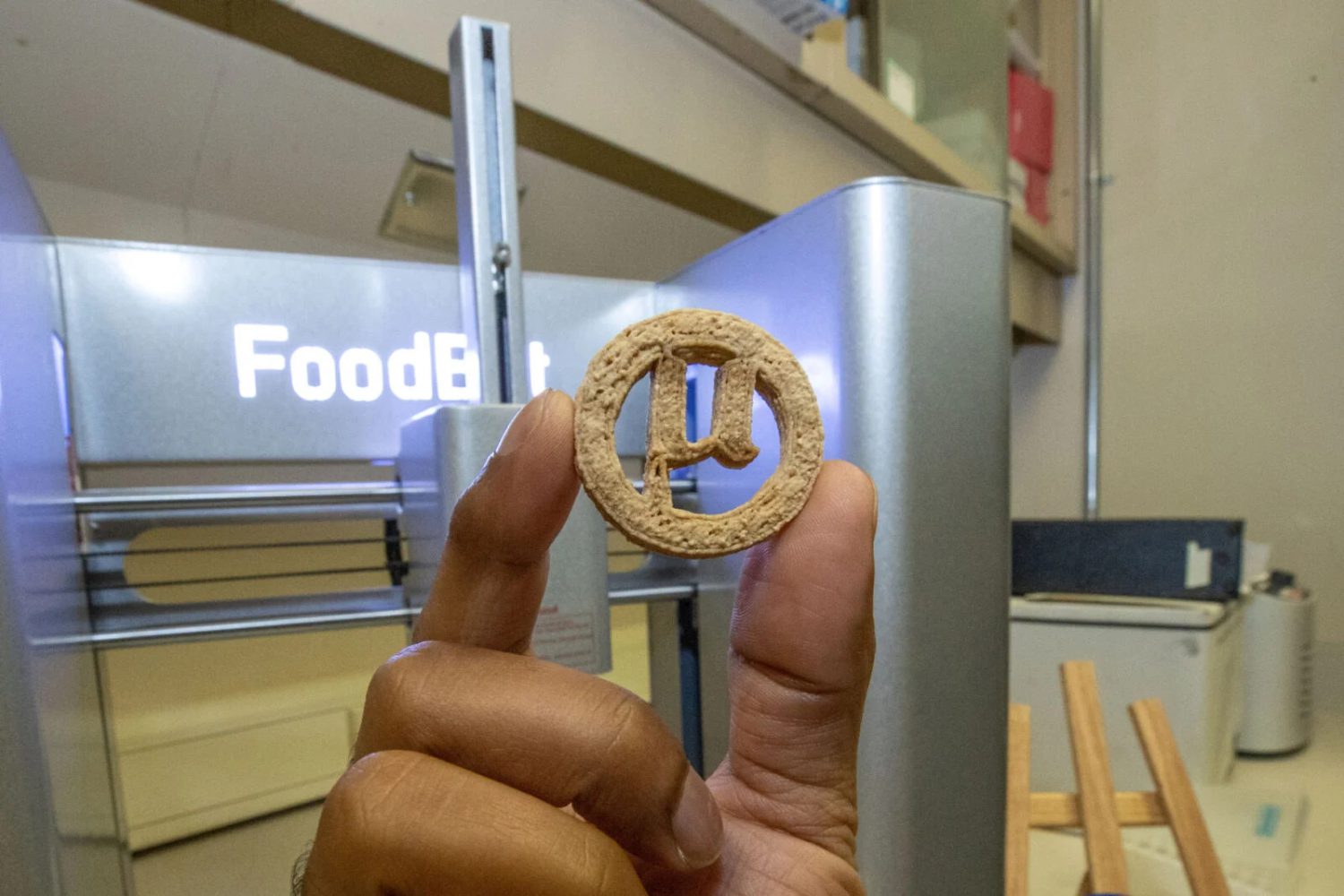
The cookie on the lab bench used to hold sparkling water. That’s not a metaphor — it’s the actual supply chain. Researchers at Southern Illinois University Carbondale have developed µBites, protein-rich, vanilla-flavored cookies made from waste PET plastic and corn stalks, presented at the American Chemical Society Fall Meeting in August 2026. No plastic remains in the final product. What remains is food — or at least, something that scores 6.5 out of 9 on a standardized taste scale.
How a Plastic Bottle Becomes Protein
The process is less “mad science” and more “very patient chemistry” — break plastic down, let engineered yeast rebuild it into something you can actually eat.
Most recycling melts plastic into more plastic, kicking the waste problem down the road. The µBites system does something stranger. Geology professor Ken Anderson‘s oxidative hydrothermal dissolution process — water and oxygen under intense heat and pressure — breaks PET bottles and corn stalks into a carbon-rich slurry that engineered yeast can metabolize.
One yeast strain converts plant biomass into vanilla flavoring. Another transforms ethylene glycol, a PET breakdown product, into beta-carotene — the vitamin A precursor your body already knows how to process. The resulting mixture gets 3D-printed into cookie shapes and hardened in a microwave.
Here’s what the lab data shows so far:
- Feedstock: discarded PET bottles combined with agricultural waste like corn stalks and leaves
- Bioconversion: engineered yeast strains produce proteins, fats, vitamins, and flavor compounds
- Safety: third-party lab testing confirms no toxic chemicals, heavy metals, allergens, or pathogens; institutional approval for formal taste tests is still pending
- Taste: earlier panels scored µBites at 6.5/9 on the Hedonic scale; aroma rated 7.33
- Efficiency and cost: carbon conversion exceeds 50% of waste material in one to two days; current production cost sits at roughly $60 per kilogram
Lead researcher Lahiru Jayakody frames the project around one blunt observation: “plastic is carbon and food is carbon.” The molecular architecture gets completely dismantled and rebuilt. Lab-grown meat once faced the same wall of instinctive disgust that “plastic cookies” triggers now — and that perception gap is something the SIU team knows it still has to cross.
Born from NASA’s Wishlist, Grounded by a $60 Price Tag
µBites began as a space-food experiment and quietly became a serious argument about what counts as waste — and what counts as dinner.
µBites started as an entry in NASA’s Deep Space Food Challenge, which seeks closed-loop food systems for long-duration missions. SIU received $25,000 and a spot among 18 promising concepts. They didn’t win. They kept going anyway.
The same technology that could feed astronauts might also help address food demand projected to rise 35–56% by 2050, with roughly 30% of the global population at risk of hunger. “Microbes are very clever,” Jayakody told the ACS meeting. “We are using their traits to solve the problems we created.”
The Star Trek replicator has been a punchline for decades. This is the first time it’s a serious research agenda with safety data attached. At $60 per kilogram, no commercial timeline, and regulatory clearance still ahead, µBites aren’t landing in your pantry soon. But the science works, the safety checks out, and the fact that “waste” and “food” are now legitimately the same research conversation says something worth sitting with.