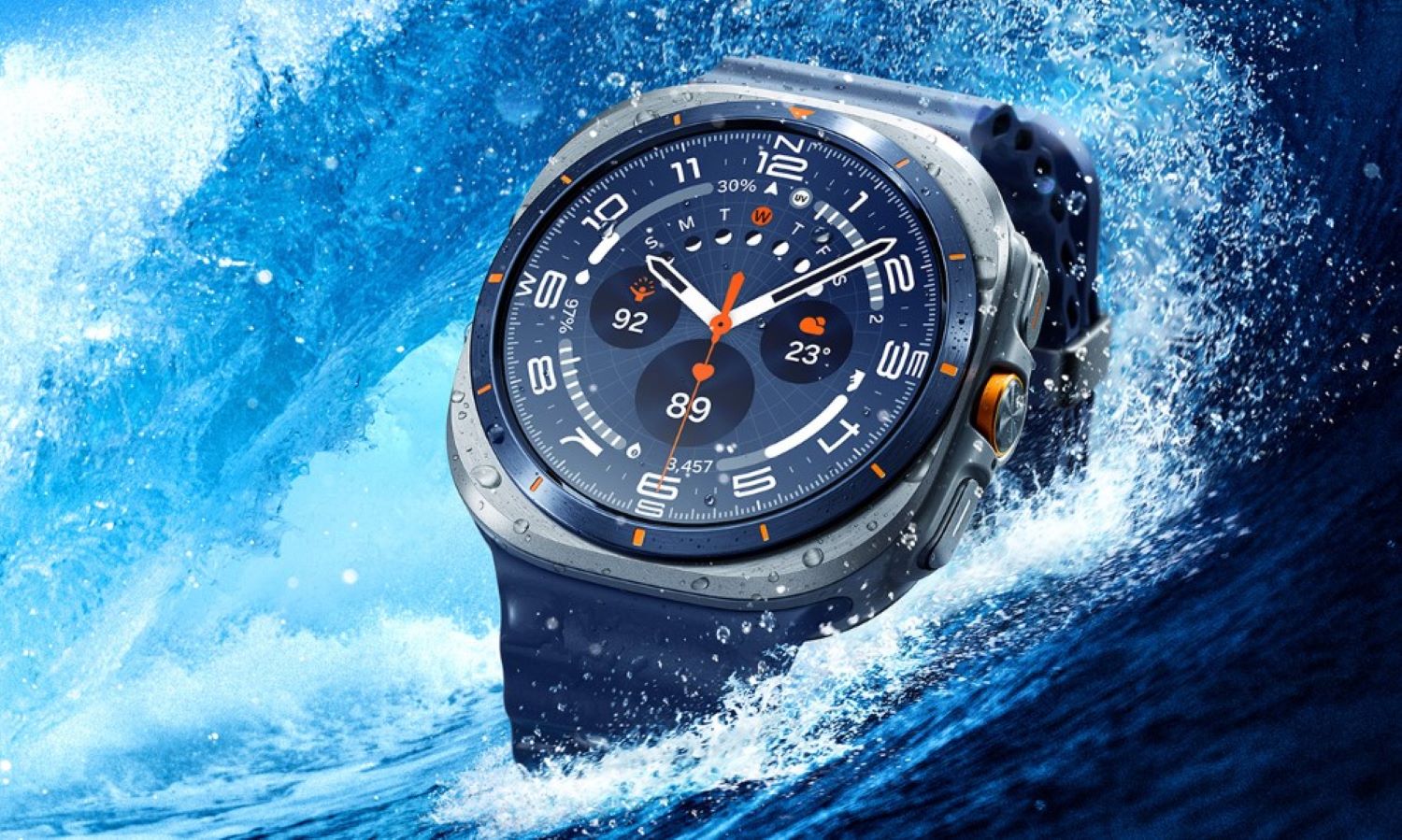
A smartwatch that gains battery capacity while losing thickness sounds like marketing fiction. Yet leaked promotional materials, first surfaced by evleaks and reported across Forbes, SamMobile, and GSMArena, paint exactly that picture for the Galaxy Watch Ultra 2. Expected to debut at Galaxy Unpacked on July 22, the Ultra 2 reportedly packs an 800mAh battery (784mAh rated) into a case roughly 10.6mm thick. The original Ultra managed 590mAh in a chunkier 12mm frame.
That math doesn’t add up with conventional lithium-ion. Forbes’ analysis argues a 35% capacity boost inside a thinner shell “strongly implies a higher-density battery chemistry, most likely silicon-carbon.” Chinese manufacturers like Oppo and Honor adopted silicon-carbon cells years ago — Samsung arriving now feels like finally watching that show everyone recommended three seasons back. Better late than never, assuming the implementation holds up.
A Bigger Battery in a Slimmer Shell
Samsung claims 60 hours of runtime, up from 48, though real-world performance remains unverified until reviews land.
- Display: 1.5-inch Super AMOLED, 480×480 resolution, 5,000-nit peak brightness (up from 3,000 nits)
- Chipset: Qualcomm Snapdragon Wear Elite (3nm TSMC) — replacing Samsung’s in-house Exynos W1000
- Durability: IP69K rating with titanium squircle case (upgraded from IP68 on the prior Ultra)
- Storage/RAM: 2GB RAM, 64GB — unchanged from predecessor
- Charging: 10W wireless — also unchanged
- Price: Expected around $699; retail availability reportedly August 5, 2026
The Chip Switch Nobody Expected
Samsung abandoning Exynos for Qualcomm signals a serious performance priority — and the expanded health sensor suite backs that up.
Samsung dropping its own silicon for Qualcomm’s 3nm Snapdragon Wear Elite is the quieter bombshell in these leaks. The efficiency gains should translate into snappier app performance and more capable AI-driven health coaching. The sensor suite has also grown considerably. According to SamMobile, the Ultra 2 reportedly tracks Advanced Glycation End Products, an Antioxidant Index, and Blood Pressure Trends — pushing Samsung into territory Garmin has owned among serious fitness users. The standard Galaxy Watch 9 is also reportedly making the same Snapdragon switch.
One concern worth flagging: silicon-carbon batteries carry less long-term degradation data than traditional cells. Samsung held off for years while competitors stress-tested the chemistry in real-world phones. Whether that patience produced a more durable implementation won’t be clear until extended reviews arrive. That unchanged 10W charging speed is worth noting too — a bigger battery with no charging speed increase means noticeably longer time to top off.
Worth Your Attention, Not Yet Your Money
If confirmed, these specs make a compelling case — but $699 demands patience until independent real-world testing arrives.
Should these leaks hold, the Ultra 2 becomes the first Galaxy Watch that might genuinely survive a weekend trail run and still have charge left by Monday. The official reveal is days away. Prospective buyers have every reason to wait for independent reviews before committing $699.