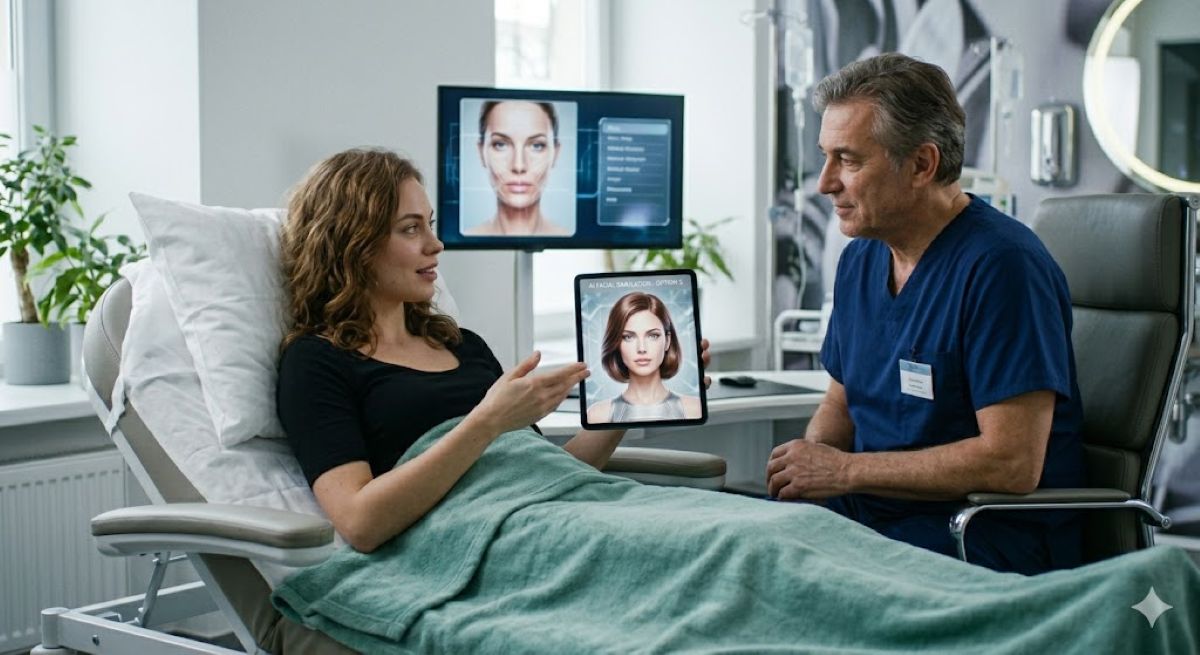
So you walk into a cosmetic surgeon’s office, pull out your phone, and show them your face—except it’s not really your face. It’s you with flawless skin, razor-sharp cheekbones, and impossibly symmetrical features, courtesy of an AI beauty app. “Can you make me look like this?” you ask. Welcome to the era of “AI face,” where algorithms are writing the beauty standards and surgeons are left explaining why human anatomy doesn’t work like Photoshop.
The Reality Check Nobody Wants to Hear
Surgeons face an impossible gap between digital perfection and biological reality.
Dr. Julian De Silva, a London facial surgeon, sees this disconnect daily. When AI edits a woman’s face, it defaults to a V-shaped jawline and heart-shaped proportions. For men, it’s all about broader, squarer jaws and fuller upper eyelids. But here’s the kicker—AI can “fix” an eye that sits a few millimeters higher than the other with a simple pixel adjustment. In reality? Your orbital bones are what they are, and changing eye position safely ranges from extremely difficult to impossible.
You’re essentially asking surgeons to perform miracles that exist only in code, not in operating rooms.
Surgeons Turn into Dream-Crushers
Professional expertise increasingly means managing unrealistic AI-generated expectations.
“You can’t control everything,” Dr. Nora Nugent tells her patients, but they’re not always listening. Once someone sees their AI-beautified self, that image gets seared into their brain like a screensaver from hell. A recent Cadogan Clinic study found AI could match surgeons’ facelift decisions 95% of the time—impressive, but researchers stressed it should “supplement, not replace” human judgment.
The problem isn’t AI’s analytical abilities. It’s that patients tune out everything else once they see their digitally perfect doppelganger.
The Culture That Created This Mess
Digital beauty filters have primed expectations for an algorithmic standard of perfection.
This didn’t happen overnight. We’ve been building toward “AI face” since Instagram filters normalized digital self-improvement. The pandemic accelerated everything—80% of facial surgeons reported patients seeking procedures to look better on video calls. Now AI apps like EntityMed and FaceTouchUp let anyone simulate rhinoplasty or jawline reshaping for free, priming expectations before patients ever meet a real doctor.
Dr. Alex Karidis recently walked a journalist through an AI makeover that escalated from modest tweaks to a £100,000+ surgical shopping list including:
- Chin implants
- Buccal fat removal
- Full laser resurfacing
Still unlikely to match the AI result.
The Deepfake Problem Gets Real
AI-generated “results” are making even real surgical outcomes seem inadequate.
Some “before and after” videos circulating on social media aren’t just enhanced—they’re entirely AI-generated. Dr. De Silva spotted one where a patient appeared decades younger post-treatment, until he noticed the six fingers on their hand. When deepfakes are setting expectations, reality never stands a chance.
The American Society of Plastic Surgeons now warns that AI-altered imagery risks becoming promises instead of possibilities. Professional bodies are scrambling to create guidelines, but the apps are already in everyone’s pockets, quietly homogenizing what billions of people think beautiful should look like.
Your face isn’t a canvas for algorithmic perfection—it’s human tissue with limits no amount of money or surgical skill can overcome.