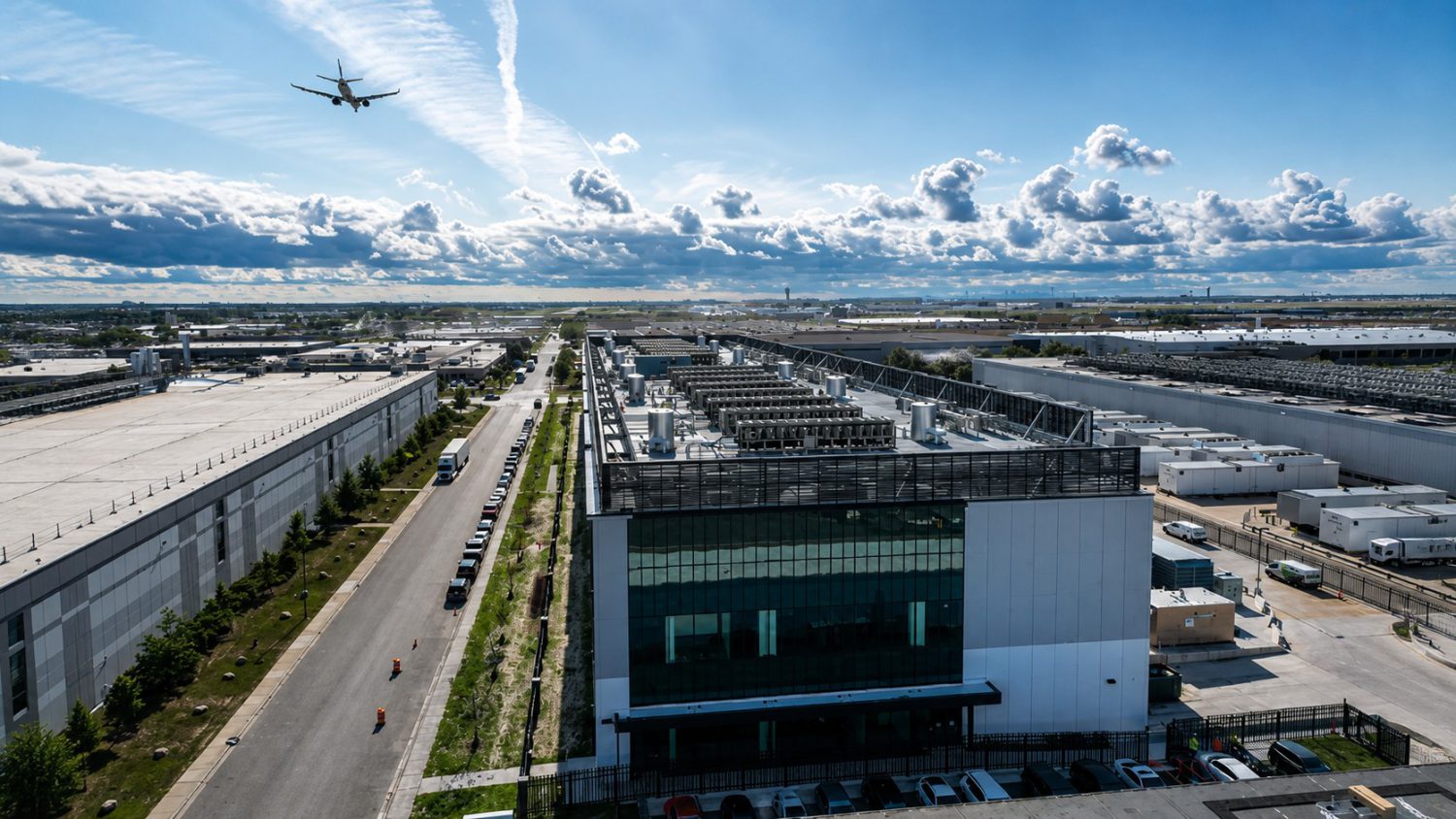
Nearly $100 million in local tax breaks landed with 18 data centers clustered near O’Hare International Airport for the 2025 tax year. That money came from somewhere. Without these breaks, the average Northlake homeowner’s annual property tax bill would drop by more than $2,000 — roughly 30% — according to an August 2026 investigation by the Illinois Answers Project and the Chicago Tribune.
The Incentive Stack: How $2 Billion Vanishes
Layers of county and state incentives have quietly erased nearly $2 billion in taxable property value across five Chicago suburbs.
- 18 data centers across Elk Grove Village, Northlake, Franklin Park, Des Plaines, and Mount Prospect received assessment reductions for 2025
- Combined cuts erased nearly $2 billion in taxable property value
- 11 of 18 already carried Cook County class 6(b) industrial incentives — a multi-year program that sharply reduces assessment ratios for qualifying industrial properties — before the latest reductions applied; 12 of 18 also hold 20-year state sales-and-use-tax exemptions under Illinois’ data center tax credit program
- In Elk Grove Village alone, five complexes saw $280 million in taxable value erased, saving them $14.5 million
Think of it like a restaurant that charges full menu price, then retroactively comps the kitchen equipment, the HVAC, and the lease — and slides the difference onto the table next door.
The Valuation Fight Nobody’s Winning Cleanly
A single Microsoft facility in Northlake illustrates how far apart the numbers can get — and how much is at stake when they split the difference.
Microsoft’s appraiser valued its Northlake Azure facility at roughly $250 million. Cook County Assessor Fritz Kaegi’s research director, David Lehman, put it at $873–900 million — counting backup generators and chillers as permanent fixtures, applying the same legal logic used for a boiler in an apartment building. The Board of Review landed at $364 million.
“When you build a $500 million data center, it should be valued at $500 million, and it shouldn’t be appealed down to $250 million, and that’s what I think is wrong with the system.” — David Lehman, Cook County Assessor’s Office
The Board handles roughly 290,000 appeals per session, including more than 32,000 commercial cases. Whoever brings the sharpest attorney and the most patient capital tends to come out ahead.
“Short-Term Pain” or a Permanent Shift?
Local mayors argue the breaks pay off over time — but watchdogs say the math only works for a fraction of deals.
Elk Grove Village Mayor Craig Johnson calls the incentives short-term pain for long-term gain — quieter industrial neighbors, higher revenues than prior uses, real jobs. Northlake Mayor Jeffrey Sherwin points to Digital Realty now paying over $2 million annually, compared with $617,000 a decade ago. Both are fair points.
Then there’s the other side. Good Jobs First analyst Kasia Tarczynska cites a 2018 study finding tax breaks are decisive for company profitability in roughly one-quarter of cases — meaning three-quarters of deals might happen regardless.
“They have all the cash … to build these data centers, so for sure they have enough revenue and income to pay their taxes.” — Kasia Tarczynska, Good Jobs First
When Digital Realty contested its Northlake valuation, the local Leyden Township school district settled at $61.5 million — far below Kaegi’s $191 million assessment — specifically to avoid a massive retroactive refund obligation. School districts are effectively negotiating against their own tax base to manage legal exposure.
Gov. Pritzker paused new state data center tax credit agreements starting July 1, 2026. But $650 million in already-approved state exemptions across 34 projects stays intact, and county-level breaks remain fully available. The pipeline slows at the state level. Residential property tax bills, however, remain unchanged.