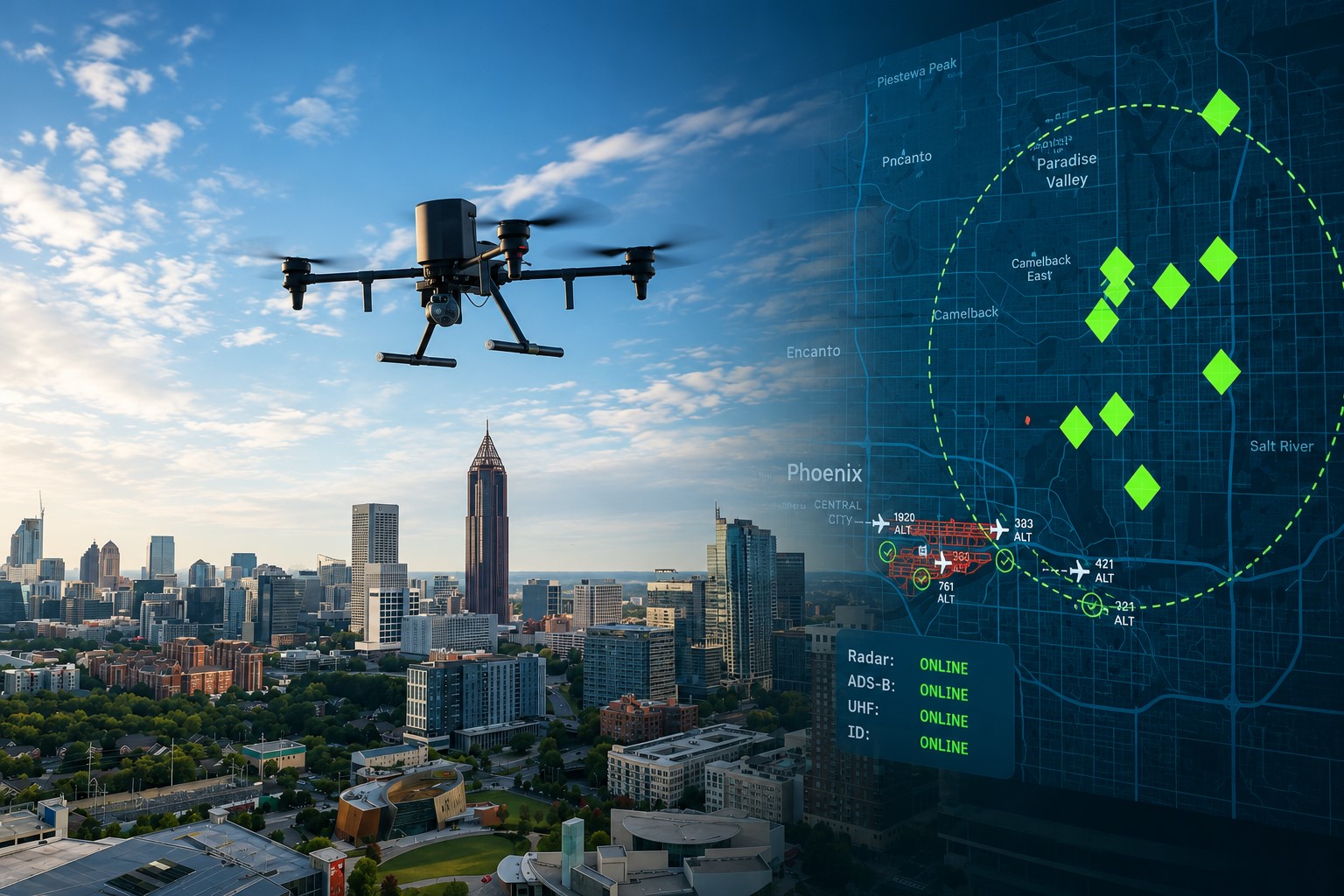
A drone that reads your license plate from 2,000 feet away sounds like a Black Mirror pitch. It’s actually Flock Safety‘s newest product. Alpha, the company’s first U.S.-built quadcopter, is designed to launch autonomously, stream thermal video to officers, and plug directly into the same ALPR camera network that civil liberties groups have spent years calling a mass surveillance system. The hardware specs are genuinely impressive. The company deploying them has a documented history that demands scrutiny.
What Alpha Actually Does
The confirmed specs are serious — but some headline claims remain unverified marketing.
Flock built Alpha for police agencies locked out of DJI hardware by federal rules. According to DroneLife and DroneXL reporting, it hits 60 mph, carries a gimbaled sensor head combining optical cameras, HD thermal imaging, and a laser rangefinder, and returns to its dock for battery swaps that get it airborne again in under 90 seconds. Flock’s claim of “longest flight time of any DFR quadcopter” comes without a published minute figure — marketing, not a benchmark. The “fly it from a phone” detail circulates in demos and social media but doesn’t appear in official spec sheets.
Flock’s stated specifications — not independently verified benchmarks:
- Speed: up to 60 mph
- Camera: reads plates from 2,000 feet
- Sensors: optical, HD thermal, laser rangefinder in one gimbal
- Dock: re-deploys in under 90 seconds via battery swap and contact charge
- Compliance: NDAA-compliant, U.S.-built
Alpha feeds into Flock’s existing cloud platform — thousands of fixed ALPR cameras already logging vehicle movements nationwide, searchable through AI-driven natural-language queries, according to Engadget’s reporting on the broader Flock ecosystem.
The Record Behind the Hardware
Flock says “vehicles, not people” — critics have documented evidence suggesting otherwise.
“Designed to enable mass surveillance and susceptible to grave abuses.” — Electronic Frontier Foundation, 2025 review of Flock’s ALPR network
Flock’s FAQ promises no facial recognition and no demographic profiling. Tracking every car in a country where driving is a daily necessity is, functionally, tracking people. The EFF documented cross-jurisdiction data sharing, false hits from stale plate data, and officer misuse of Flock systems. Engadget reported that Flock employees used footage of preschoolers to sell more cameras. The ACLU flagged analytics that scan all vehicle movement patterns to flag “suspicious” behavior — predictive policing operating under a different label.
Fixed cameras watch specific intersections. Alpha goes wherever agencies point it, adding thermal vision and aerial angles no pole camera can match. Your neighborhood’s data-retention policy almost certainly wasn’t written for this. The drone is probably as capable as advertised. Whether the oversight is — that remains entirely unclear.