Drone threats have fundamentally changed air defense economics, forcing a rethink of how you protect sprawling infrastructure like refineries and offshore platforms. Traditional ground-based sensors work fine for single facilities, but they leave blind spots across vast geographic areas—exactly where coordinated drone swarms can slip through, similar to how hypersonic missiles exploit gaps in traditional defense systems.
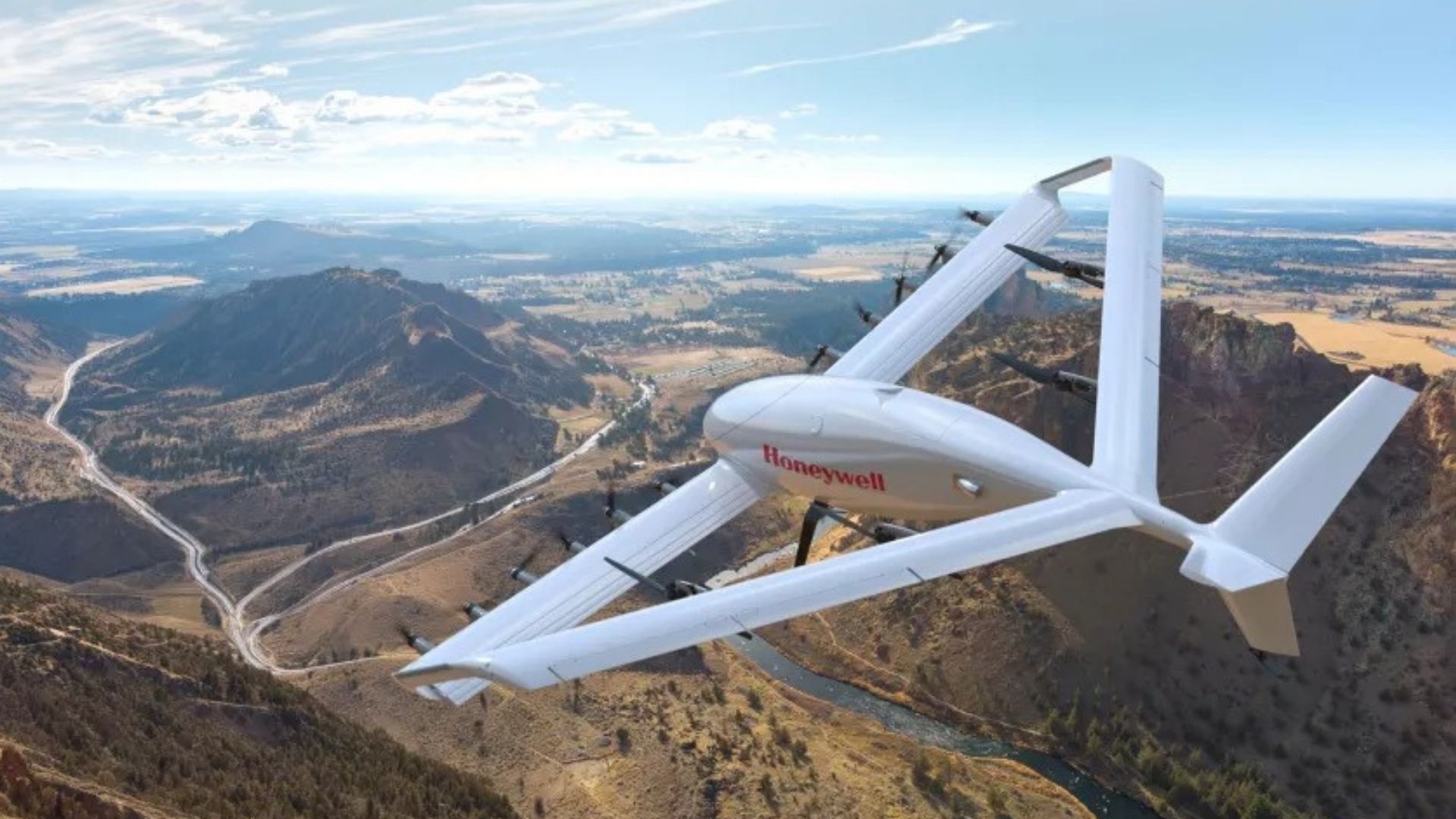
Honeywell Aerospace and Odys Aviation just filled that gap with the Laila-SAMURAI system, creating the first persistent airborne counter-drone platform that can hunt threats for eight hours straight without touching the ground.
Two Systems, One Airborne Predator
The collaboration merges Honeywell’s Stationary and Mobile UAS Reveal and Intercept (SAMURAI) platform—originally designed to protect Air Force convoys—with Odys Aviation’s Laila aircraft. Think of it as mounting a comprehensive radar suite and interceptor system on a drone that can hover like a helicopter but fly like a plane.
The result bridges the gap between expensive ground sensors and even more expensive missile defense systems, creating a new defensive layer that patrols the horizon where threats actually emerge.
Seven Seconds to Live or Die
Here’s where things get intense: “The AI-driven piece is really critical because it’s seven seconds from detection to having to make a decision on what effector I’m using with some of the high-speed drones that are coming in,” says Norm Balchunas, Honeywell’s senior director of cybersecurity and electronic warfare.
Seven seconds. That’s barely enough time to process what you’re seeing, let alone decide whether to jam it, track it, or deploy interceptor drones. The AI handles target discrimination—separating actual threats from birds or weather—while operators focus on engagement decisions, much like the advanced targeting systems on a sixth-generation fighter.
450 Miles of Persistent Protection
The Laila aircraft isn’t your typical electric drone that needs special charging stations every few hours. Its hybrid-electric system runs on Jet A, A-1, and JP-8—standard military fuels available anywhere.
With 450-mile range and eight-hour endurance, it can patrol massive areas like pipeline networks or offshore energy platforms that ground-based systems simply can’t cover effectively. No runway required either, since the VTOL design lets it launch from virtually anywhere.
Infrastructure Gets Its Sky Bodyguard
“Critical infrastructure and forward-operating locations require persistent protection across large areas and the ability to engage threats at the horizon long before they’re at the doorstep,” explains James Dorris, CEO of Odys Aviation.
Translation: you can’t protect a 500-mile pipeline with a few ground sensors anymore. The economics favor this layered approach—catch threats early with the airborne platform, reducing reliance on costly last-resort kinetic defenses. It’s defense strategy catching up to threat reality, finally giving infrastructure operators something that scales to match the problem they’re actually facing.