Qualcomm’s canceled Snapdragon Dev Kit left Windows developers scrambling for reliable Arm hardware to test their apps. Microsoft just filled that void with the Surface RTX Spark Dev Box, a compact desktop that combines Nvidia’s new RTX Spark platform with the build quality and support that Qualcomm’s aborted effort never delivered.
Raw Power for AI Workloads
This isn’t your typical mini PC—it’s built for sustained developer punishment.
The Dev Box packs Nvidia’s RTX Spark Arm processor with 128GB of unified memory and a 100W thermal envelope—significantly higher than the 45-80W constraints typical in Spark laptops. That extra headroom matters when you’re training models or running 120-billion-parameter AI inference locally. The unified memory architecture means your CPU and GPU share that massive pool, eliminating the bottlenecks that plague traditional discrete setups. Think of it as having a MacBook Pro’s M-series efficiency but with CUDA support that actually works.
Xbox-Inspired Design That Actually Functions
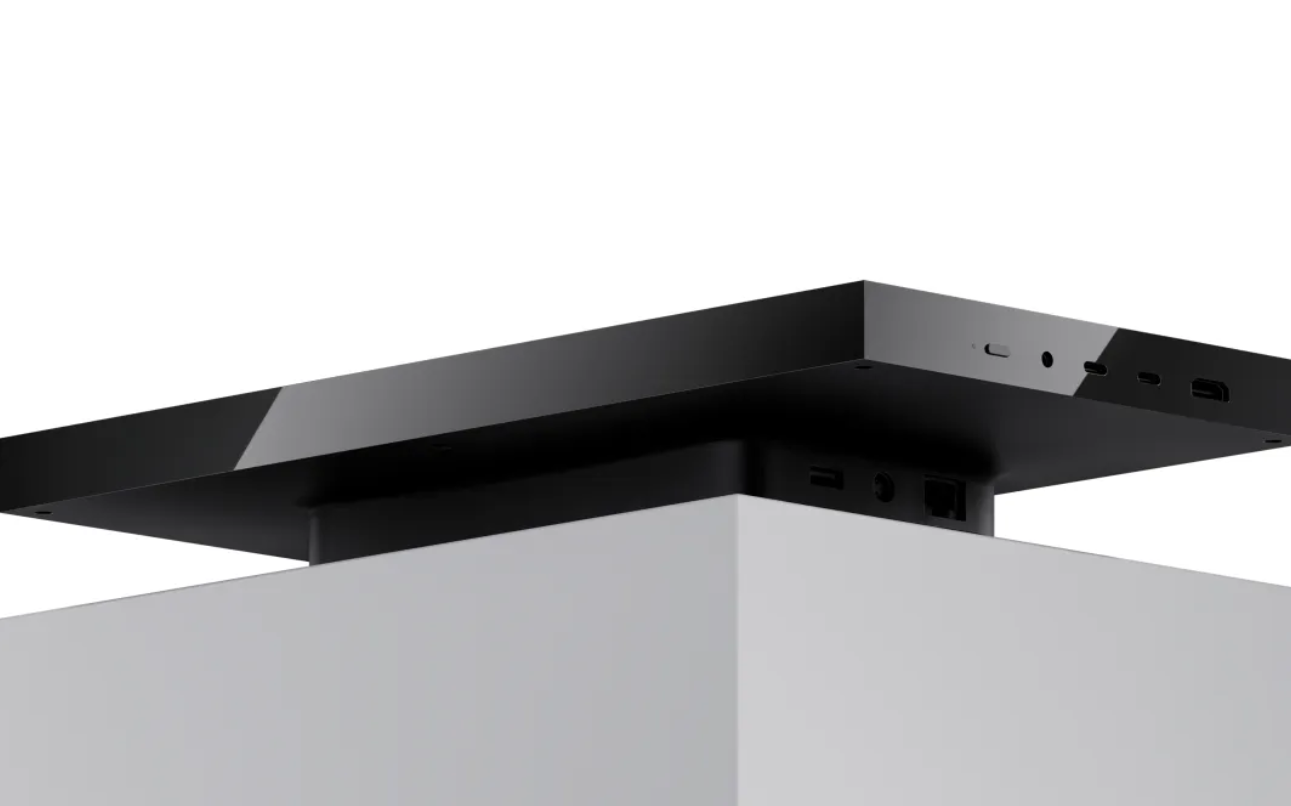
Solid aluminum construction doubles as passive cooling, borrowing Xbox Series X aesthetics.
The compact aluminum chassis pulls double duty as both enclosure and heatsink, with top vents styled like an Xbox Series X. This isn’t just Microsoft design language—it’s practical thermal engineering. While Qualcomm’s dev kit reportedly suffered hardware quality issues that contributed to its quiet cancellation, Microsoft’s Surface branding suggests they’re serious about long-term reliability. The aluminum block approach should handle 24/7 development workloads without the plastic fatigue that plagued earlier Arm dev hardware.
Developer-Ready Out of the Box
Pre-configured Windows 11 Pro eliminates the usual setup headaches.
Microsoft ships the Dev Box with Windows 11 Pro pre-tuned for development work:
- VS Code
- GitHub Copilot
- Developer Mode enabled
- PowerShell 7 as default
- All productivity distractions turned off
No more spending your first day wrestling with driver installations or hunting down development tools. This attention to developer experience shows Microsoft understands what went wrong with previous Windows on Arm dev initiatives—hardware is only half the battle.
Three-Chip Strategy Takes Shape
Microsoft now covers every use case from battery life to CUDA workloads.
The Dev Box completes Microsoft’s silicon strategy: Snapdragon for all-day battery life, Intel for x86 compatibility, and RTX Spark for AI-heavy workloads requiring CUDA. It’s arriving later this year through Microsoft’s online store, though pricing remains undisclosed. For developers tired of emulation workarounds and limited Arm tooling, this represents the first serious Windows on Arm development platform since the transition began—assuming Microsoft can deliver where Qualcomm couldn’t.