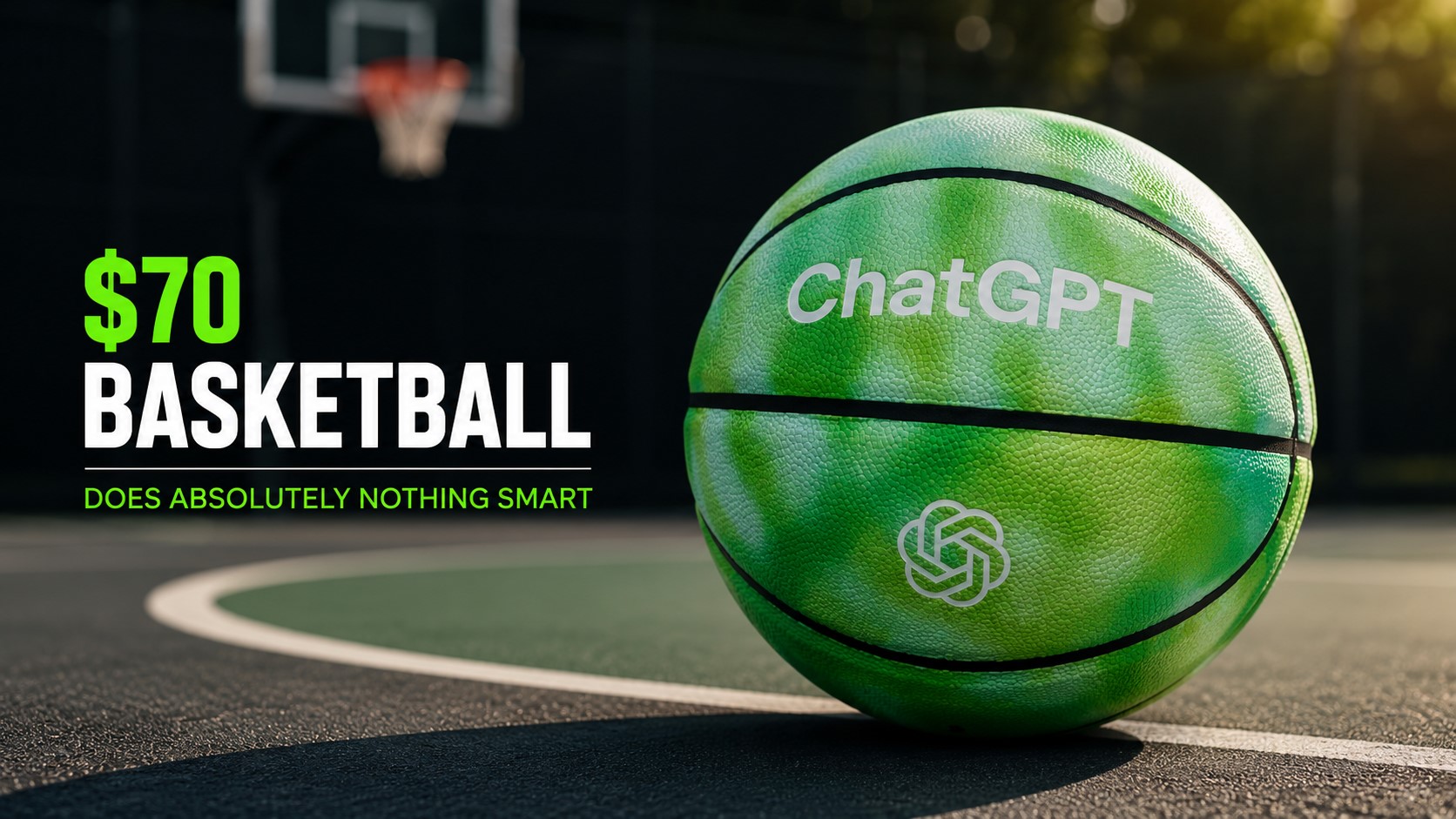
You’d expect a basketball from the world’s most talked-about AI company to track your shot arc or coach your free throw. It does neither. The ChatGPT basketball is a standard Size 7 (29.5″), 100% rubber outdoor ball in ChatGPT green, sold through the OpenAI Supply Co. store for $70. No sensors. No app pairing. No Bluetooth. Just rubber and a logo.
Here’s what the product lineup looks like in context:
- Size and material: Size 7 (29.5″), 100% rubber, built for outdoor play and adverse weather
- Price: $70 — no AI features, no connectivity, no sporting-goods justification for the markup
- Store neighbors: A $230 Codex mini keyboard and a $175 “research” quarter-zip, treating the ChatGPT logo like a lifestyle badge
- Origin story: The ball reportedly circulated as gifted swag before hitting public sale
Its marketing anchor is the “Pause. Play. Prompt.” campaign, which frames the purchase as “a physical reminder that creativity doesn’t just live on our screens.” OpenAI’s product listing suggests that “sometimes the best ideas arrive between pickup games.” The pitch is delivered completely straight, which, honestly, makes it funnier.

The Brand Move Behind the Ball
The tension between OpenAI’s “step away” messaging and its engagement-deepening features is where the real story lives.
That $70 is almost entirely brand premium. For context, the same amount could purchase roughly 56 million GPT-5 input tokens, according to ChatAI’s analysis. One option lets you process a small library. The other bounces.
Think of it as a Supreme drop where the logo is the product — the cultural signal matters more than the construction. Standard branded rubber balls from major sporting-goods makers typically run well below OpenAI’s price point, which means you’re paying for the ChatGPT name and the narrative attached to it, full stop.
The deeper tension here is harder to laugh off. OpenAI is selling you a ball that says “go outside” while simultaneously building features engineered to pull you back in. The company launched Pulse, a feature that proactively compiles morning briefs designed to get you checking ChatGPT the way you’d check a news feed — before your first cup of coffee, according to TechCrunch. A company nudging you toward offline play with one hand while extending digital hooks with the other deserves at least one raised eyebrow.
What the Ball Really Tells You
This isn’t about basketball — it’s a window into how far OpenAI thinks the ChatGPT brand can stretch.
The basketball reveals more about OpenAI’s ambitions than any product spec sheet could. The company doesn’t just want to live on your laptop. It wants space on your shelf, in your gym bag, and on the court. That’s a deliberate brand-building move — turning ChatGPT from a software tool into a recognizable consumer identity with physical artifacts and aesthetic cues. Compare that to smart gadgets that earn shelf space by actually making life easier.
Whether that reads as clever cultural positioning or a $70 rubber contradiction depends on how seriously you take an AI company telling you to touch grass. Either way, the ball tells you something real: OpenAI is playing a much longer game than basketball.