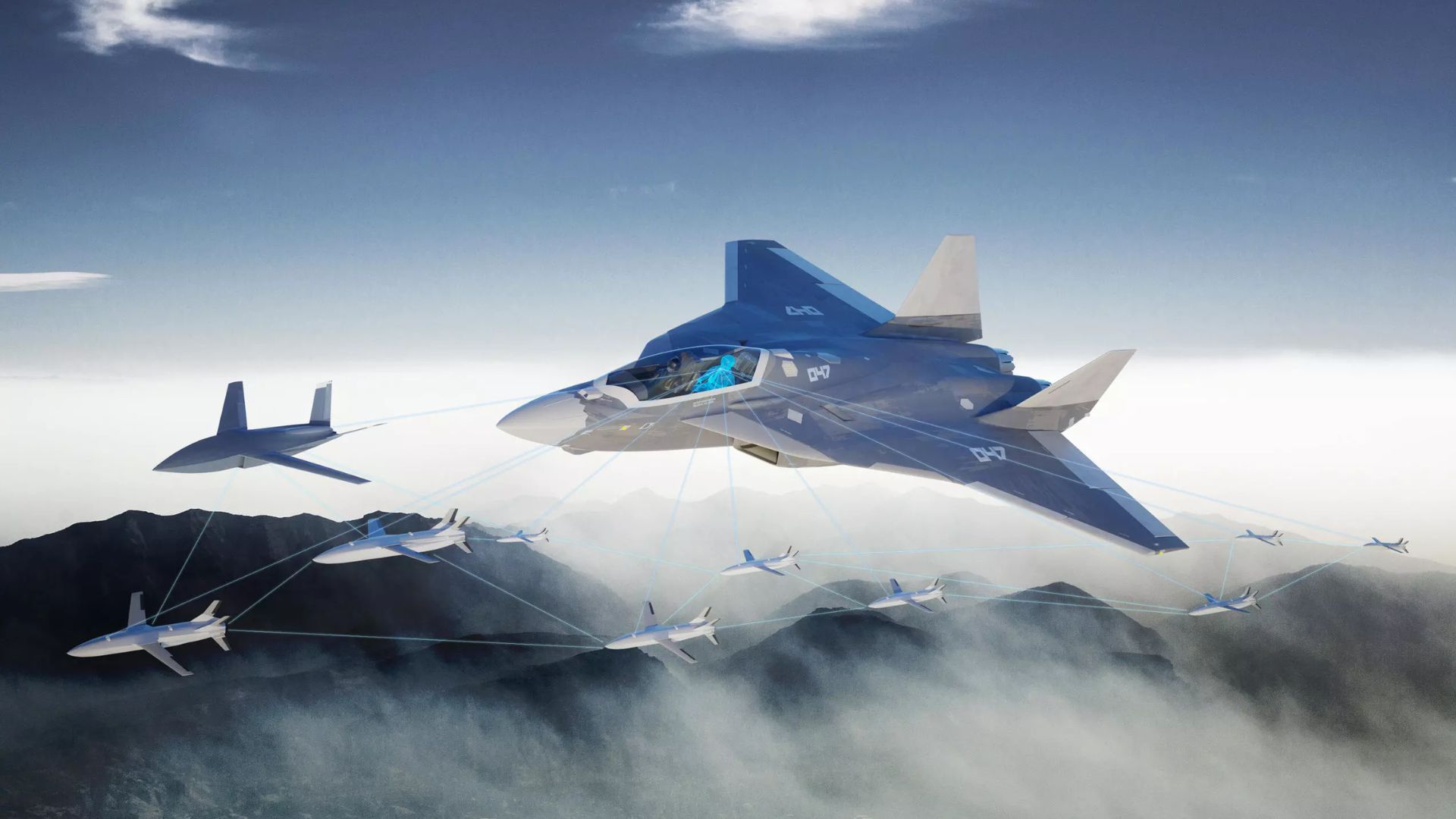
By 2040, Europe wants to fundamentally change how air combat works through its Future Combat Air System—and it’s not really about building a better fighter jet. Think of FCAS like creating a military version of a smart home ecosystem, where every device talks to every other device in real time. This “Combat Cloud” would link fighters, drones, ships, satellites, and ground forces into one massive networked brain.
Airbus describes the system as enabling “full collaborative combat” through what they call the Next Generation Weapon System. Your understanding of air warfare probably involves pilots making split-second decisions in isolation. FCAS flips that script entirely—AI assists human decision-making while unmanned Remote Carriers work alongside crewed fighters, sharing data across air, land, sea, space, and cyberspace simultaneously.
Sixth-Generation Stealth Meets Drone Swarms
The New Generation Fighter coordinates attacks rather than flying solo missions.
The actual fighter aircraft represents just one piece of this puzzle. This sixth-generation stealth jet will feature advanced sensors and the ability to command drone wingmen—imagine a quarterback calling plays for robotic receivers. Manned-unmanned teaming begins in the early 2030s, with the full system operational by 2040.
France specifically wants carrier operations and nuclear deterrence capabilities, while Germany and Spain have different priorities that continue creating friction between the partners.
Europe’s Tech Independence Project
Strategic autonomy drives this ambitious multinational effort.
FCAS serves Europe’s broader goal of reducing dependence on American military technology. France, Germany, and Spain are splitting responsibilities—Dassault Aviation leads the fighter development while Airbus handles major system components for Germany and Spain. This isn’t just about building cool military tech; it’s about preserving high-end aerospace expertise and ensuring Europe can defend itself without relying on Pentagon systems.
Program Challenges Threaten Timeline
France-Germany disputes raise questions about delivery dates.
The project faces repeated delays and leadership disputes, particularly over workshare and design authority between Dassault and Airbus. These aren’t minor bureaucratic squabbles—they’re fundamental disagreements about how advanced military technology gets developed.
Defense analysts suggest that even if the fighter component stalls, the drone, sensor, and combat-cloud architecture could continue separately.
Whether FCAS succeeds as envisioned or fragments into compatible subsystems, it represents Europe’s bet that future warfare depends more on networking intelligence than individual platform superiority.