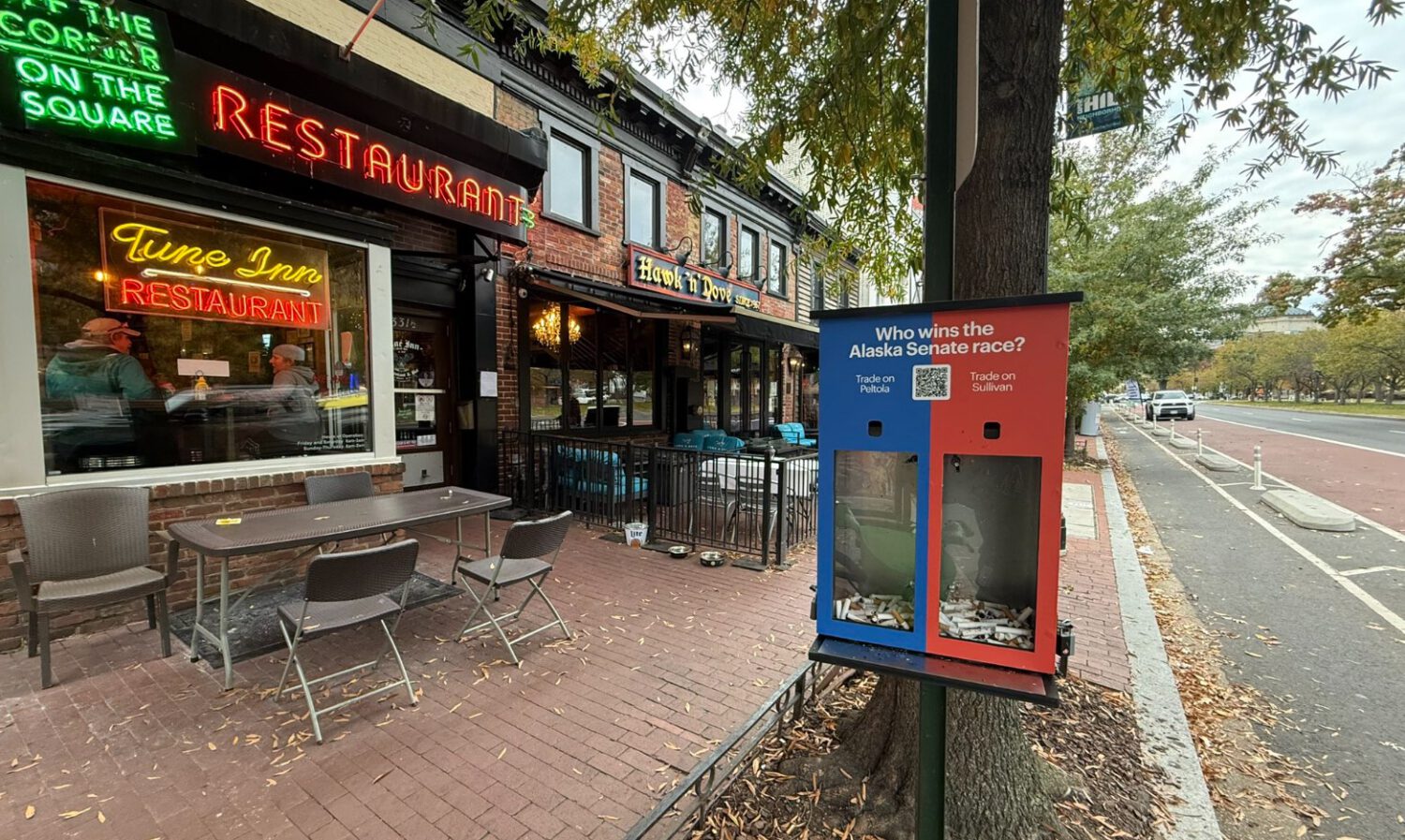
Kalshi, a prediction-market platform, placed cigarette-butt receptacles in Austin, New York, and Washington, D.C., ahead of the Texas Senate election. Each box offered two labeled compartments, one for Democrat James Talarico and one for Republican Ken Paxton, asking passersby to deposit a butt for whoever they thought would win.
The campaign drew social-media attention. As reproduced in Houston Chronicle reporting, one post read: “Look out for these @Kalshi ‘cig ballot boxes’ across Washington, D.C., Austin, TX, and NYC for who folks thinks might win in big races!” The post was attributed to Erin Maguire; the account’s authentication status was not independently established.
The Race Behind the Receptacle
This is a genuinely consequential Senate contest that extends well beyond any street installation.
The 2026 Texas Senate race opened after John Cornyn lost the Republican primary. Talarico, the Democratic candidate, faces Paxton, the Republican, in a contest that has drawn national attention.
Kalshi has been running tradable contracts on the outcome. After early voting closed, the platform published a market report placing Talarico at 71% and Paxton at 29% as of that report’s stated time. Those figures are market-implied probabilities derived from contract trading on Kalshi’s platform; they can change with trading activity and reflect the collective expectations of Kalshi’s user base, not a representative sample of Texas voters.
What the Butts Can Tell You (and What They Can’t)
Self-selected, unweighted, and demographically uncontrolled, the ashtray deposits carry real methodological limits.
The cigarette-box deposits are an unofficial promotional straw poll, not a scientific survey. Participation would likely depend on foot traffic, willingness to engage with a branded installation, and whether a person happened to be smoking at the time.
No verified deposit counts, sampling protocol, or independent methodology were made available in the reporting. Any claim about which compartment received more deposits should be treated with appropriate skepticism.
Three Things Kalshi Is Doing at Once
Polling aesthetics, real market data, and product advertising are converging in the same installation.
Kalshi is simultaneously operating a prediction market, running an advertising campaign, and generating shareable content that blurs the boundary between the two. The installations also promote awareness of Kalshi’s tradable markets, which are the platform’s core product.
Online criticism noted the irony of associating cigarettes with a gambling-style financial product, according to the Houston Chronicle. That reaction appeared in social-media commentary, not in any formal survey of opinion.
The Larger Debate Kalshi Is Walking Into
Prediction markets remain contested territory, and this campaign steps directly into that ongoing argument.
Critics of event contracts argue they function like sports betting and may circumvent state gambling restrictions. Supporters describe them as information-aggregating markets that reflect real expectations about outcomes.
Kalshi’s cigarette-box campaign does not resolve that debate. The installation does make clear what one prediction-market platform is willing to do to make political trading more visible and participatory: set up a branded ashtray on a street corner and invite the public to weigh in.