A few years back, 4K OLED gaming monitors carried price tags reserved for exotic cars and private islands. Fast-forward to today, and these displays have dropped into reality—and your budget. The difference? 240Hz refresh rates now pair with per-pixel light control and response times hitting 0.03ms, transforming competitive gaming and cinematic experiences alike. This guide cuts through the market noise to spotlight eight models delivering genuine performance gains without the former premium tax.
This content may contain affiliate links. If you wish to support us and use these links to buy something, we may earn a commission.
8. MSI MAG 272UP QD-OLED X24
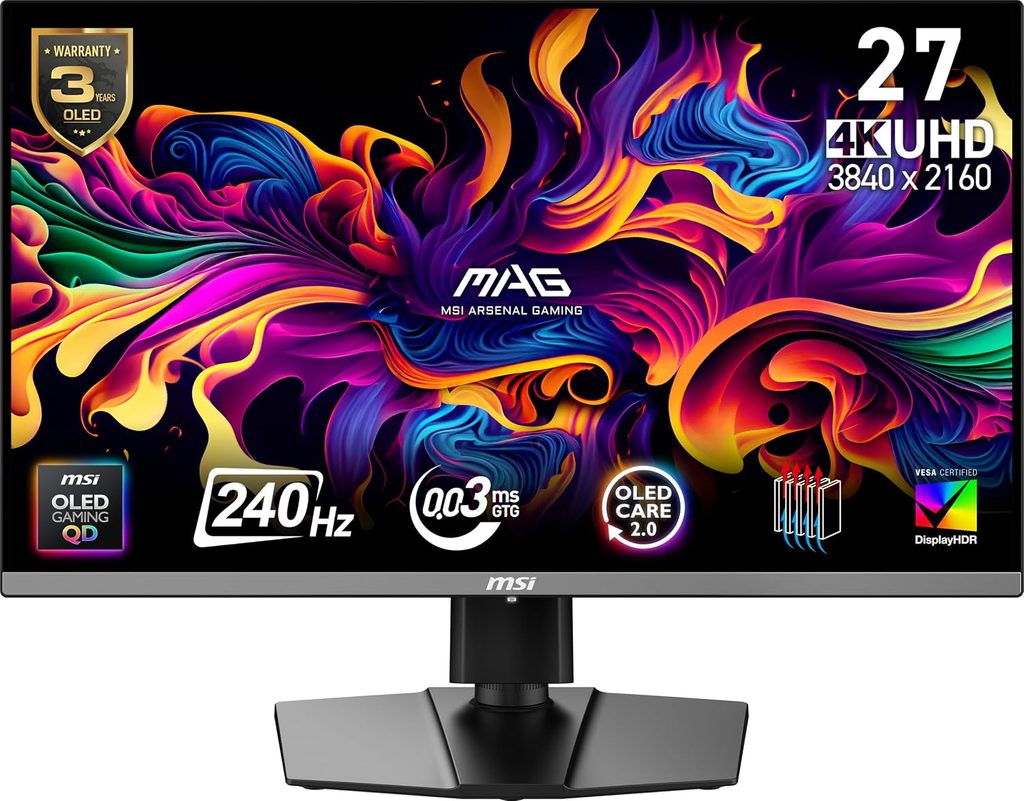
Entry-level pricing meets high-refresh 4K QD-OLED performance in a 26.5-inch panel.
The MSI MAG 272UP QD-OLED X24 delivers a 26.5-inch 4K QD-OLED display with a 240Hz refresh rate and 0.03ms GtG response time. Its 3840 × 2160 resolution offers the pixel density competitive players need to spot distant targets, while DisplayHDR True Black 400 certification brings 1,000-nit HDR peak brightness and 250-nit SDR brightness. The specs alone justify attention, but the real story lies in the accessible price point that makes premium QD-OLED features attainable without a second mortgage.
7. Alienware AW2725Q
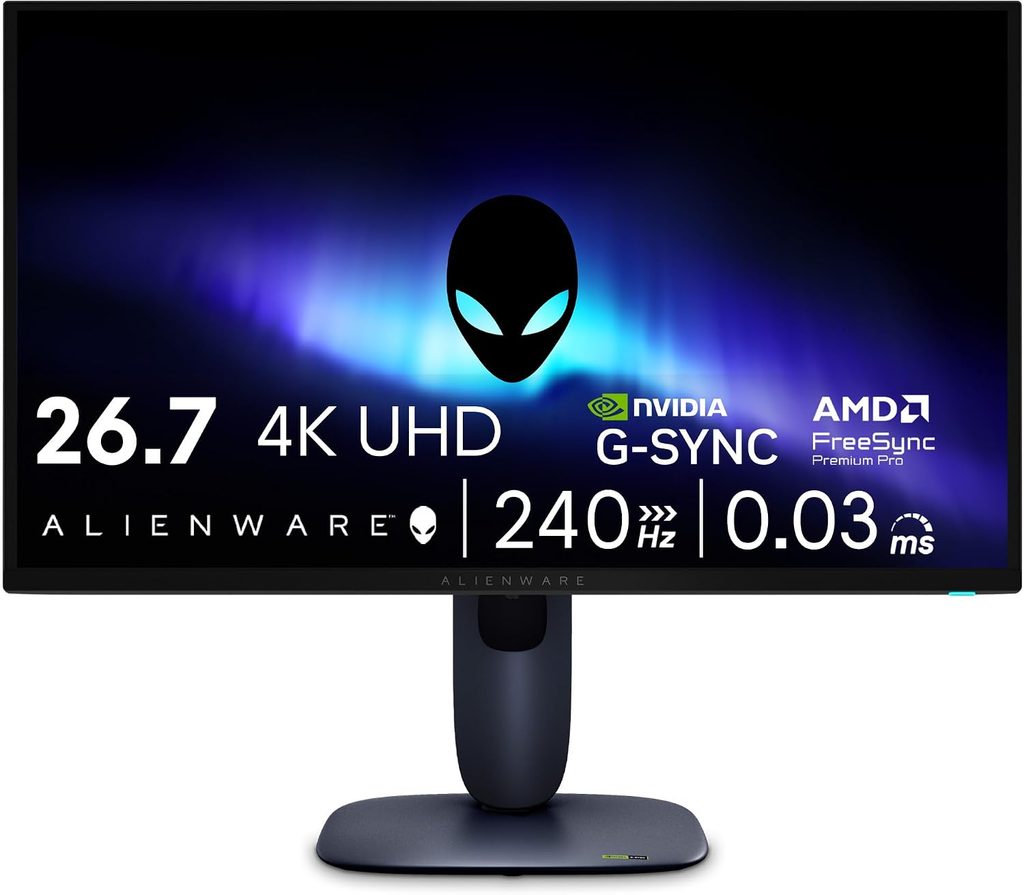
Premium design elevates fourth-generation Samsung QD-OLED tech beyond utilitarian rivals.
Many gaming monitors prioritize raw specifications over aesthetics, but the Alienware AW2725Q breaks that mold. It shares a 27-inch fourth-generation Samsung QD-OLED panel with models like the MSI MAG 272UP, yet distinguishes itself through a glossy display finish and refined industrial design. The display pushes 240Hz refresh rates with 0.03ms GtG response time, offering approximately 250-nit SDR brightness and up to 1,000-nit HDR peak brightness. G-SYNC and FreeSync Premium Pro support complete the package for those curating high-end setups where visual refinement matters as much as frame rates.
6. Samsung Odyssey OLED G7 G73SH
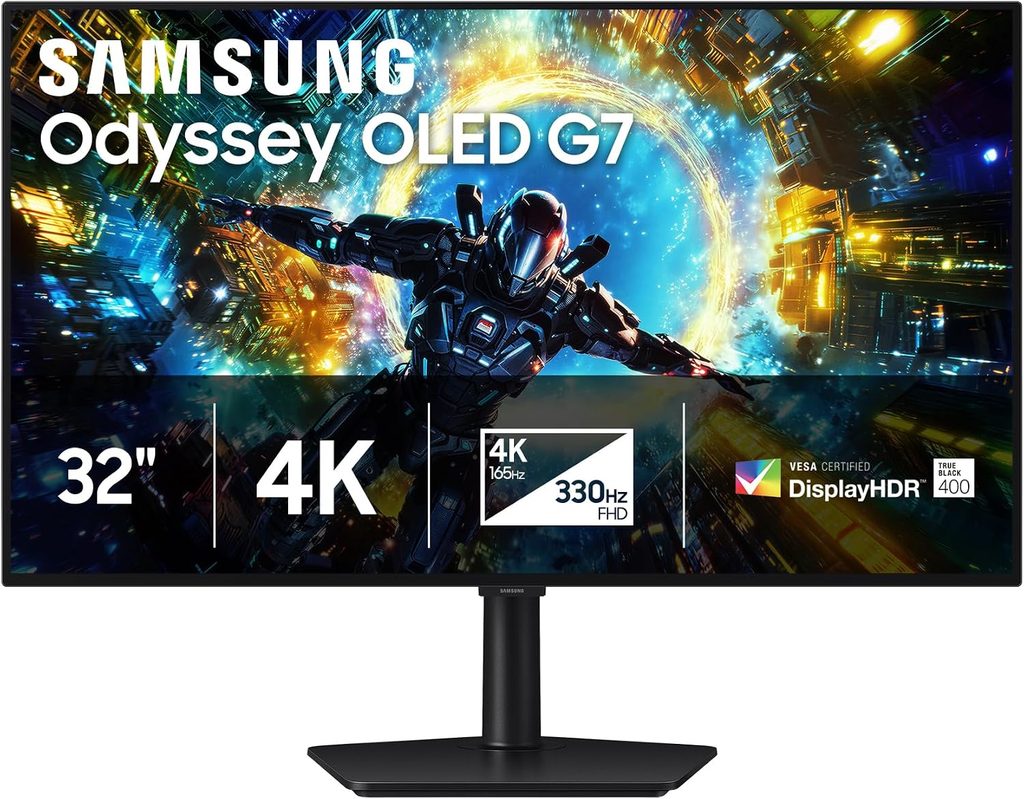
Dual-mode flexibility switches between 4K/240Hz richness and 1080p/480Hz esports precision.
This 32-inch 4K OLED panel delivers versatility through its dual-mode design: 4K resolution at 240Hz for visually rich experiences, or 1080p at up to 480Hz when milliseconds matter most. The monitor offers approximately 275-nit SDR brightness and 1,300-nit HDR peak brightness, providing headroom for both competitive gaming and HDR content. The ability to transition from immersive 4K landscapes to pixel-perfect esports precision makes this a dynamic display that adapts to different gaming moods without requiring a second monitor.
5. ASUS ROG Strix OLED XG32UCWMG
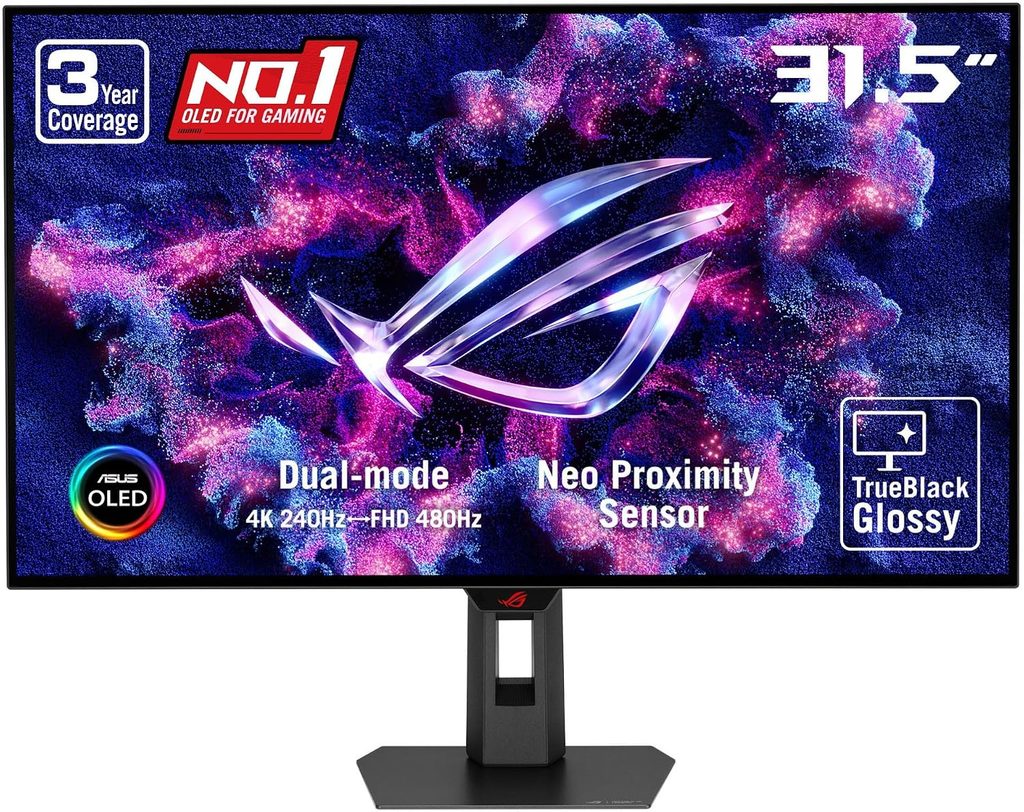
LG OLED panel technology pushes dual-mode performance to 480Hz in competitive titles.
Hitting 480Hz refresh rate in its 1080p mode, this monitor redefines competitive gaming expectations from a 4K OLED. The 32-inch LG OLED panel delivers smooth 240Hz operation at full 4K resolution, while dual-mode performance eliminates the usual resolution-versus-refresh-rate compromise. HDR peak brightness reaches approximately 1,300 nits, ensuring detail clarity from shadowy corners to bright explosions. For esports players running titles like Valorant or CS:GO, the 480Hz mode provides measurable response-time advantages over competitors capped at lower refresh rates.
4. MSI MPG 321URX QD-OLED
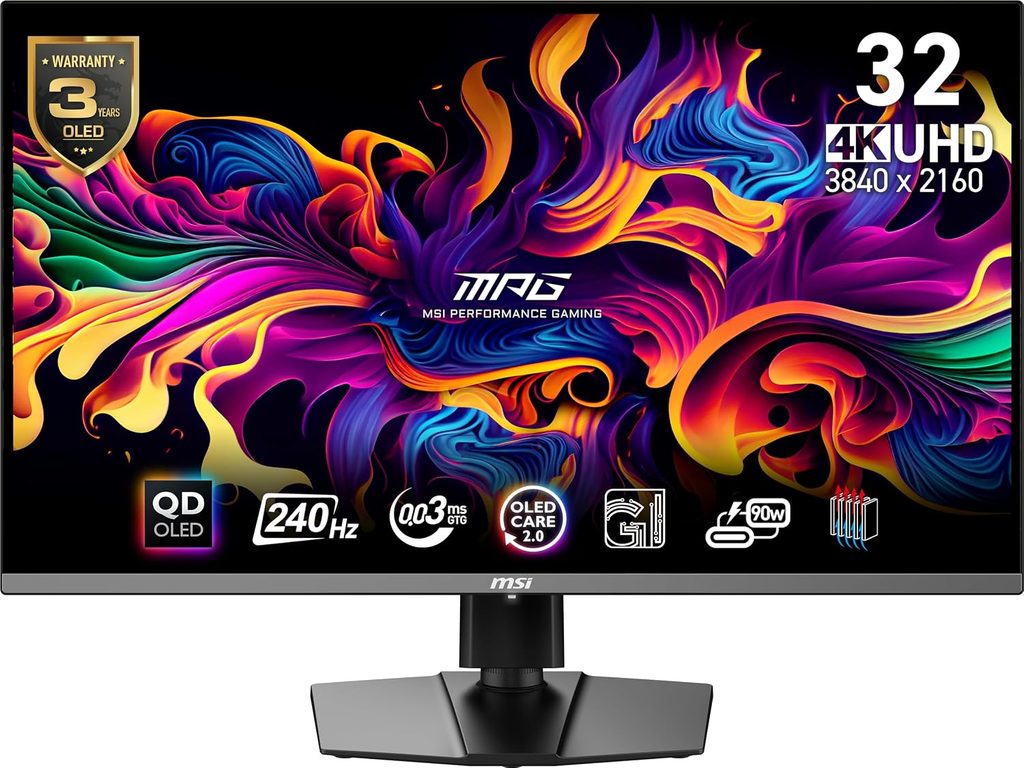
Third-generation Samsung QD-OLED panel offers value-focused 32-inch 4K performance.
The 32-inch 4K QD-OLED display proves lasting value through its third-generation Samsung QD-OLED panel. It delivers crisp 4K resolution and approximately 1,000-nit HDR peak brightness while maintaining the deep blacks and vibrant colors characteristic of QD-OLED technology. For gamers seeking premium OLED performance without chasing every cutting-edge trend, this model offers a quality experience at a lower price point than newer fourth-generation or tandem-OLED alternatives.
3. MSI MPG 322URX QD-OLED
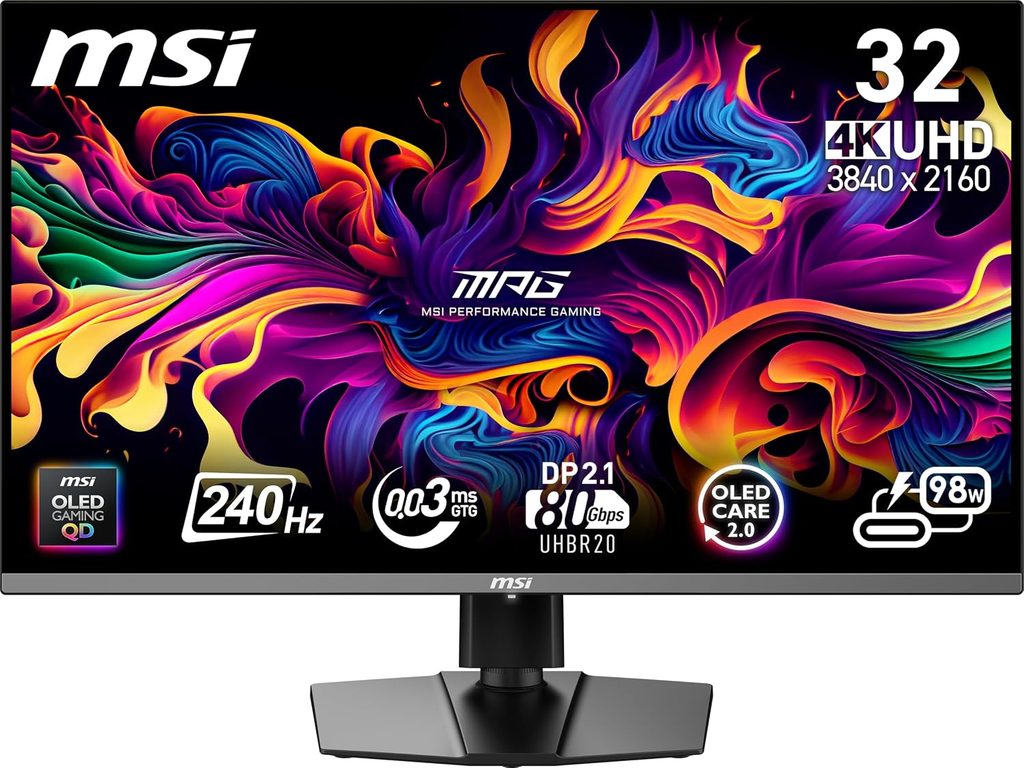
Incremental refinement over the 321URX maintains reliable current-generation QD-OLED performance.
This MSI model quietly evolves the manufacturer’s 32-inch 4K QD-OLED lineup through polished refinements rather than revolutionary changes. It delivers approximately 1,000-nit HDR peak brightness, positioning itself as a solid upgrade for those seeking reliable current-generation performance without the tandem panel technology found in later models. For gamers upgrading from older non-OLED displays, the stellar contrast and response times define the QD-OLED experience without requiring investment in the absolute latest, most expensive innovations.
2. MSI MPG 322UR QD-OLED
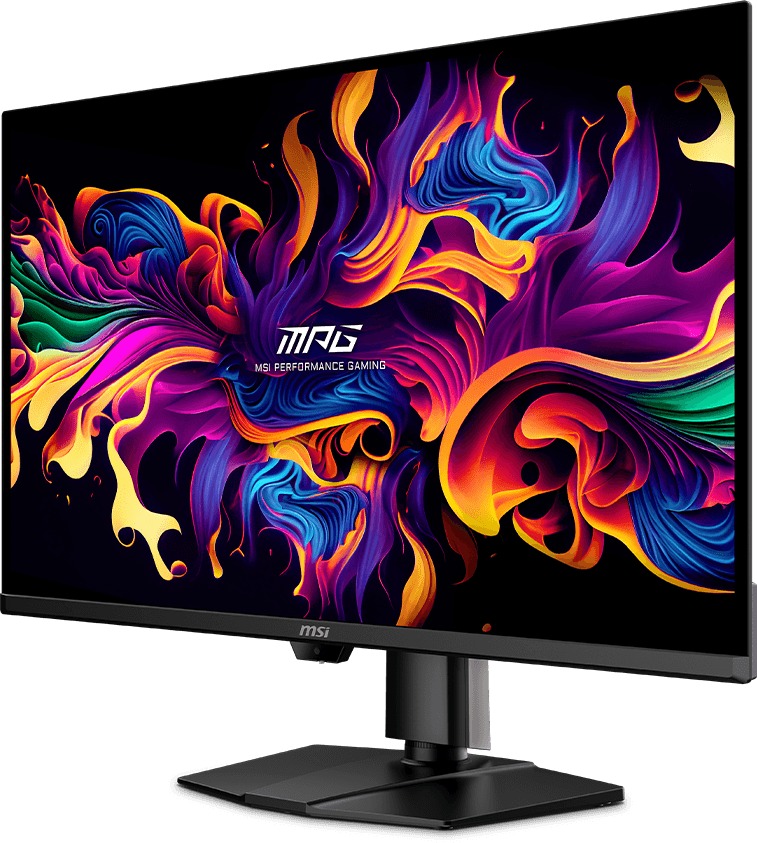
Fourth-generation PHOLED tandem panel architecture boosts brightness and longevity.
The MSI MPG 322UR QD-OLED employs a fourth-generation PHOLED tandem panel that stacks multiple OLED emitting layers to improve light efficiency. This 32-inch 4K monitor delivers approximately 300-nit SDR peak brightness and 1,000-nit HDR peak brightness, earning DisplayHDR True Black 500 certification—a notable improvement over previous standards. The upgraded DisplayPort with UHBR 20 support enables uncompressed 4K visuals at high refresh rates, eliminating bandwidth bottlenecks that can compromise fidelity. MSI includes OLED Care 3 with a proximity sensor to address longevity concerns, making this tandem panel design a brighter, more future-resistant choice.
1. ASUS ROG Swift OLED PG32UCDM
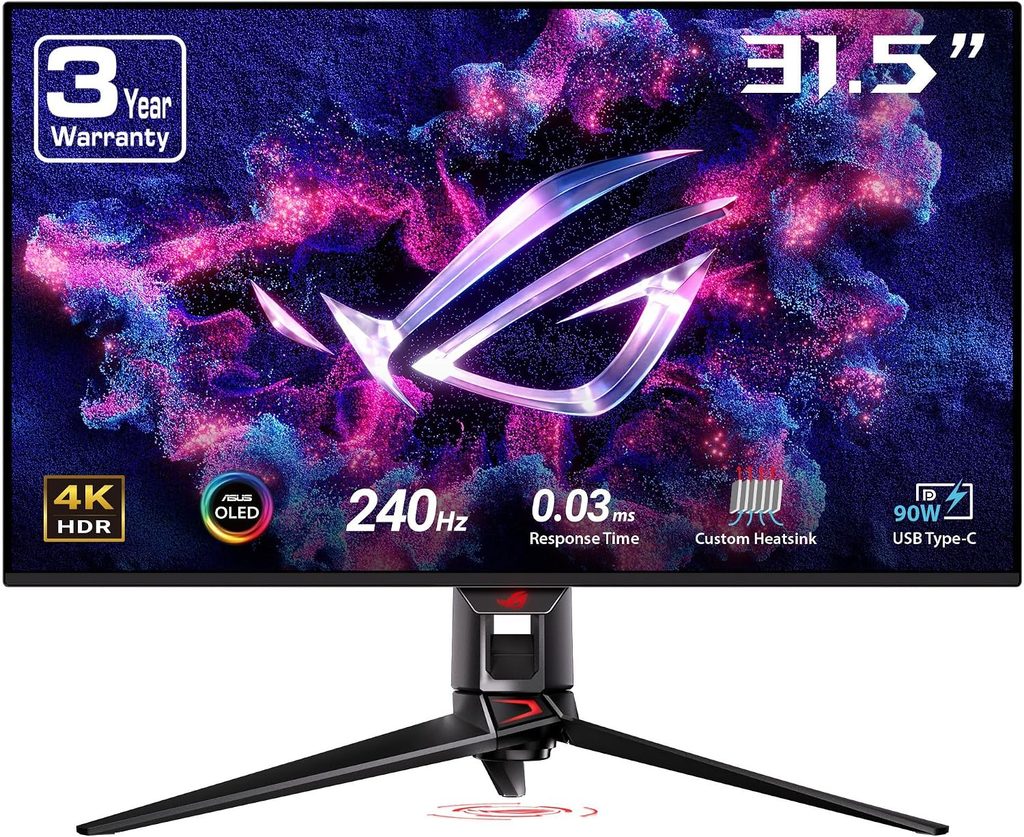
Semi-gloss Black Shield coating reduces reflections while preserving OLED’s visual advantages.
The ASUS ROG Swift OLED PG32UCDM leverages a 32-inch 4K OLED panel, sharing its fourth-generation foundation with the MSI MPG 322UR while adding ASUS’s semi-gloss anti-reflective Black Shield film. According to ASUS, this coating makes perceived blacks appear substantially darker in bright rooms—addressing the frustration of glossy screens becoming mirrors that shatter immersion. The monitor delivers 240Hz refresh rates and 1,000-nit HDR peak brightness, combining premium design and finish with performance specifications that justify its positioning above more utilitarian alternatives in the 32-inch 4K OLED category.