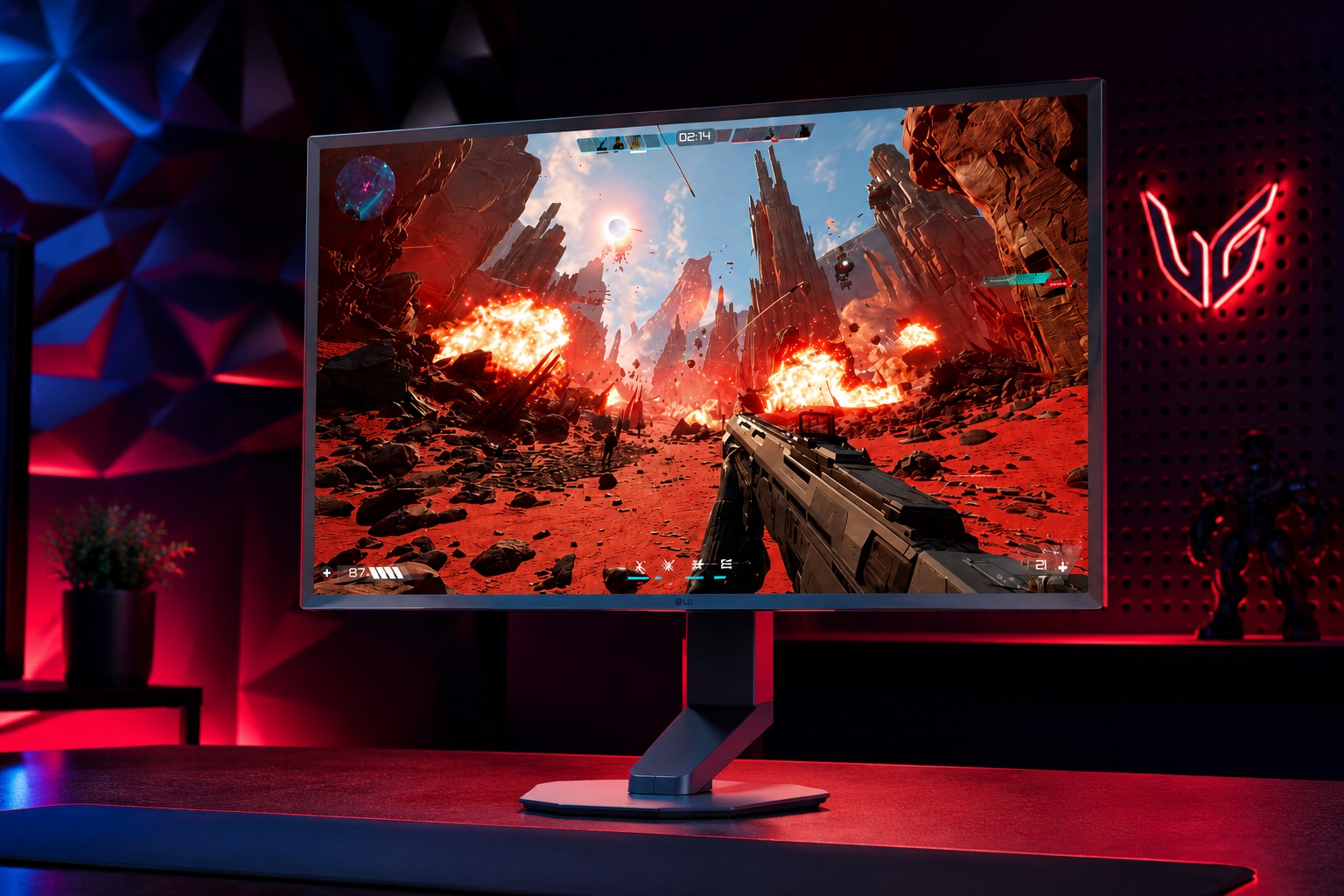
LG’s UltraGear 25G590B delivers what Samsung and Acer couldn’t: true 1000Hz refresh rates at full 1920×1080 resolution. While competitors like the Samsung Odyssey G6 and Acer Predator XB273U F6 drop to 720p to hit quadruple-digit refresh rates, LG maintains visual fidelity where esports pros need it most.
The 24.5-inch IPS panel targets competitive FPS players who demand motion clarity without resolution compromise. Motion Blur Reduction Pro technology combines with the extreme refresh rate to achieve roughly 1.0ms persistence per frame—a notable improvement over the 1.85ms at 540Hz displays.
That translates to cleaner target tracking when enemies strafe across your crosshairs in CS2 or Valorant.
Esports Engineering Over Mainstream Appeal
Tournament-focused design prioritizes precision over visual flourishes.
The monitor’s 24.5-inch form factor reflects competitive gaming’s preference for compact displays. This size keeps crucial UI elements within natural peripheral vision while fitting tournament setups.
Height, tilt, and swivel adjustments include calibration indicators—essential for players who need identical setups across different venues. LG includes AI Scene Optimization for game-specific picture tuning and AI Sound enhancements for spatial audio, though these features feel secondary to the core refresh rate achievement.
The real innovation lies in the panel engineering that delivers consistent 1000Hz performance without dual-mode compromises.
The Reality Check on Four-Figure Refresh
Hardware demands and diminishing returns challenge mainstream adoption.
Exploiting 1000Hz requires systems pushing 800-1000 FPS consistently—a tall order even for high-end rigs with optimized competitive settings. The jump from 60Hz to 144Hz transforms gameplay; moving from 540Hz to 1000Hz delivers subtler improvements that mainly benefit motion-clarity purists and professional competitors.
Most ranked players will find better value optimizing 360-540Hz displays with proper system latency tuning.
Specialized Tool for Specialized Users
Extreme refresh rates serve ultra-competitive gaming’s narrowest margins.
The 25G590B launches in select markets during H2 2026, though pricing remains undisclosed. Without cost details, value comparisons stay speculative, but this clearly targets professional esports organizations and serious competitors chasing every possible advantage.
LG’s achievement is undeniably impressive from an engineering standpoint—native 1000Hz represents genuine technical progress. Whether that progress translates to a meaningful competitive edge depends entirely on your skill level, hardware budget, and willingness to chase diminishing returns.
For most players, the difference between good and great lies more in practice than in panel persistence.