General Motors agreed to pay $220 million across 36 states to resolve allegations that it shared driving and location data with data brokers and insurers without adequate consent. Ford’s new “Privacy Promise” arrives in that context.
What Ford Is Committing To
Ford Chief Privacy Officer Kristin Jones framed the initiative as an active commitment to customers, not a legal formality.
Jones described the motivation plainly. “I personally think that it’s super important for us to be making it very clear to our customers what our data practices are, and not only that, but making a commitment to them about it,” she told TechCrunch.
According to Ford’s announcement, the initiative addresses privacy considerations across the data lifecycle, including collection, use, storage, and disposal.
What Your Car Actually Sends Back
Ford’s connected vehicles can gather a range of information, and that data may be linked to the owner.
Ford’s connected vehicles can collect vehicle diagnostics, driving characteristics, location information, vehicle performance data, and environmental conditions. Per Ford’s privacy policy, that information may be associated with a vehicle identification number or other identifiers tied to the owner.
Ford says it uses that data for connected services such as navigation, traffic updates, and roadside assistance, as well as for maintenance diagnostics, product development, and personalizing features to individual drivers.
The Pledge on Data Brokers
Ford’s most direct commitment targets the conduct that drew regulatory action against GM.
“We also do not share information about how our customers are driving their vehicles to data brokers,” Jones told TechCrunch. Ford’s announcement states that the company does not sell driving-behavior data to data brokers, though the materials do not address every form of third-party data sharing.
How Drivers Can Manage Their Settings
Ford says both the vehicle itself and the Ford app give drivers a path to adjust what they share.
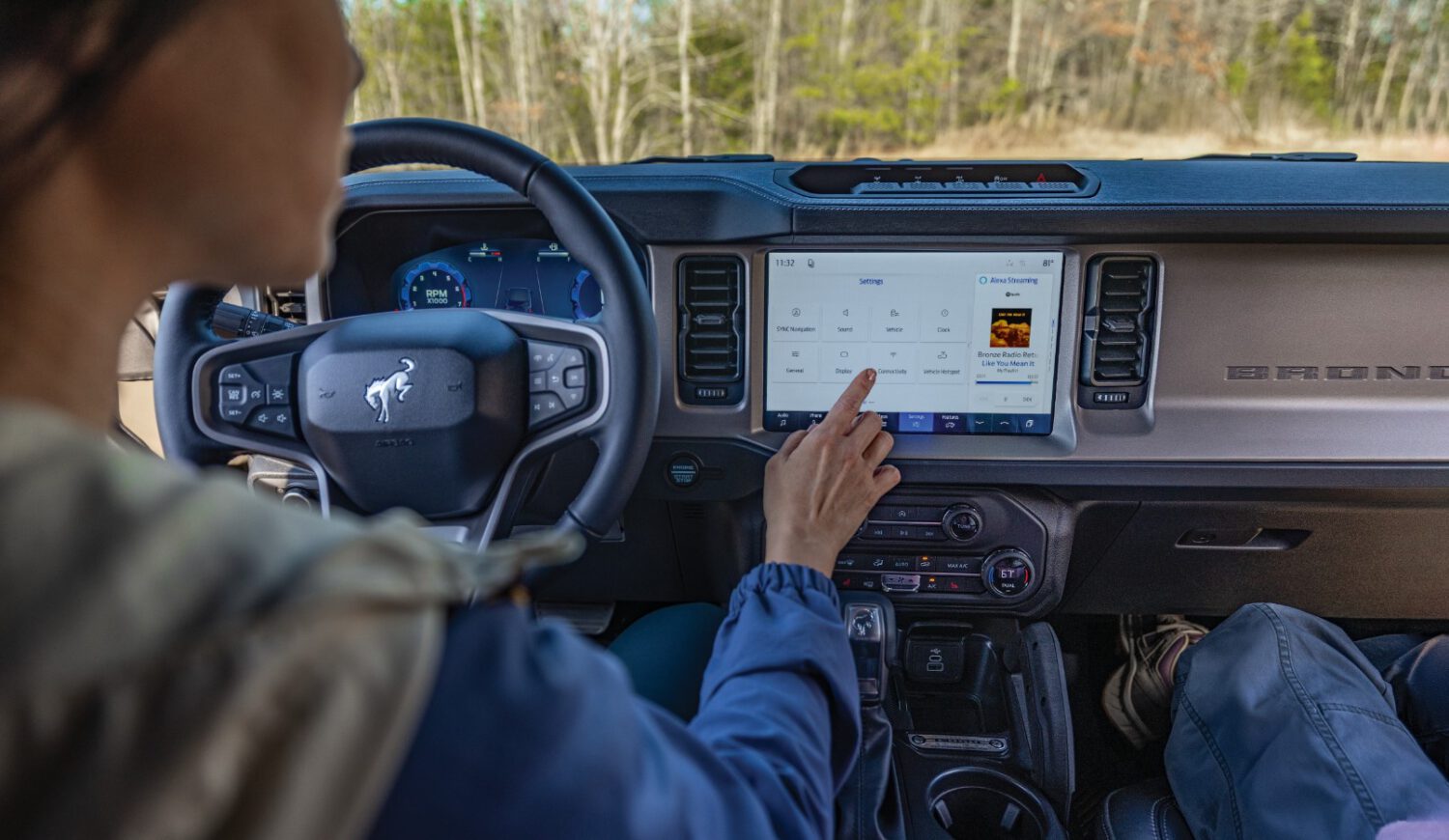
Ford says customers can adjust data-sharing preferences through the vehicle’s center display or the Ford app. The control mechanism exists; what matters is what happens when a driver uses it.
The Real Cost of Opting Out
Choosing privacy over connectivity comes with concrete feature losses, according to Ford’s own materials.
Choosing not to share connected-vehicle data with Ford limits connected features. Real-time navigation, built-in roadside assistance, BlueCruise hands-free driving assistance, internet connectivity, and location functions within the Ford app may all be affected, depending on the vehicle and selected settings, according to Ford’s materials.
What the Promise Doesn’t Answer
Ford’s announcement is clear about what it prohibits but leaves several practical questions unresolved.
The cited Ford announcement does not clarify whether connected-vehicle data is shared with insurers, advertisers, analytics contractors, or dealers. The available materials reviewed for this article do not specify which data uses require affirmative opt-in consent versus which are active by default. The announcement also does not identify an independent auditing mechanism to verify that the Privacy Promise is honored in practice.
Those are open questions, not proven violations. They are, however, the same categories of ambiguity that drew regulatory scrutiny to GM’s data practices.
A Starting Point, Not a Guarantee
Ford has named the privacy trade-off clearly; fully resolving it will require answers the company has not yet provided.
Whether the Privacy Promise constitutes meaningful protection depends on details not yet addressed publicly. Those details include what third-party data sharing covers, which settings are active by default, and how long location and diagnostic data is retained. The trade-off between convenience and data exposure is real for drivers using FordPass, BlueCruise, or built-in navigation. Ford has named that trade-off. It has not yet fully resolved it.