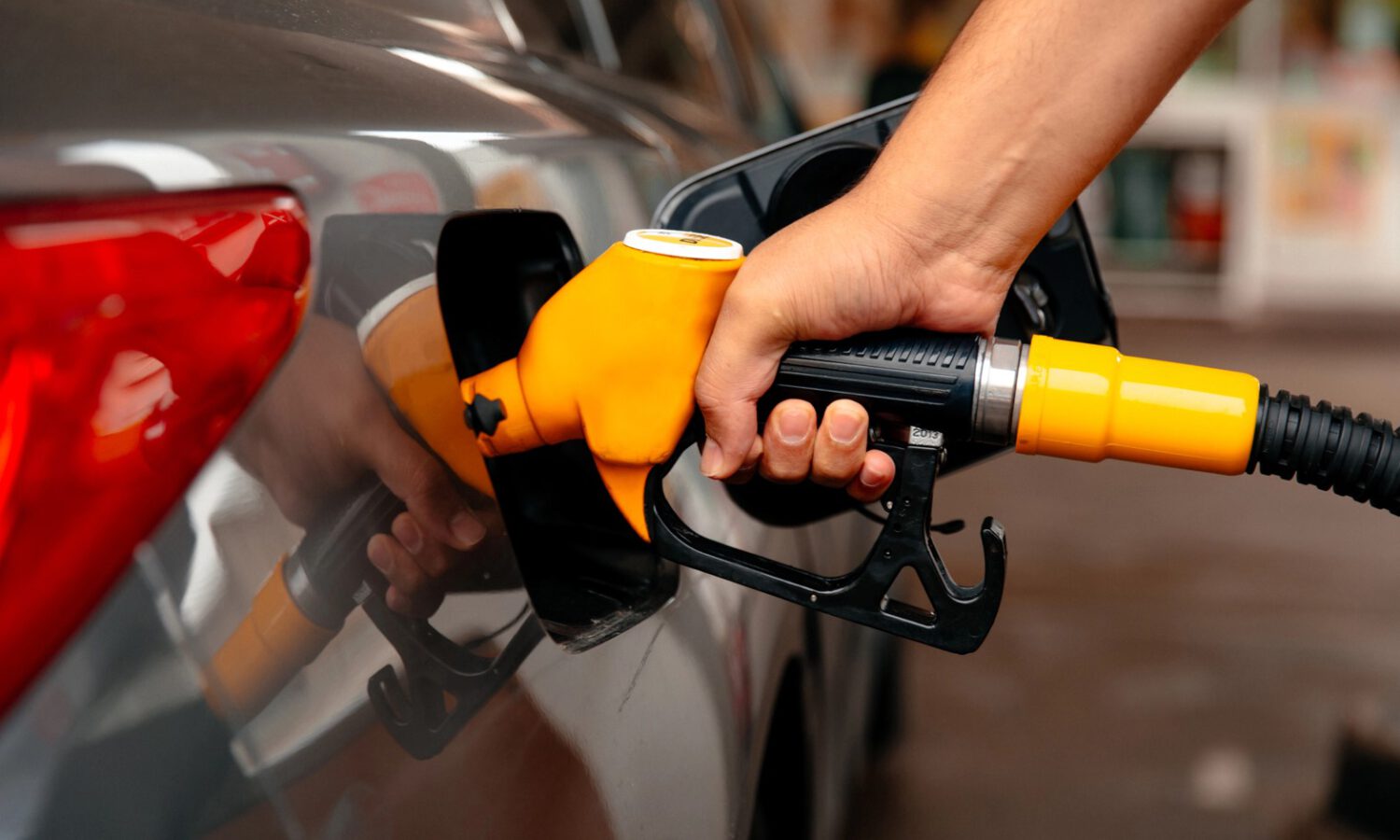
For the first time on record, gasoline-only vehicles fell below half of global new-car sales. Mobility Global data covering January through June 2026 put their share at 49%, down from 73% just five years ago, a 24-point decline in fewer than five years. The milestone is real, and it needs a qualifier before anyone declares the combustion engine finished.
“Gasoline-only” means exactly that: no hybrid assist, no plug, no diesel. The milestone does not mean most new cars run without an engine.
A Milestone With Fine Print
The powertrain mix has shifted dramatically, but the full picture is more complicated than the headline figure suggests.
The numbers from Mobility Global tell a clear story on powertrain share:
- Gasoline-only vehicles: 20.25 million units sold, 49% share, down 10% year over year
- Battery-electric vehicles (BEVs): 6.87 million units, 17% share, up 12%
- Conventional hybrids: 7.27 million units, 18% share, up 10%
- Those three categories account for roughly 84% of reported sales; diesel, plug-in hybrids, and other powertrains make up the estimated remaining 16%
Run the actual math and approximately 83% of new vehicles sold globally still included an internal-combustion powertrain in some form during the first half of 2026. That figure is an estimate, calculated from the 17% BEV share, not a separately reported statistic.
The overall car market also shrank. The International Energy Agency reported a roughly 5% year-over-year contraction in global new-car sales. Gasoline-only vehicles lost ground at about twice that rate.
This is a six-month result recorded during an energy-price shock tied to Middle East supply disruption, which secondary reporting identifies as a factor pushing buyers toward lower running-cost vehicles. Whether fuel prices stabilize or reverse, the first-half threshold may not hold.
Where the Growth Is (and Isn’t)
BEV adoption accelerated in several regions, but the picture varies sharply by market.
China posted the most striking contrast. It accounted for roughly half of all global BEV sales at 3.44 million units, yet its BEV sales still declined 3% year over year. That makes it the world’s largest and one of its few contracting BEV markets at the same time.
Growth elsewhere was strong. European BEV sales rose 32%. Southeast Asian BEV sales surged 81%. BEV sales in Oceania more than doubled. North American BEV sales fell 15%.
The U.S. told a different story from the global headline. After the federal EV tax credit expired, BEV share slipped year over year. Cox Automotive reported that U.S. hybrid share hit a record 14.1% at midyear. Cox described the shift as a structural change in consumer strategy, not a gasoline revival.
The IEA reported that EVs broadly, meaning BEVs and plug-in hybrids combined, reached 24% of global sales in the first half of 2026. Yoshiaki Kawano of Mobility Global reportedly said EV demand increasingly reflects genuine consumer needs rather than subsidy-driven purchases. A canonical source URL for that statement was not available at publication.
Automakers face growing pressure to expand both hybrid and BEV portfolios. Battery supply chains and charging networks must scale across markets moving at very different speeds.
The Real Shift
The meaningful takeaway is a category-level shift, not a verdict on the combustion engine.
Gasoline-only vehicles have lost their majority position. Combustion engines have not. That distinction is not a technicality; it is the actual story of where the market stands right now.
The full-year figure will show whether January through June marks a structural turning point or a fuel-price-driven anomaly. If gasoline-only share rebounds above 50% in the second half, the likeliest explanation would be a fuel-price reversal, not a consumer preference shift. Either way, the direction of travel over five years is not ambiguous.